Opera wants you to pay $20 a month to use its AI-powered browser Neon
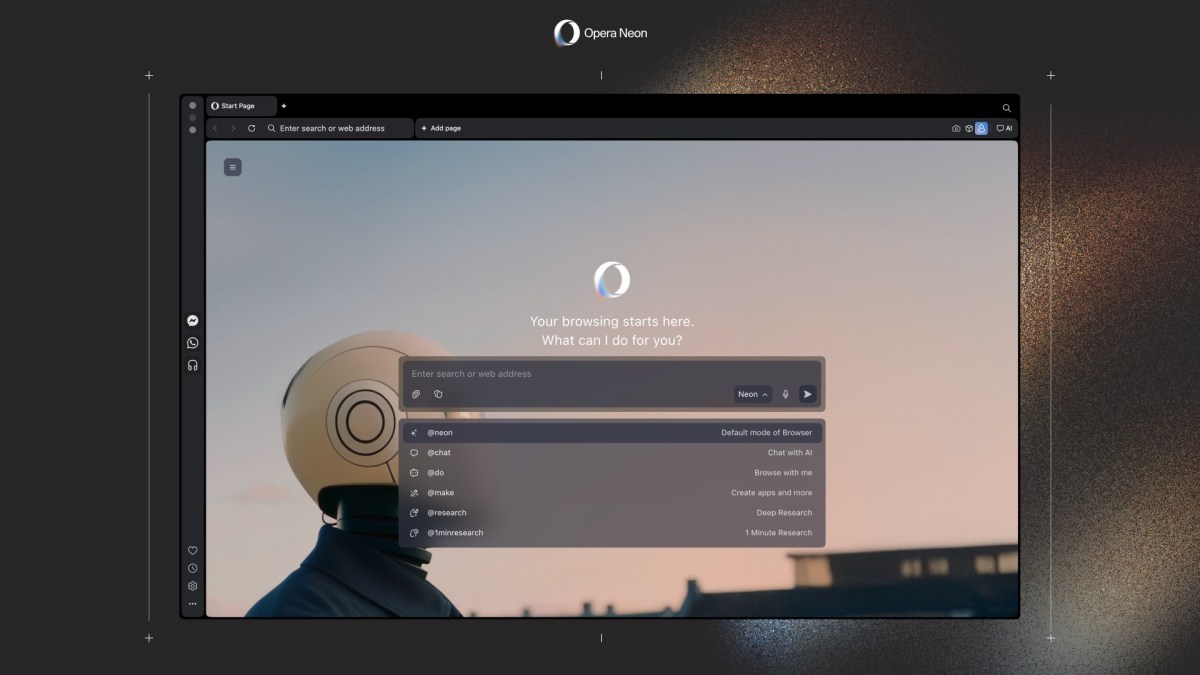
After a few months of testing, Norwegian browser company Opera has finally made its AI-powered browser Neon available to the public, although you’ll have to pay $19.90 per month to use it.
Opera first unveiled Neon earlier this year in May and launched it in early access for select users in October.
Similar to other AI-first browsers like Perplexity’s Comet, OpenAI’s Atlas, and The Browser Company’s Dia, Neon bakes an AI chatbot into the interface, letting you ask it answers about pages, use it to create mini-apps and videos, and let it perform tasks for you. The browser uses your browsing history as context, so you can, for example, ask it to retrieve details of a YouTube video you watched last week or the message you read yesterday.
You can also create “maps” for repeatable tasks using prompts, and the browser offers an in-depth research agent that can give you detailed information on any topic. The browser also has a new tab organizing feature called Tasks, which are the workspaces of AI chats and tabs. This feature is more like Tab Groups combined with Arc Browser’s Spaces feature, which has its own context for AI.
In addition to the AI features, the subscription gives users access to top models such as Gemini 3 Pro, GPT-5.1, Veo 3.1 and Nano Banana Pro. Subscribers also get access to Opera’s Discord community and direct access to the developers.
“Opera Neon is a product for people who want to be the first to have the latest AI technology. It’s a rapidly evolving project with major updates every week. We’ve been shaping it with our Founders community for a while and are now excited to share early access to it with a wider audience,” said Krystian Kolondra, EVP of browsers at Opera, in a statement.

The company noted that its other products, such as Opera One, Opera GX and Opera Air, also have free AI features such as a chat-based assistant.
WAN event
San Francisco
|
October 13-15, 2026
Meanwhile, established browsers are taking a slower approach to adding AI features to their products. Earlier this week, Google detailed the security work it’s doing to protect users from various attack surfaces that agent features are susceptible to, and Brave said Wednesday it’s previewing its agentic functions in a nightly buildand provides an isolated browsing profile for the use of AI features, so users can keep their normal, non-AI usage separate.