‘Murder In Glitterball City’ Filmmakers on Their Strange True-Crime Documentary
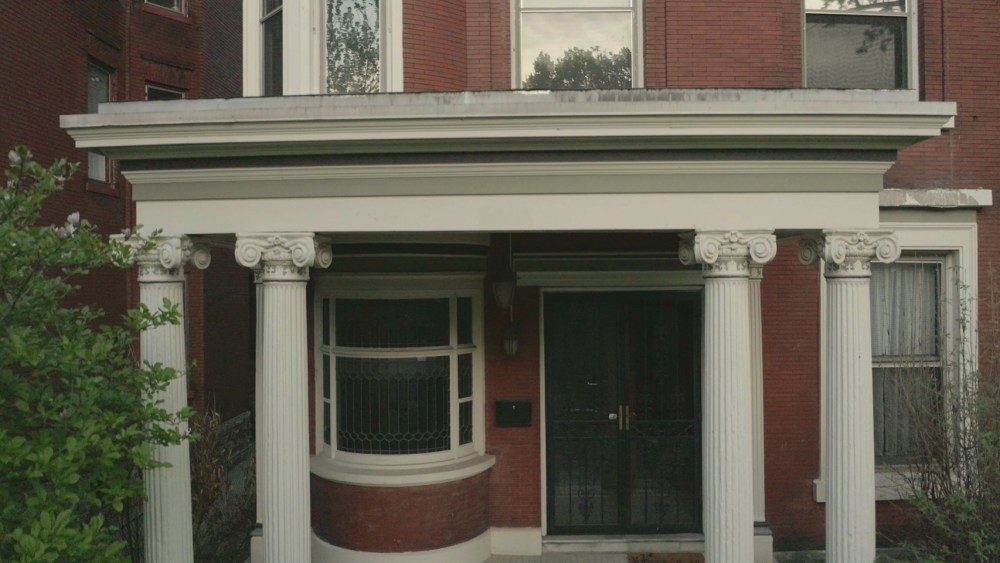
In June 2010, the body of James “Jamie” Carroll was discovered by Louisville police.
The house at 1435 South Fourth Street, owned by Jeffrey Mundt and his friend Joseph “Joey” Banis, became a crime scene. Banis and Mundt were dating at the time, and a wild night of sex and drugs led to a bloody murder. But who did it?
In HBO’s two-part true crime documentary “Murder in Glitterball City,” now streaming on HBO and HBO Max, filmmakers Fenton Bailey and Randy Barbato try to put the pieces together.
In the two-part series, they use community to tell the story of this couple and how, at the center of it all, was a very toxic relationship. The documentary begins with what appears to be an on-camera confession from Banis, but as the story unfolds, that appears not to be the case.
As gruesome as the murder was, Bailey says, it was important to honor the victim. “This is a true crime story. It’s also a queer story. David, who wrote the book, is gay, and we are queer filmmakers.” He adds: “By telling it we didn’t want to be coy about the details, we also wanted to present the details, and that was the best way to tell Jamie’s story and keep him remembered.”
Both Banis and Mundt were tried for murder, but Banis remains in prison while Mundt walks free. Bailey and Barbato sat down to talk about the movie and share their thoughts on the film’s ending.
When did you both find out, or when did you hear about this murder, and what happened next?
Randy Barbato: It was over five years ago. HBO’s Lisa Heller and Nancy Abraham said, “We have a book we’re going to send you. Check it out.” We were reading David Dominé’s “A Dark Room in Glitter Ball City: Murder, Secrets, and Scandal in Old Louisville,” and we thought, “What is this?” So we flew to Louisville and spent a few days calling people, knocking on doors, and tracking people down in the book. We came back and called HBO and said, “We have to make this, and we don’t know what it’s going to be.” We spent the next four years talking about it, back and forth.
At the heart of it is a heinous crime, but there are concentric circles of fascination and incredible characters and who inspired us and made us laugh. We asked, “Wait, how are we going to make this all fit together? And I don’t know if we do, but I know we finished it.”
I went down a rabbit hole after I finished it, and I saw a headline that said, “It’s a real-life ‘How to Get Away with Murder’.” And that’s exactly what it is, but how did you find the right people to tell this story? You have Angelique X Stacy for one, and then you have John and Missy, and you go to the legal side of people.
Fenton Bailey: It’s a great cast of characters, isn’t it? And in a way this is a matter of hindsight, but it’s a bit like the disco ball itself. You have this single event; it hits the disco ball and all these different versions, reflections and ideas bounce off it.
In the case of John and Missy, that’s how David’s book begins, and it’s so good because we said, “We have to find them.” When we met them they were such great characters. And you have an enclave of Old Louisville, just a few blocks away, that was saved from the wrecking ball by these gay men. They’re not in the movie. But other gay people moved in and artists came, so you have this unique little time capsule of these bohemian, creative characters, all within a few blocks.
In addition to the characters, there is a wealth of archival material that helps solve this puzzle. Talk about your experience and how you put together your own CSI crime board.
Barbato: We are archive queens, and you know that about us, but we have a great team that we work with, and they are archive queens too. It’s interesting because now that you mention it, there’s a lot of archive in there. That archive is a character that we used and needed, and it was part of putting the story together.
Bailey: One thing happened halfway through: we talked to Joey in jail and he gave permission to his lawyer to give us a copy of his laptop. And so suddenly we found all this stuff. And this was in 2012-2013, when even though there were text messages and iPhones and emails and things like that in abundance, the police hadn’t really caught up with those kinds of departments, and so there were so many things that they just never had a chance to look at. That material ends up being the linchpin of the whole story because it starts with this videotape where Joey seems to confess to the crime at first, and then of course as everything unfolds you realize that this is not what it seems to be. But there is a huge amount of information at a time when I don’t think the authorities were really able to process it. Even now, with the Epstein files, they don’t seem to be able to process everything. It’s just the volume. Some of what Joey himself has captured, whether through phone calls, text messages or videos, is quite extraordinary. As then, for reasons best known to them, it appeared that Jeffrey had started a counterfeiting operation. It’s quite stunning.
I’ll get back to what you said, Randy. You are the archive queens and documentary queens. Going in after reading the book, what questions did you want to know or hope to get answered, and at the end, when you were done, what questions did you still have?
Barbato: The main question was: has justice been served and what do we not yet know about the crime and the story? But when we started making the film, a million other questions came up. We started learning about the community, the city and the different characters and their connection to it. Every day there was a different question. A lot of it has become organic. We kept trying to understand the crime better, and what it becomes is also this psychodrama. So you’re trying to understand and build on the character portraits of these two people, and of course Jamie, who is very important for us to humanize him and not label him as a victim buried in a basement. So it was an endless voyage of discovery.
And how do you connect the discovery we’ve made of all the side characters to the crime at the center of this story, and what is that connection? That became a huge obsession for us, because it was, “Why are these people as important as what’s going on downtown and the crime, and what is their connection?
Bailey: We had a teaching witness, LaTanya, and she was brought in to talk about domestic violence and how it works, and the dynamics of it.
Barbato: She helped us understand why community is so important when it comes to crime. Horrible crimes happen that you think have no relation to you, and to which you have no connection, but that is actually not the case at all. We are all affected and we can all learn in some way. And so we didn’t even know that this was a question that we would need an answer to, and we never thought that she would be the one to ask us that question.
Bailey: In the immediate context of the trial, she was there to support Jeffrey’s defense argument that he was a victim of domestic violence and that he was terrified, and that didn’t quite match the way we felt when you look at the whole of it all. But she said toxic relationships are dangerous not only for the people in them, but even more troubling, people need to know that they can be dangerous to innocent bystanders, and that people around them can become entangled in them. In this case, that’s completely true, and because Jamie was actually an innocent bystander.
And what did we start with, and what is the question we have at the end: who did it? You know, although I really think about it, after talking about it for hours, months and years. I think Randy and I both believe there should be two people in prison, not just one.
There’s a lot of humanity in it. How did you find that balance while telling the story?
Barbato: We really tried to do that. It’s because of who we are, and no matter what role someone has played, including possibly being the murderer, we are all human, and to understand something means connecting with that, and communicating with empathy, and connecting with people you know, including all the lawyers. You can watch so many true crime stories or shows, and they do a great job. They’re great, but they’re very procedural, and I don’t often feel a connection with any of the people, and so for us that’s really important.
In Joey’s case, it’s just curious about how he became who he is because when his first boyfriend talks about them and they fall in love, it’s obviously a beautiful story until it gets dark, but it’s so sweet that you realize even monsters have a soft spot.
It’s interesting to say that since you wonder when people become monsters, at what point do you turn into that person?
Bailey: Unless the monsters exist, and they are the ones escaping justice. If there is a monster, and that monster is those who escape justice or are held accountable. And I think that might have happened in this story to some extent.
Watch the trailer below.