Middle Eastern airlines and the struggle to resume services after regional hostilities | News
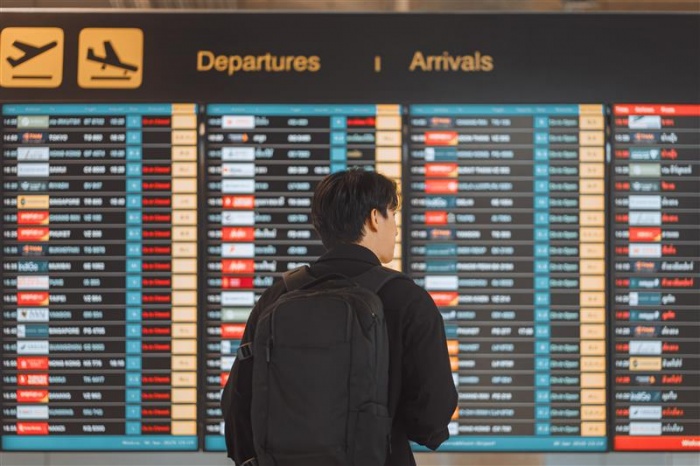
The outbreak of serious hostilities in the Middle East, focused on escalating conflicts involving Iran and other regional powers, has thrown one of the world’s busiest flight corridors into chaos. Civil aviation – normally a smooth and interconnected network of international connections – has been disrupted in several countries. This disruption has had a direct impact on airlines such as Middle East Airlines (MEA), the national carrier of Lebanon, as well as major Gulf carriers.
The collapse of normal air traffic
The crisis began when escalating military actions caused a chain reaction of airspace closures in Iran and its neighbors. Authorities in several countries – including Iran, Qatar, the United Arab Emirates, Kuwait, Bahrain, Kuwait and others – closed their airspace to civilian aircraft for safety reasons. This grounded much of scheduled commercial traffic, stranding thousands of passengers and forcing airlines to cancel services entirely or divert flights via long detours.
In these circumstances, MEA has suspended or canceled a number of its scheduled flights, especially those connecting Beirut to Gulf hubs such as Doha, Dubai and Abu Dhabi. The closures of key regional airspaces mean that aircraft cannot safely transit the usual corridors connecting Beirut to the rest of the world, causing significant operational setbacks. Even flights that could technically operate are subject to sudden changes, cancellations and legal restrictions.
Limited activities where possible
As the crisis has developed, a cautious resumption of flights has begun in areas where airspace is considered safe or only partially restricted. Some UAE-based airlines have operated a limited number of repatriation, cargo or repositioning flights, with priority given to stranded passengers and essential services. A few more international airlines have also resumed select routes to the region or around it, taking advantage of partial airspace reopenings or alternative route options.
For MEA, this means that while a handful of flights to and from Beirut and nearby destinations are allowed to operate, the airline’s broader schedule remains heavily restricted. Routes crossing closed or high-risk airspace remain suspended, causing many normal long-haul services to be postponed indefinitely.
Challenges to full resumption
Several factors continue to prevent a return to regular flight schedules:
Airspace security and government restrictions: Regional airspace remains under strict control, with many countries not yet ready to fully reopen to civilian traffic due to ongoing hostilities and unpredictable risks from missile or drone activity.
Operational certainty: Even when limited flights are available, airlines are reluctant to publish fixed long-term schedules because the situation can change quickly. A sudden flare-up in hostilities could lead to new closures without warning.
Rerouting and logistical complexity: With traditional connections to Gulf hubs disrupted, both long-haul carriers and smaller regional airlines are having to plan alternative routes – often over much longer distances – which increases costs and reduces the number of flights that can be reliably offered.
As a result, most airlines in the region, including MEA, are taking a phased approach, operating only where safe and practicable, pending broader political and security developments.
When will service return to normal?
At this time, there is no set timeline for when MEA or other regional airlines will fully resume normal scheduled services. The earliest expectations among aviation planners suggest that as the safety situation improves and airspaces reopen, we could see a gradual return of flights in the coming days to weeks. Some airlines had initially aimed to resume limited operations in early March, depending on airspace certifications and safety reviews.
But full resumption – meaning regular daily flights on all previous MEA routes – will likely take longer, possibly several weeks or more. Airlines will not commit to robust schedules until there is lasting stability in the region, predictable access to airspace and confidence that normal operations can continue without sudden closures.
Looking to the future
Middle East Airlines, like many of its regional counterparts, is in one of the most unpredictable periods in modern aviation history. The response depended on flexibility, security priority and constant monitoring of political developments. While repatriation and essential services provide some relief, passengers can expect continued schedule changes, with a return to full service directly linked to progress towards regional calm and clear civil aviation rules.
For travelers, this means staying informed, checking flight status regularly with airlines and preparing for constant adjustments. The situation continues to evolve hour by hour – and so does the ability of Middle Eastern airlines to resume flights connecting the region to the world.