Microdramas look to the future of $26 billion at Crisp’s Seoul conference
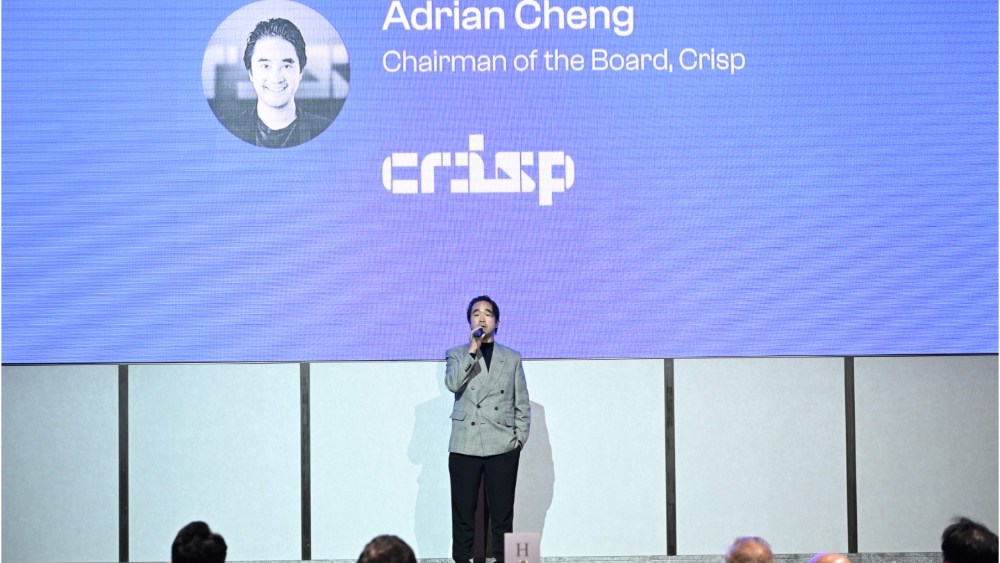
The future couldn’t look more vertical than from the 76th floor of the Lotte Tower, the sixth tallest building in the world, where key microdrama stakeholders attended the Future Is Vertical: The Global Rise of Short Form Media conference. The conscious choice of organizer Crisp, a short-form scripted video content company, underlined its ambitions to shape an industry that is speeding towards a global turnover of $26 billion by 2030.
The summit, held at the Signiel Hotel in Seoul, brought together platforms, content creators and technology providers from the Americas, Europe and Asia to discuss an industry transforming from its roots in gaming and web novels to mainstream entertainment.
The event opened with a keynote by Adrian Cheng, Chairman of Crisp and the newly formed Almad Group. He emphasized that microdramas do not represent a fad, but a global phenomenon emerging from Seoul to Sao Paulo, where “every frame is intentional, every moment carries intention.” In Lagos, he noted, comedians thrive in vertical short scripted videos of two to three minutes.
Neorigin CEO Chen Bo traced the format’s evolution from gaming methodologies during a panel on how games and web novels shaped short drama. “Our microdrama team at NeoOrigin is actually a spin-off of the game publishing team,” Chen explains. “We use the same methodologies, business models and publishing tools, such as Meta or Google.”
Production timeline and budget emerged as the key differentiators. While games typically take hundreds of thousands of dollars and several years to develop, microdramas can be produced in one to two months for less than $100,000, according to Chen. Zou Jianfeng, chairman of MoboReels, emphasized that cost remains the main barrier in adapting complex stories to short formats.
Market intelligence firm Media Partners Asia presented data showing the sector has grown from virtually zero five years ago to $5 billion by 2023, with forecasts of $12 billion by the end of the year. China currently accounts for almost 80% of global sales, although growth is accelerating in the US, Japan, Southeast Asia and Korea.
Cassandra Yang, CEO of RisingJoy, highlighted emerging areas during the Short Form Going Global panel. “India has seen tremendous growth this year,” Yang noted. “It went from zero to the largest growth market of independent microdrama apps since September 2024. Thailand and Indonesia emerged, with Indonesia becoming the largest download market after India.”
Martin Moszkowicz, veteran German producer and former chairman of Constantin Film, emphasized budget discipline while suggesting that the development of intellectual property would determine success. “There will be hundreds of series that will flop in the market,” he said. “Who gets the brilliant creators is what is going to be important.”
Yang reinforced the need for content quality. “Companies I work with are running microdrama apps with a gaming industry methodology for user acquisition,” she says. “But I tell them if you don’t have good content, your retention rate will drop within seven days.”
Ronan Wong, CEO of AR Asia Productions, identified uncharted creative territory including unscripted content, horror and formats aimed at Gen Z audiences. The animation segment attracted particular interest, with Emily Yang and Maciej Kuciara, Emmy-winning co-founders of the Shibuya studio, presenting their vertical animated microdrama “White Rabbit.”
“Within the traditional Hollywood structure, there is a lot of politics and bureaucracy,” Yang noted during the panel The Future is Empowering Creators with Short Form Animation. “I am very optimistic that the short drama market will be a more vertical place for artists to express themselves.”
Kuciara emphasized the size advantages. “Going vertical means going much shorter,” he said. “Telling mini stories makes it much easier and allows creators to be more creative with the medium and reduce costs.”
The production of “White Rabbit” includes audience participation through greenlight voting in the episode. The series follows Mirai, a character who is unaware of her nature in the field of artificial intelligence, a theme that resonated during conference discussions.
Minhong Lee, co-founder of Carpenstreet, projected cautious optimism about AI applications. “I think we can reduce the production budget for microdramas with AI,” Lee said. “But it’s just like with airplanes. There are very high-tech models now, but the pilot is still essential.”
Yang described AI as a creative tool rather than a replacement. “You give two directors the same camera; one can tell a great story, and the other tells a very lazy story,” she said. “The story matters, not the technology.”
TikTok presented its microdrama distribution strategy during a keynote titled Unlocking Global Traffic Codes, with representatives Ben Yang and Liya Li outlining metrics for early hit identification. The platform’s data showed that multilingual dubbing increases ad consumption by 102% compared to single-language content, while multi-country implementation increases consumption by 258 percent.
Media Partners Asia analyst Myat Pan Phyu detailed the market dynamics in her presentation on the microdrama economy, noting that standalone apps such as ReelShort and DramaBox currently dominate the entertainment charts of app stores worldwide. The sector primarily targets women between the ages of 25 and 45, although demographic patterns vary by market.
Investment activities indicate the maturation of the sector. Recent deals include Krafton’s $86 million investment in Spoon Labs, Vigloo’s parent company, and Fox’s backing of Holywater for vertical video production. DramaBox’s participation in the Disney Accelerator program signals strong interest from the studio.
The conference highlighted the infrastructure benefits in embedded ecosystems, particularly WeChat mini-programs in China, which integrate discovery, payment and distribution within existing super-app frameworks.
Despite revenue growth, profitability remains elusive for most players. Among the major platforms, DramaBox reported a profit of $12 million on revenue of $323 million, while ReelShort expects revenue of $800 million but continues to operate at a loss due to high production costs and paid traffic.