Mediawan Kids & Family Eyes Microdrama Push, sets up partnerships with Asia
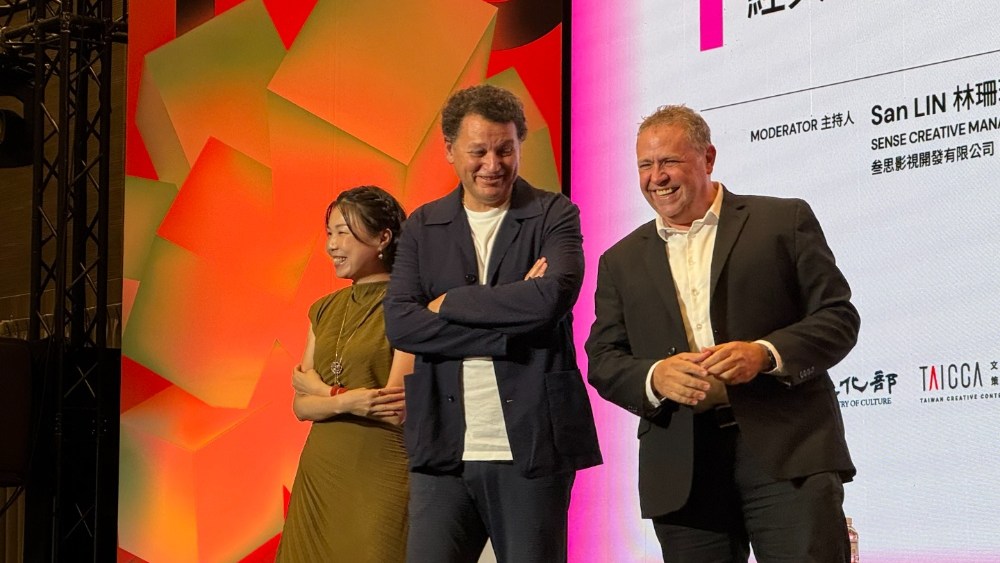
Mediawan Kids & Family is delving into the microdrama space with plans to launch its first vertical animation short content next year, president Julien Borde revealed at the Taiwan Creative Content Fest.
Speaking on a panel focused on cross-media IP adaptation, Borde said the animation industry is “really ready” for the fast-growing short-form trend that has dominated Asian markets. “The writers know very well how to tell a story in a very, very short form,” he told the audience at the event.
The move marks a significant strategic step for the Paris-headquartered production and distribution company, which operates more than 80 production companies worldwide, including Method Animation, the studio behind ‘The Little Prince’ franchise. While Borde acknowledged that “Asia and Europe and Western countries in general are less advanced than Asia” in both live-action and animated micro-content, he expressed enthusiasm about the format’s possibilities.
The discussion on microdramas highlighted ongoing challenges in revenue generation and subsidies. Laurent Duvault, vice president of business development and audiovisual rights at Media Participations-Mediatoon, noted that European subsidy systems have yet to catch up with the format. “People keep thinking it’s recycling content, when it’s actually brand new content,” Duvault said, adding that finding “a healthy business model and a healthy subsidy model” remains a key challenge.
Borde suggested that micropayment systems – already common in Asia – could provide a solution when combined with subscription models. “Some platforms in Europe are testing micropayments,” he said, noting that his company is monitoring how this approach develops.
Both French managers emphasized their commitment to Asian partnerships, with Mediawan focusing mainly on Taiwan. Chief operating officer Jean-Yves Patay has visited Taiwan several times and the company currently has three co-productions with Taiwanese studios: one TV series and two feature films.
“We are here for the long term and to build a very strong partnership between Taiwan and France,” Borde said on the occasion of his first visit to the area.
Duvault, who represents France’s third-largest publishing group with more than 40 publishers producing 3,500 new books annually, said his team currently has almost 200 projects in development worldwide. “One in ten should end up on screen,” he noted, with 20% of projects located outside France, including in America, Germany, England, Mexico and China.
He unveiled a Taiwanese win: “Bob & Marley,” an animation project featuring a Taiwanese bear character that he is now developing with local producers. “When I found out it was [Taiwanese]it became my priority to find a producer here, and magic happens,” Duvault said.
The panel delved into strategies for identifying which literary and comedy IPs warrant adaptation. Media Participations leans on what Duvault calls “evergreen” characters – properties that have been around for 30, 40 or 50 years, citing examples like “The Little Prince” and “Astro Boy.”
The company is currently launching “The Marsupilamis” for Nickelodeon, a project that has been in the works for almost a decade. “It’s the perfect example of turning a 70-year-old character into something fresh and new,” Duvault said.
However, he warned that evergreens pose risks. “Every time you come out with a new iteration, people might not like it because it’s not the memory they have,” he explained, noting that some recent evergreen adaptations have disappointed when they failed to meet audience expectations formed during childhood.
Mediawan’s Method Animation has built its reputation on reinventing classic IP, producing three different iterations of ‘The Little Prince’: one feature film and two series. But Borde said the company is increasingly focusing on properties with existing fan engagement. “It is very difficult to establish a new brand in such a fragmented consumer world,” he explains. “More and more we have to come to our partners with something that already exists and is very strong, with billions of views.”
Recent examples include “Ki and Hi,” an anime-adjacent series based on a French manga by YouTuber Kevin Tran that surpassed Japanese manga in France, and “Mr. Crocodile’, based on the creation of author Joann Sfar. The series was launched on France Televisions and Nick Jr.
Both executives acknowledged the evolving challenges of working with major streamers. “It’s more difficult than in the past because pay TV is no longer as important as it used to be and you have fewer slots available with all the streaming companies,” Borde said. Still, he praised partners like Disney (co-producer of “Miraculous Ladybug”), Warner and Nickelodeon for adding value to original concepts.
Duvault, who joked about taking calls with Netflix at 4 a.m. and 6 a.m. that morning, noted the platforms’ different approaches to animation versus live action. “Animation is largely centralized, in Asia or in the Western world, especially in America. But when it’s live action, they act locally,” he said. “You have to be prepared to have a very tough legal discussion, a very complicated contract.”
The economy remains challenging but necessary. “The payback would be better than the salary,” Duvault said.
When asked about the balance between evergreen IP and original ideas, Borde emphasized the importance of preserving both. “If TF1 had not taken the risk over a decade ago to launch ‘Miraculous Ladybug’, something that was actually completely unknown, we would not have had the opportunity to build that brand,” he said. “I want to be positive about new, original ideas because the market tends to say that only evergreen IPs are being done. And I don’t think that’s true.”
Duvault agreed, noting that success stories like “Miraculous” — which became an evergreen “in less than a decade” — warrant continued investment in new voices. “That money is mainly invested in new talents to ensure that there will be new characters tomorrow,” he said.
For both companies, success depends on finding what Duvault called “authentic, real voices” with “authenticity, freshness and originality” – qualities that go beyond whether an IP has been around for fifty years or launched last year.
The panel was moderated by San Lin, CEO of Sense Creative Management Ltd.