Malaysia’s AI agent-powered messaging app Respond.io raises $62.5M, eyes acquisitions
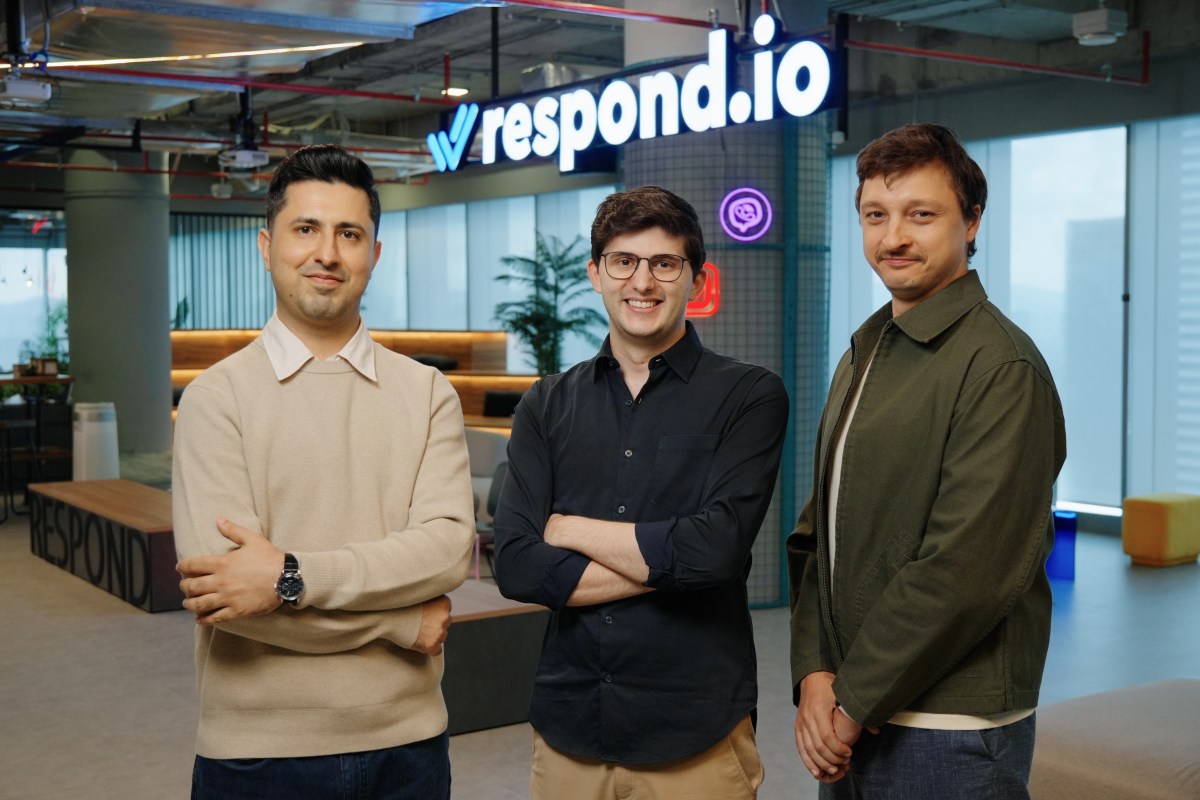
In 2017, Respond.io wanted to solve a simple problem: companies couldn’t keep up with customers who had switched to messaging apps. Today Respond has become one of Malaysia’s tech success stories with its customer conversation management software.
The Kuala Lumpur-headquartered startup has raised a $62.5 million Series B round led by Camber Partners, with participation from Endeavor Catalyst and existing investors. It last raised a Series A of $7 million in 2022. The company has grown to $35 million in annual recurring revenue (ARR), a 169% year-over-year growth, with a profit margin of 30%, the company tells TechCrunch.
Co-founder and CEO Gerardo Salandra, who worked at IBM and Google before joining Runtastic, a fitness tracking app sold to Adidas in 2015, founded Respond in Hong Kong in 2017, together with Hassan Ahmed (CTO) and laroslav Kudritskiy (COO). Two years later, the team moved the company to Malaysia.
The platform helps mid-to-large B2C companies generate revenue from customer conversations across multiple messaging channels, including WhatsApp, Instagram, TikTok, Messenger, Line, Telegram, WeChat, voice calls and web chat. It also uses AI agents to automatically handle high volumes of customer queries, qualify leads, and close sales without human intervention.
Salandra described its core customers as “high-consideration” businesses, where customers need to talk to someone before purchasing, such as healthcare, automotive, retail, education and travel. “You don’t go to a website, put your credit card on it and buy a car; you chat with someone, you ask a lot of questions,” he said. The sweet spot consists of companies with 200 to 10,000 employees.
The rise of AI has raised an obvious question for platforms like Respond: can tools like ChatGPT simply replace what they built?
Salandra believes his position is strong enough to stop such an intrusion, should it occur. The company currently processes 2 billion messages per quarter.
“Just looking at the numbers, every day that AI becomes more prominent, we’re growing faster,” he told TechCrunch. “We don’t see what the public SaaS markets see.”
Part of that comes down to price, he said. Unlike enterprise software competitors that charge per seat, Respond charges based on the volume of customer calls, meaning it doesn’t matter whether a human or an AI answers. “If fewer people use your product, they make less money,” he said. “But we don’t calculate that way.”
The established platforms, especially those dominant in North America and Europe, were built around email and phone calls. “With the existing platforms, they’ve turned to messaging as an afterthought. They’re very email-oriented, they’re very conversation-oriented, but when it comes to messaging, that’s an afterthought,” Salandra said.
According to the CEO, that amount of message data creates a feedback loop. More messages means better AI. Better AI attracts more customers. More customers generate more messages. “This is what we call the data flywheel,” Salandra said. He added that the head start is also important for any early-stage AI company. “Because we started so long ago and have such a strong foundation, we can provide better AI compared to someone who just entered the messaging world.”
With the new capital, Salandra says the company plans to pursue hiring, organic growth and acquisitions. The CEO has two types of purchasing goals in mind: complementary technology that fits into the existing ecosystem, and established teams with strong customer bases in strategic markets such as Europe and North America. “Imagine how many months I can save if I find the right company that maybe already has the customers and the team,” he said. “By making an acquisition I can save myself six months to a year.” He confirmed that the company is already in discussions with a number of potential targets.
The geographic push makes strategic sense. Respond currently generates approximately 30% of its revenue from APAC, 30% from Latin America and 20% from the Middle East and Africa, leaving North America and Western Europe at just 20%. But Salandra says these regions are now the fastest growing. “It took longer to implement the change, but now they are moving very quickly to messaging channels,” he said, adding that he expects both regions to become the company’s largest segment within two to three years.
Despite the new capital injection, Salandra is cautious about what comes next. “We don’t want to be a growth company at all costs,” he said. “Even with this money, we will be very disciplined.” But Salandra has bigger plans in mind. “My favorite result?” he said. “Tolling the bell at Nasdaq.”
When you make a purchase through links in our articles, we may earn a small commission. This does not affect our editorial independence.