Maite Alberdi’s ‘A Child of My Own’ leads the Chilean contingent in Berlin
Chile continues to hold its own against major players from Latin America, far exceeding what its size (19.7 million inhabitants) would suggest, with a presence comparable to that of Mexico and Brazil. This year, Chile is competing with three films and three series – led by Prime Video’s ambitious eight-episode family saga “The House of the Spirits” – at the Berlin Film Festival, along with several projects at EFM.
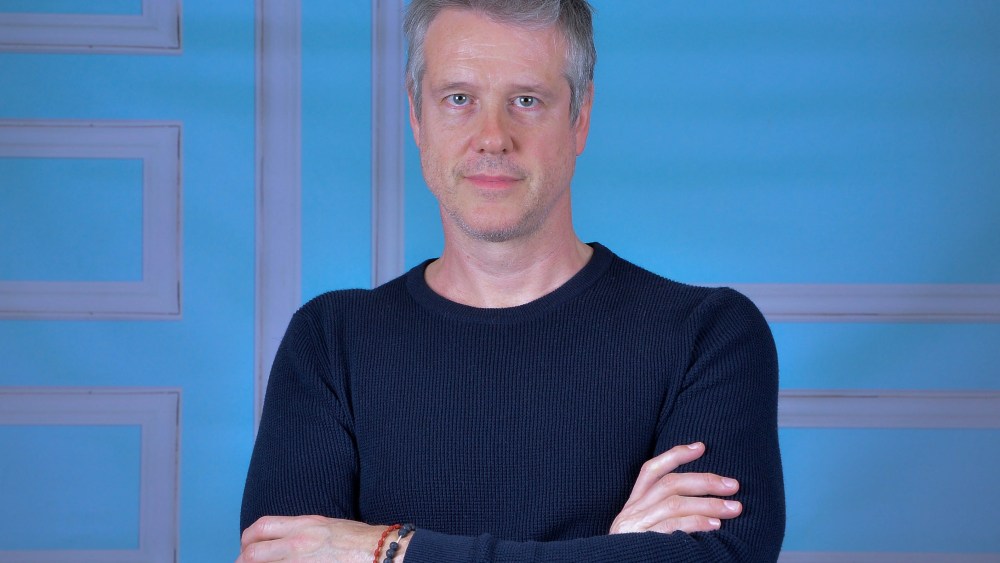
“We believe this is the most important (or the largest) Chilean presence we have ever had. Of course, there have been previous occasions. For example, when ‘Gloria’ was presented and we received a major award, and also for other films,” said Diego Rougier, the new president of the Chilean Film & TV Producers Association, APCT.
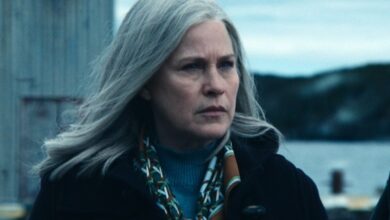
Leading the troika of films is Netflix’s “A Child of My Own,” from two-time Oscar nominee Maite Alberdi (“The Mole Agent” and “The Eternal Memory”), who shot her docu-fiction hybrid in Mexico. Of her experience, she tells Variety: “It was great because it’s a huge industry and the idiosyncrasies are somewhat similar to those of Chile.”
Ana Celeste Montalvo as Alejandra in “A Child of My Own” Courtesy of Netflix / Netflix ©2026
Courtesy of Netflix / 2026
Joining the Berlinale Perspectives sidebar is “Red Hangar” (“Hangar Rojo”), the feature debut of documentary filmmaker Juan Pablo Sallato. Co-produced with Chile’s Villano Prods., Argentina’s Brava Cine and HD Argentina, and Italy’s Rain Dogs, Berta Films and Caravan, it is a testament to Chile’s savvy co-production capabilities.

‘The Red Hangar’, courtesy of Villano Prods.
Given the size of the country’s sales market, Chile has been co-producing for years. Rougier notes: “I believe we have reached a level of maturity in the way we execute projects. We have shown seriousness, responsibility and talent – and that has opened the door to trust. I think co-production is fundamentally about trust. When you visit markets, you meet producers, you start developing projects together and relationships grow over time. Trust becomes the driving force behind these productions. And I believe Chile has shown that it is a serious and reliable partner in co-productions.”
The third picture, recent graduate Diego Fuentes’ “Matapanki,” also a feature debut, was financed through a mix of university funds and various crowdfunding platforms and events that matched the film’s punk spirit, such as live shows and self-managed activities, says producer Tomas Santelices.

“Matapanki” courtesy of Minerva Pictures
He describes their creative process as follows: “We shot on a Canon C300 and designed a workflow that allowed us to ‘dirty’ the digital image as we applied our VFX. We aimed for a grainy black and white look, like a photocopy, refined through meticulous, hands-on rotoscoping to achieve the film’s intended aesthetic.”
“Because our market is very small, we rely on a lot of ingenuity and creativity to continue producing,” says Rougier. “The truth is that we are constantly searching and we are all pushing for more and better tax incentives, just like other countries. We are always striving to achieve better conditions and in the meantime we depend on a high degree of creativity and productivity.”
Chile’s best tool for co-productions is the IFI Audiovisual program, he says, which is ideal for productions with large foreign investments in Chile. “It’s a kind of cash rebate – not a direct cash rebate, but it works on a similar mechanism. The key point is that all production costs can qualify for the rebate if foreign money is involved,” he explains. For location shoots in the metropolitan region or in the capital, you can request a reimbursement of 30% for local costs and 40% for location shoots in the rest of the country.
After several false starts, the country finally launched a film commission in December, now led by coordinator Yerko Martinez Carrere. “Chile’s experience with co-productions, combined with its incredible locations – from deserts to snow, the sea, forests, the Araucanía and Patagonia regions – and its highly skilled technical crews, makes it ideal for major productions. It is a great moment to launch a Film Commission and attract not only local projects, but also international productions to film here,” notes Rougier.
“We have a strong industry, but that is not enough. We must continue to grow to remain competitive and gain the recognition that Chilean audiovisual work deserves. Step by step, the productions we create speak for themselves and pave the way for what comes next.”