Leslie Iwerks’ on how Disneyland was built
Documentary filmmaker Leslie Iwerks was editing Disney+’s “The Imagineering Story” and watching archival footage when she thought, “Wouldn’t it be cool if we could sit in the footage and not have to deal with talking heads?” That idea became the basis for her latest feature film, “Disneyland Handcrafted” – a look into Walt Disney’s dream to build the Happiest Place on Earth, known today as Disneyland, and the artistry and courage it took to create it.
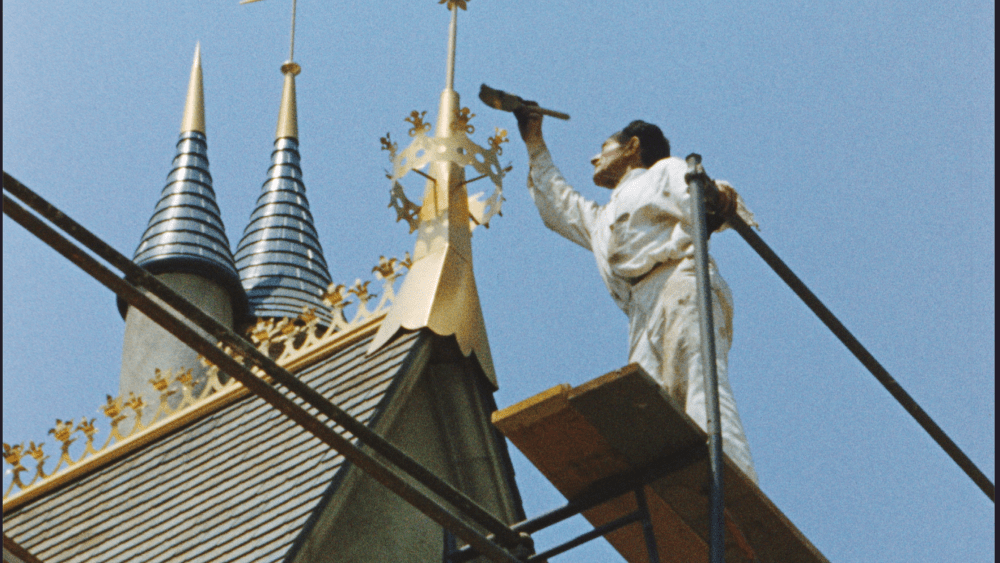
Iwerks focuses on the trials and tribulations of the year leading up to the opening day of Walt Disney’s original Magic Kingdom in 1955. The documentary delves into the period and uses archival footage to explore what happened on site during the construction of Disneyland. Excavated 16mm film reels, unused from the production of “Walt Disney’s Wonderful World of Color” and stored in vaults for years, along with original audio and video, help tell the story.
The title, she explains, came from the editing room. “There were so many shots of hands and the cameramen really focused on the craftsmanship. That’s really what we leaned on, [showing] that this was hand-forged, this was handmade.”
You had the idea of telling a story purely through archive footage. Where did you start?
We [made] a seven-minute proof of concept, and we added sound effects to it, because there was no sound on this footage. We had to carefully create sound effects to make it come to life. That was a whole new layer of reality. We started thinking, “Let’s add sound bites.” We were watching audio interviews about the origins of the park, and as we started researching all these interviews, we started to realize that a lot of what people were talking about was how hard it was, what the challenges were, how impossible it was, and how crazy it was. That became the story we wanted to tell.
There is a wealth of Disney archives. What did the footage look like when you received it?
Disney had this stuff scanned in 2014. But as far as I know, no one had actually used the 2K. We cut it and used it. Once we had a rough cut done, we took it to Different by Design, the Santa Monica Post Office, and we were able to clean up the footage and restore some of the footage that had a lot of grain, hair, or lines. There were probably close to 4000 frames that we cleaned up by hand.
From an audio perspective, there was no audio, so my first choice was Skywalker Sound. They came to me with Bonnie Wild, a re-recording mixer. She’s been mixing this whole thing for at least a week. They were editing and putting in sound effects, shot by shot, authentic to what you see.
They spent a day on sound effects: footsteps in the ground, the cement being dumped on the ground, the scraping of the cement being put in and the rocks. Bonnie said it was one of the hardest projects she’s ever done, and this was even harder because it’s real. You had to be completely authentic.
Taking a look behind the scenes at the Jungle Cruise is fascinating. You’ll see the details of the ride’s animatronics, as well as how the alligator’s individual teeth were handcrafted and everything that went into building it. Why did you record that?
When we did Jungle Cruise, we saw those images. It was fascinating to see Harper Goff trying to put the rock stuff together. We saw his interviews, talked about the budget, and he wasn’t good at math. These are real human stories about trying to construct something without really knowing it, and Walt can say, “I actually know what the budget is, and you should be aware of that.”
The fun part about being on that boat is trying to figure out if the people in the boat are going to get too wet. The fact that Walt sneaks onto the back of the boat without him knowing was just really cute. You see the park in its original DNA.
Is there anything you learned about Walt while putting this together?
What really struck me about this was Walt’s humility. Early on, when you see him being interviewed, they say, “Well, you’re the greatest genius ever.” And he says, “Well, I hope I can make that happen.” I just felt the worry that he had at that moment, that there are people who over-promise, and will he under-promise? Setting up the film that way sets the stage for all the drama that comes next.
If you hear at the very end, it’s not about keeping a bunch of money, it’s about giving it back. It’s about putting it to use. I think it’s a lesson, especially in today’s world. I feel like there are a lot of purity lessons here that will remind us of good values.
Did Bob Iger give you notes on the documentary?
He did. I showed him a fine cut and he said it was very emotional. He really loved it and said, “I would add more conflict.” He said, “Go deep, deal with the conflict hard.” When I saw him again, I said, “Thank you for your note.” He says, “Oh, you took it. Oh, that’s sweet.” We probably would have done it anyway; it wasn’t finished yet because we were still editing.
This interview has been edited and condensed.
“Disneyland Handcrafted” premieres January 22 on Disney+ and Disney’s YouTube channel.