Latest satellite images reveal massive Sargassum arrivals this season
Satellite images analyzed in recent weeks raise new concerns about the size of the coming sargassum season in the Caribbeanwith scientists now warning that the situation could be significantly more serious than previously reported.
Previous estimates indicated that about seven million tons of sargassum migrated across the tropical Atlantic Ocean towards the Caribbean Sea.
Updated observations now suggest that volume has continued to risepointing to what could be one of the largest influxes of sargassum ever.
The latest rating is based on High-resolution satellite data shows extensive and increasingly dense sargassum mats which extends across the central and western Atlantic Ocean.
These floating occurrences are part of the Great Atlantic Sargassum Belta recurring phenomenon first identified in 2011. According to recent images, the belt appears broader and more concentrated than earlier this seasonsignificantly increasing the likelihood that large quantities will reach Caribbean shores in the coming weeks.
An important source of this analysis is the Laboratory of Optical Oceanography at the University of Floridaa research center internationally recognized for its work in satellite-based ocean observation and marine remote sensing. The laboratory specializes in analyzing the interaction of light with ocean water and has developed advanced methods for this detect, track and estimate the biomass of floating sargassum from space. Using data from NASA and international satellite platforms, the scientists provide regular monitoring and seasonal forecasts that are widely referenced throughout the Caribbean.
According to the most recent reports from the laboratory: Sargassum biomass in the tropical Atlantic Ocean is already well above historical averages for this time of year. Researchers note that while not all of the sargassum detected by satellites will eventually make it to land, the unprecedented magnitude currently observed increases the likelihood of long-lasting and widespread coastal impacts throughout the Caribbean basin.
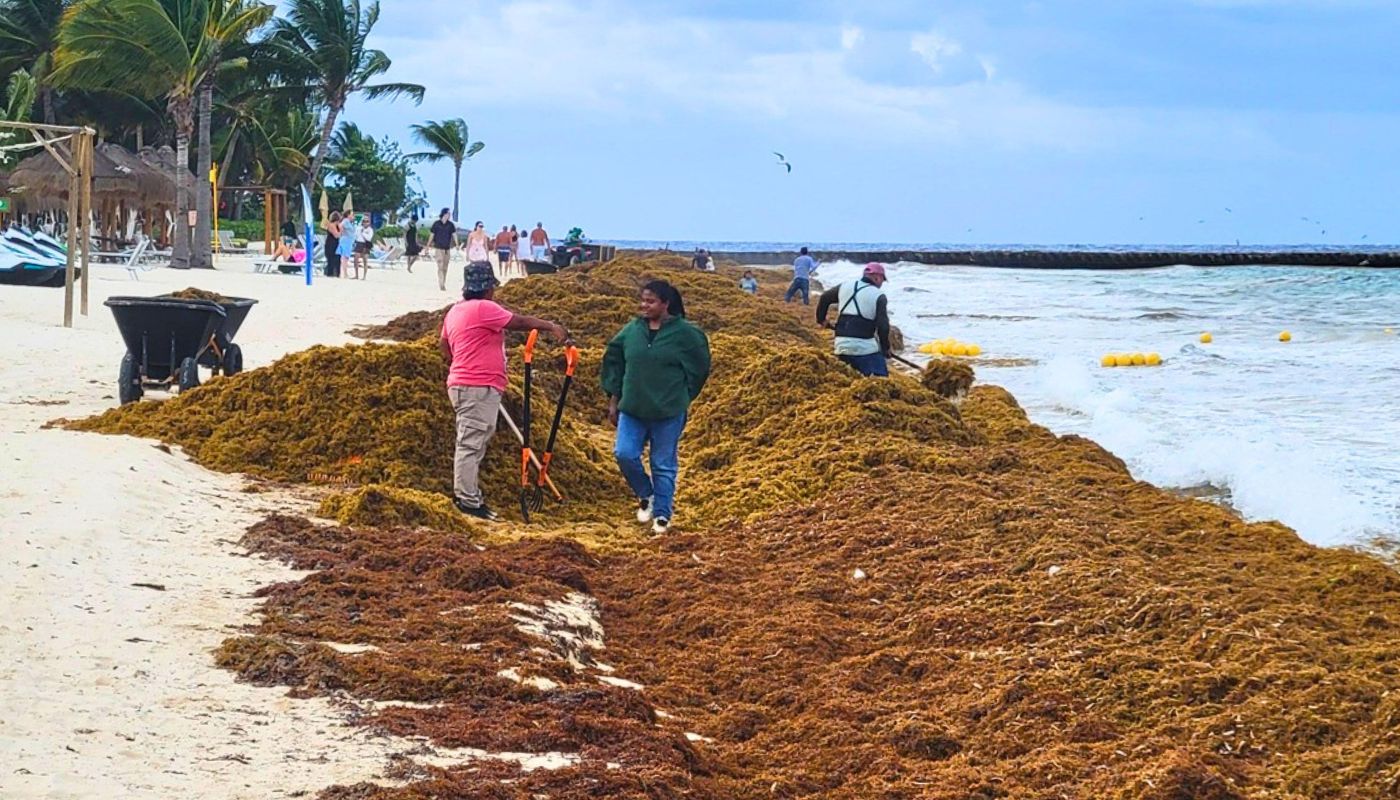
In the Mexican Caribbeanthe first indications of this prediction are already visible. Beaches along the coast of Quintana Rooincluding areas near Cancun, Playa del Carmen, Puerto Morelos and Tulum, have experienced periodic arrivals of sargassum the past few weeks. At multiple locations offshore accumulations have grownThis suggests that more severe strandings may occur as prevailing currents and seasonal winds continue to push the algae westward.
Local authorities and the tourism industry have responded by intensifying monitoring, clean-up operations and deployment of offshore containment barriers. However, environmental specialists warn that continued landings could have an impact coastal ecosystems, water quality and local economiesespecially if arrivals continue for several months.
Because satellite images are constantly updated, scientists emphasize that Early awareness and preparedness remain critical. While uncertainty remains about the exact timing and severity of the landings, Current data shows that conditions are already worse than previous predictions of seven million tons.
The evolving situation highlights the growing importance of satellite science in anticipating environmental challenges that are increasingly becoming a recurring feature of the Caribbean.