Judy Greer and Kara Swisher mix their opinions on AI, Hollywood jobs and aging
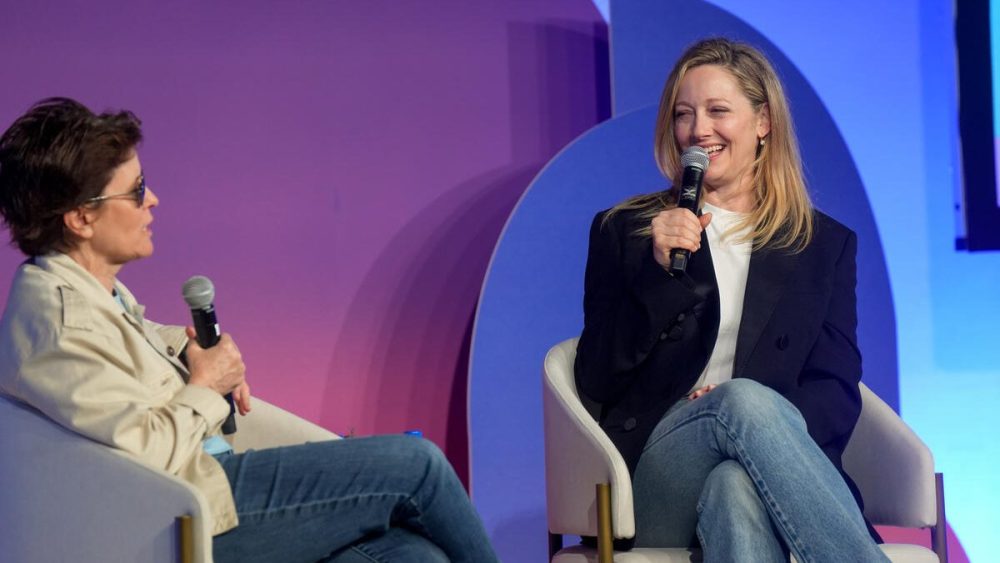
Actor Judy Greer and journalist and TV host Kara Swisher settled in as soon as they sat down.
The pair tackled AI fears, came of age on screen and assessed how the rise of streaming has changed Hollywood’s traditional compensation models during a conversation in the SHE Media Co-lab space at the SXSW festival in Austin, Texas on March 15.
Greer was at the festival as part of the rollout of the indie drama “Chili Finger,” a true crime story revolving around a failed scam plot. She stars opposite Sean Astin, Bryan Cranston and others. Greer described the job picture in Hollywood as “terrifying” for people in the early stages of their careers.
“In the beginning of all the streaming television, we already lost a lot of money. We’re not getting those residuals anymore. People who depended on that for their health insurance no longer have access to that. And so that’s a big, huge change that we’re trying to figure out,” Greer said. “There are so many more jobs, but it feels like no one is working, and now people can’t get their insurance.”
Greer, known for her character on “Two and a Half Men,” “Arrested Development” and numerous other TV shows and films, told Swisher that growing older as an actress is creatively fulfilling. Swisher is a veteran journalist and author and now a TV personality. She hosts the docuseries “Kara Swisher Wants to Live Forever,” about the science and understanding of aging, which airs April 11 on CNN.
“I’m so happy with the way I’m doing. The roles I’ve been offered are so much more layered and interesting, and that’s why I’ve enjoyed this part of my life,” Greer said. “In the future, I tend to see all these older actors, male actors, playing super-evil villains and stuff. And I’d like to see some women play those roles — like ‘Retribution!’ I think it would be interesting. We would do it in a much smarter way,” Greer said.
“One of the things that’s liberating as I get older is that I don’t have to stick to a certain look anymore. I think that’s why the roles become so interesting to me. Even myself, personally, I’m not that concerned about how I look and be beautiful in a movie. I don’t care anymore,” Greer said.
Swisher pressed Greer about concerns about making money as an artist in the age of AI.
“Personally, I’m still a little sheltered from the really scary parts because I’m recognizable. My voice is recognizable. I haven’t had to be scanned [for potential AI reproductions]“Stuff like that,” Greer said. “People at my level and above, it is really our duty to fight for the middle class of what I do. Because people who are background artists, people who are day players, they’re the ones that I think are really going to get super fucked.
Swisher admitted that she has conflicting feelings about how to handle the rapid advance of AI. Greer agreed.
“If we can’t kill this thing, and I don’t know if we should, how can we use the superpower for good and not for evil? Is there something that we can use to love, to take our art to the next level and to take artists to the next level, like the way the iPhone gave a medium to young filmmakers, young people and young artists. Is there a way to use the superpower to help creatives?” Greer asked.
(Image: Kara Swisher and Judy Greer at the SHE Media Co-lab at the SXSW Festival in Austin, Texas on March 15.)