Is vibe coding ruining a generation of engineers?
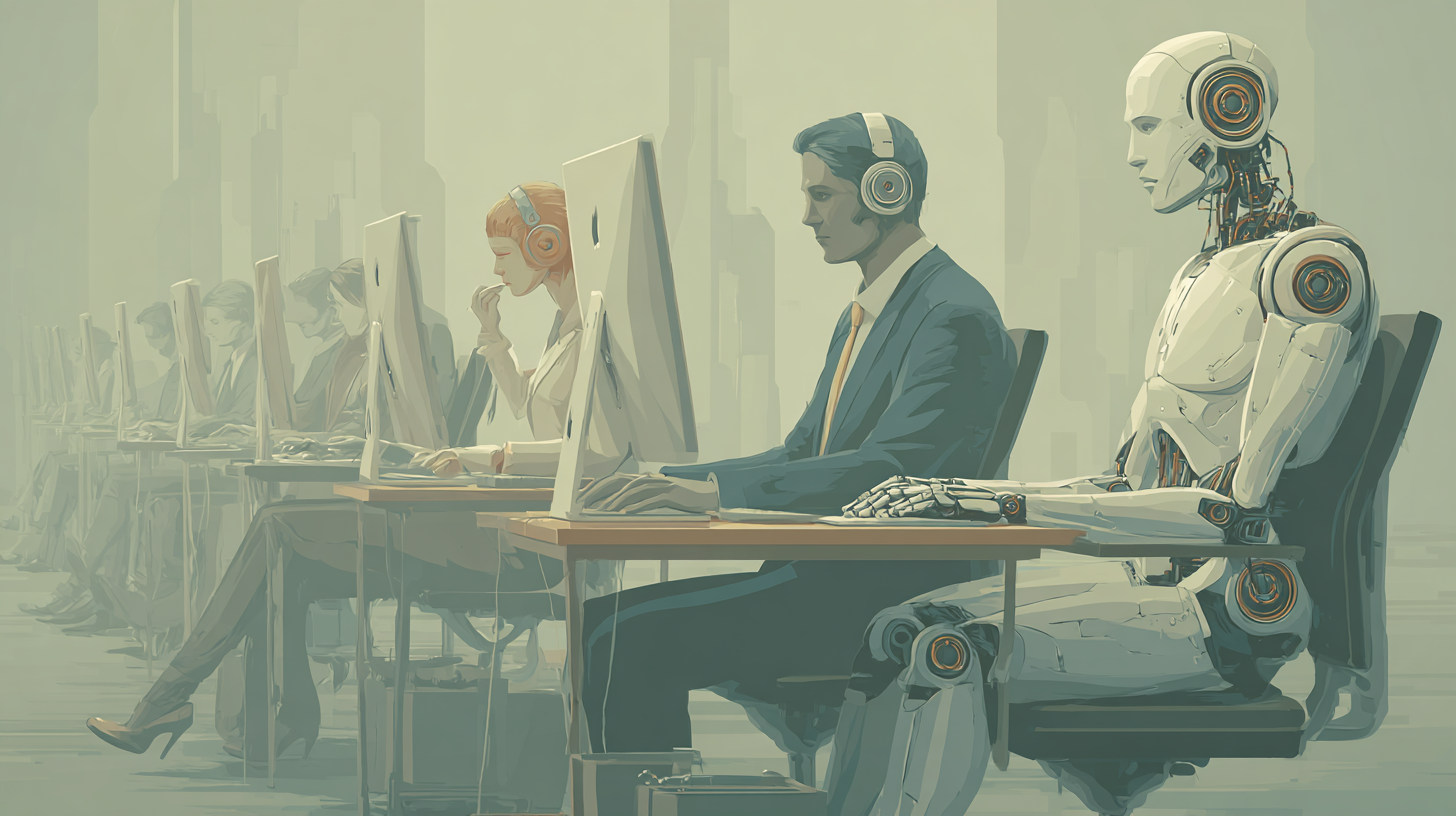

AI tools are revolutionizing software development by automating repetitive tasks, refactoring bloated code, and identifying bugs in real time. Developers can now generate well-structured code from simple language prompts, saving hours of manual effort. These tools learn from massive codebases and provide context-aware recommendations that increase productivity and reduce errors. Instead of starting from scratch, engineers can quickly prototype, iterate faster, and focus on solving increasingly complex problems.
As code generation tools become more popular, they raise questions about the future size and structure of engineering teams. Earlier this year, Garry Tan, CEO of startup accelerator Y Combinator, noted that about a quarter of current customers are using AI to write 95% or more of their software. In an interview with CNBCTan said: “What that means for founders is you don’t need a team of 50 or 100 engineers, you don’t need to raise as much. The capital lasts much longer.”
AI-powered encryption can provide a quick fix for companies under budget pressure, but the long-term effects on the field and the labor pool cannot be ignored.
As AI-powered coding increases, human expertise may decrease
In the age of AI, the traditional journey to coding expertise, which has long supported senior developers, may be at risk. Easy access to large language models (LLMs) allows junior coders to quickly identify problems in the code. While this speeds up software development, it can distance developers from their own work, slowing the growth of key problem-solving skills. As a result, they can avoid the focused, sometimes uncomfortable hours required to build expertise and progress toward becoming successful senior developers.
Consider Anthropic’s Claude Code, a terminal-based assistant built on the Claude 3.7 Sonnet model, which automates bug detection and resolution, test creation, and code refactoring. Using natural language commands reduces repetitive manual work and increases productivity.
Microsoft has also released two open source frameworks – AutoGen and Semantic Kernel – to support the development of agentic AI systems. AutoGen enables asynchronous messaging, modular components, and distributed collaboration between agents to build complex workflows with minimal human input. Semantic Kernel is an SDK that integrates LLMs with languages such as C#, Python, and Java, allowing developers to build AI agents to automate tasks and manage enterprise applications.
The increasing availability of these tools from Anthropic, Microsoft, and others may reduce opportunities for coders to refine and deepen their skills. Instead of “banging their heads against the wall” to debug a few lines or select a library to unlock new features, junior developers can simply enlist the help of AI. This means that senior coders with problem-solving skills honed over decades could become an endangered species.
Over-reliance on AI for code writing risks diluting developers’ hands-on experience and understanding of key programming concepts. Without regular practice, they may struggle to debug, optimize, or design systems independently. Ultimately, this erosion of skills can undermine critical thinking, creativity, and adaptability – qualities that are essential not only for coding, but also for assessing the quality and logic of AI-generated solutions.
AI as a mentor: turning code automation into hands-on learning
While concerns that AI is reducing the skills of human developers are valid, companies should not dismiss AI-enabled coding. They just need to think carefully about when and how to use AI tools in development. These tools can be more than productivity enhancers; they can act as interactive mentors, guiding programmers in real-time with explanations, alternatives, and best practices.
When youAs a training tool, AI can enhance learning by showing programmers why code is broken and how to fix it, rather than simply applying a fix. For example, a junior developer using Claude Code can get immediate feedback on inefficient syntax or logic errors, along with suggestions coupled with detailed explanations. This allows for active learning, not passive correction. It’s a win-win: speeding up project timelines without having to do all the work for junior coders.
Additionally, coding frameworks can support experimentation by allowing developers to prototype agent workflows or integrate LLMs without requiring prior expert-level knowledge. By observing how AI builds and refines code, junior developers who actively interact with these tools can internalize patterns, architectural decisions, and debugging strategies – mirroring the traditional learning process of trial and error, code reviews, and mentorship.
However, AI coding assistants should not replace real mentorship or pair programming. Pull requests and formal code reviews remain essential for mentoring newer, less experienced team members. We are nowhere near the point where AI can single-handedly upskill a junior developer.
Companies and educators can build structured development programs around these tools that emphasize code understanding to ensure AI is used as a training partner rather than a crutch. This encourages programmers to question AI outputs and requires manual refactoring exercises. In this way, AI becomes less of a replacement for human ingenuity and more of a catalyst for accelerated, experiential learning.
Bridging the gap between automation and education
When AI is used purposefully, it doesn’t just write code; it teaches coding, combining automation with education to prepare developers for a future where deep understanding and adaptability remain indispensable.
By embracing AI as a mentor, as a programming partner, and as a team of developers we can focus on the problem, we can bridge the gap between effective automation and education. We can empower developers to grow with the tools they use. We can ensure that as AI evolves, human skills evolve too, creating a generation of programmers who are both efficient and deeply informed.
Richard Sonnenblick is chief data scientist at Map.