Instagram head Adam Mosseri pushes back on MrBeast’s AI fears but admits society will have to adjust
Instagram head Adam Mosseri said AI will change who can be creative, as the new tools and technology will give people who previously couldn’t be creators the ability to produce content of a certain quality and scale. However, he also admitted that bad actors will use the technology for “nefarious purposes” and that children growing up today need to learn that you can’t believe something just because you’ve seen a video of it.
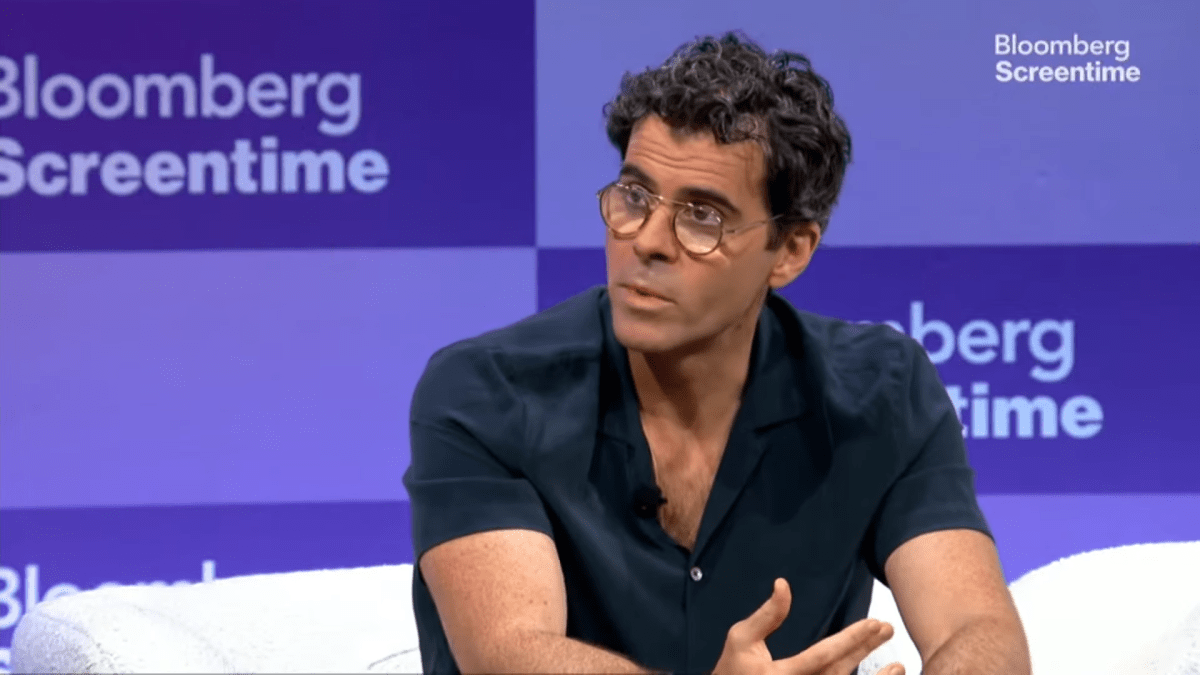
The Meta manager shared his thoughts on how AI is impacting the maker industry Bloomberg Screen Time conference this week. At the beginning of the interview, Mosseri was asked to address creator MrBeast’s (Jimmy Donaldson) recent comments. On Threads, MrBeast had suggested that AI-generated videos could soon threaten creators’ livelihoods, saying these were “terrifying times” for the industry.
Mosseri pushed back a bit on that idea, noting that most creators won’t use AI technology to reproduce what MrBeast has done historically, with its massive sets and elaborate productions; instead, creators will be able to do more and create better content.
“If you take a big step back, one of the ways the Internet made it possible for almost anyone to become a publisher was by reducing the cost of distributing content to virtually zero,” Mosseri explains. “And it looks like some of these generative AI models will reduce the cost of producing content to zero,” he said. (This obviously does not reflect the real financial, environmentand the human costs of using AI, which are significant.)
Additionally, the director suggested that there is already a lot of “hybrid” content on today’s major social platforms, where creators use AI in their workflow but don’t produce fully synthetic content. For example, they use AI tools for color corrections or filters. In the future, Mosseri says, the line between what is real and what is generated by AI will become even blurrier.
“It’s going to be a little less about what is organic content and what is synthetic AI content, and what the percentages are. I think there will be more in the middle than pure synthetic content for a while,” he said.
As things change, Mosseri said Meta has some responsibility to do more in terms of identifying what content is being generated by AI. But he also noted that the way the company had gone about this was not the “right focus” and was practically “a fool’s errand.” He referred to how Meta had initially tried to automatically label AI content, which led to a situation where it did labeling real content as AIas AI tools, including those from Adobe, were used as part of the process.
WAN event
San Francisco
|
October 27-29, 2025
The director said the labeling system needs more work, but Meta also needs to provide more context that helps people make informed decisions.
While he didn’t elaborate on what that newly added context would be, he may have been thinking about Meta’s Community Notes feature, the crowdsourced fact-checking system launched in the US this year, modeled after the one X uses. Rather than turning to third-party fact-checkers, Community Notes and similar systems flag content with corrections or additional context when users who often share opposing views agree that a fact-check or further explanation is needed. It’s likely that Meta could consider using such a flagging system when something is AI-generated but not labeled as such.
Instead of saying that it is entirely the platform’s responsibility to label AI content, Mosseri suggested that society itself should change.
“My kids are young. They’re nine, seven and five. I want them, as they grow up and are exposed to the internet, to understand that just because they see a video of something doesn’t mean it actually happened,” he explained. “When I grew up and saw a video, I could assume it was a recording of a moment that happened in the real world,” Mosseri continued.
“What they’re going to do… they have to think about who’s saying it, who’s sharing it, in this case, and what their motivations are, and why they might be saying it,” he concluded. (That seems like a heavy mental burden for young children, but alas.)
In the discussion, Mosseri also touched on other topics about Instagram’s future beyond AI, including plans for it a special TV app and the newer focus on Reels and DMs as core features (which Mosseri said merely reflected user trends), and how TikTok’s changing ownership in the US will impact the competitive landscape.
On the latter, he said it’s ultimately better to have competition, as TikTok’s presence in the US has forced Instagram to “do a better job.” As for the TikTok deal itself, Mosseri said it’s difficult to analyze, but it doesn’t appear that the way the app is built will change meaningfully.
“It’s the same app, the same rating system, the same creators you follow – the same people. It all works seamlessly,” Mosseri said of the “new” TikTok operation in the US. “It doesn’t seem like it’s a big change in terms of incentives,” he added.