Inside Tokyo’s protest music scene
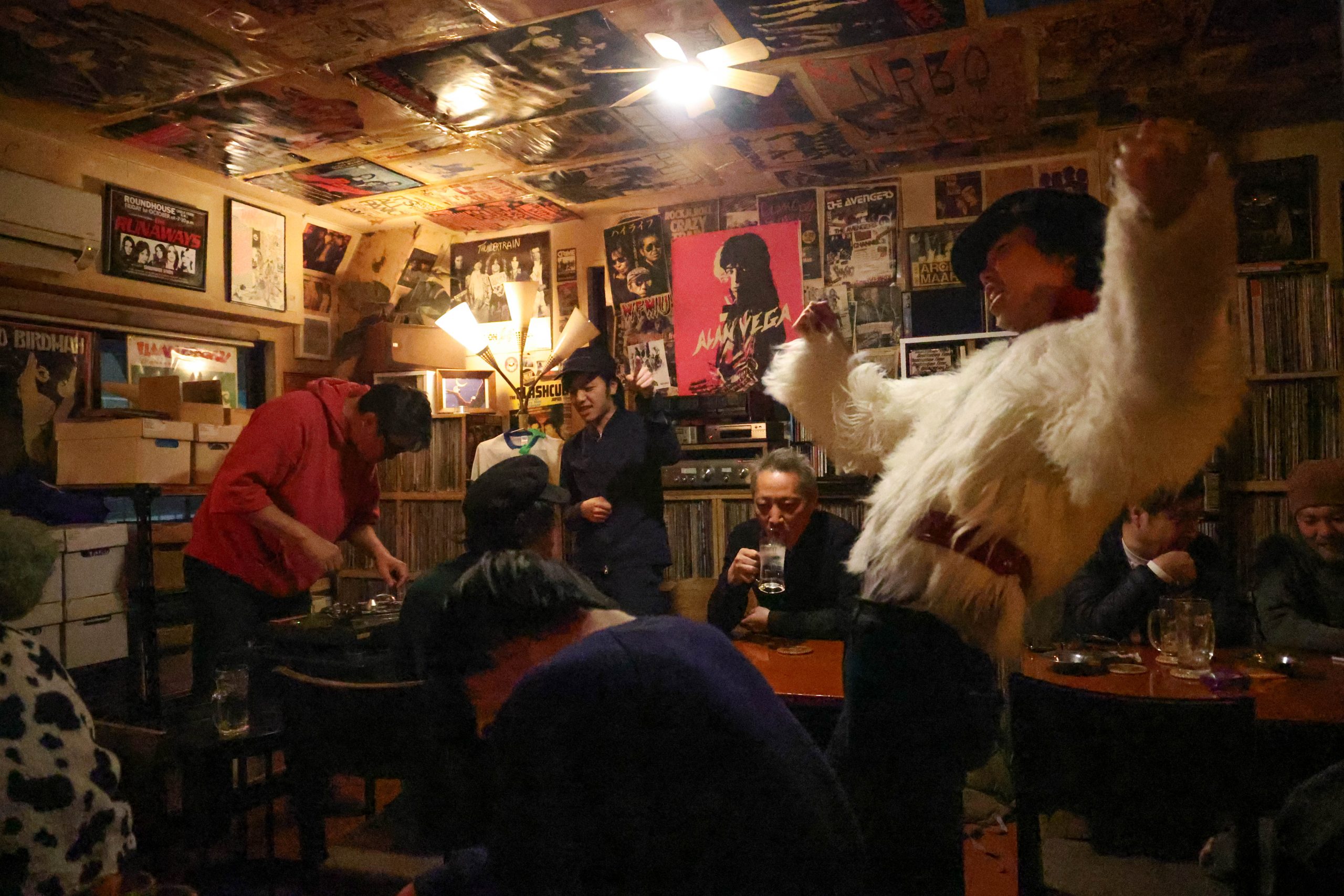
TOKYO – You hear a heavy strumming of power chords from a guitar just loud enough to ring. On the mic, the singer screams. They’re singing about worldwide political issues with passion and anger. This is a protest, but with punk music. And in Tokyo, there is a community of people keeping this form of protest alive.
In the mid-1970s, a new kind of music was created. It was brash, loud, fast-paced and rebellious. It rejected mainstream conventions, polished rock bands like The Beatles and The Rolling Stones. Punk music was first popularized in New York with The Ramones and in London with the Sex Pistols. The bands gained attention for their music’s unconventionality but also its flagrant political messaging.
The genre spread all over the world, with a unique scene taking root in Japan. Here, it can be traced back to bands like SS, G.I.S.M. and The Stalin, who took inspiration from Western bands, but fused it with their Japanese approach, with a direct rejection of an often reserved society.
Before travelling to Japan to dig into the protest music scene, Coco Royal, a music influencer based in Tokyo, told me that it’s rare to find politicized artists in the current Japanese music scene.
“Japanese people don’t really like talking about politics,” said Tokyo music influencer Coco Royal. “Like, you can see they are holding back because you can see they can’t do anything about it or they feel like they can’t do anything about it, so they don’t want to talk about it.”
But, what I found in Tokyo was something else: a rich punk music scene where they aren’t afraid to share their thoughts on social issues, like opposing the war in Palestine, or to the rise of the far-right in Japan.
Just outside of the bustling Shinjuku Station in Tokyo, the political organization Punks Against Apartheid held what they call a “noise demonstration” with bands playing in support of Palestine. A crowd gathered as Rebecca Marie Goldschmidt, the coordinator for the event, spoke. She was born in the U.S., but now lives in Nagasaki and visits Tokyo for several of her organization’s events.
“We’re here today to bring the true spirit of punk rock music, which is anti-system,” she said. “But with respect to all people’s differences, respect to all people’s realities.”
People in the crowd gathered around the stage passionately chanting and holding signs that read: “No Nukes,” “Free Palestine” and “Stop Genocide.”

“Punk rock music to me, and protest music to me, is so important. It’s an art form that allows people to express their anger and their frustration and it’s also a way to get your aggression out,” said protester Meredith Blake Hackleman, another American in the crowd who was in town for a series of music-related protests.
Another event at Sub Store, a small bar in the ward of Koenji, was packed with people who were there to view Palestinian artwork and listen to music. Among them were musicians who put their political passions into their art.
“My band is punk, hardcore punk, it’s not only for Palestine,” said harcore punk singer and a composer Sailor Kannako. “I cannot experience the struggle, but the system. The same system oppresses me, so I write about it.”

“Many Japanese people don’t know [the] problem about Palestine and [Japanese Prime Minister Sanae] Takaichi,” said musician Nerakat. “But they like music. So, I hope many people get interested in problems through music. Music power.”
In Chofu, on the west side of Tokyo, an event called Fight for Rights featured 14 musicians at a small venue. All of the participants were there to perform in support of that premise.
I walked down a series of narrow stairs leading me to a heavy door. Behind it, groups of people held drinks and chatted. On stage, a musician was tuning his guitar while others shuffled equipment. It wasn’t long before the lights dimmed and lively music from the band The Spastman filled the space.

The music wasn’t only punk music, there were also ska, Latin and folk bands. But they all had one thing in common — they were there to play music that had a message, and the audience was there because it resonated with them.
Some sang about nuclear bombs, others screamed against right-wing Prime Minister Sanae Takaichi, and one band sang about the importance of inner reflection.
Contemporary examples of Japanese protest music are the bands such as Ballad Shot, The Spatsman and The Redemptions.
In a country thought by many to shy away from politics, Japan has a protest music scene alive and thriving … if you dare to listen.
Related