Inside the prison with Nicolas Sarkozy – Riots and VIP benefits
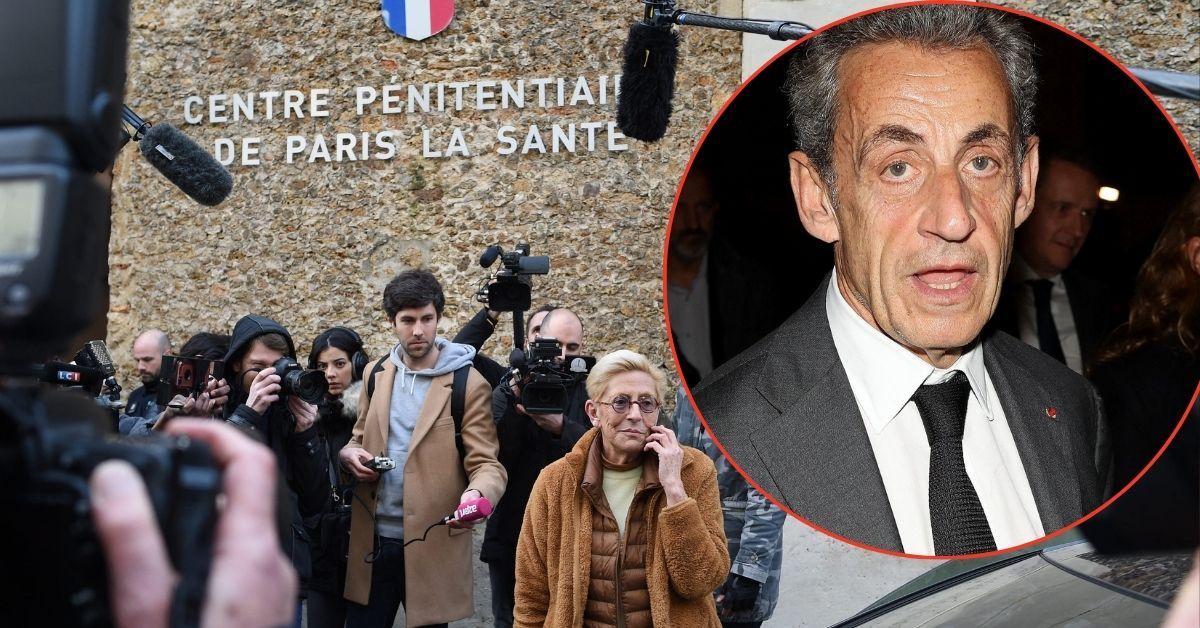
Former French President Nicolas Sarkozy will soon be held in solitary confinement in Paris’ infamous La Santé prison – a fortress infamous for executions, riots and daring escapes, but now equipped with a discreet VIP wing for high-profile prisoners. RadarOnline.com can reveal.
Sarkozy, 70, was sentenced to five years in prison after being convicted by the Paris criminal court of “criminal conspiracy” to launder millions of dollars he allegedly received from Libyan dictator Colonel Muammar Gaddafi to finance his 2007 presidential campaign.
Article continues below advertisement
Lonely life for the former president of France
Article continues below advertisement
Nicolas Sarkozy received a five-year prison sentence for criminal conspiracy.
Article continues below advertisement
The verdict followed a three-month trial that ended in April and involved 11 co-defendants, including three of Sarkozy’s former ministers.
Judge Nathalie Gavarino said the former leader “allowed his close associates to act with the aim of obtaining financial support from the Libyan regime.”
Sarkozy maintains his innocence and has promised to appeal.
Sources close to the French prison service have confirmed that Sarkozy will now be transferred to La Santé, in the city’s 14th arrondissement.
He will serve his sentence on the top floor of the isolation wing, separated from other inmates and under constant supervision.
“He will be given a cell equipped with a bed, desk, shower, toilet and stove,” said a senior justice official. “He can request a small refrigerator and a television. For security reasons, he will not mingle with the general population.”
Article continues below advertisement
La Santé: a prison steeped in dark history
Article continues below advertisement
Sarkozy vowed to appeal the verdict after his conviction in April.
Article continues below advertisement
La Santé, built in 1867, has one of the darkest histories of French prison life. Once home to serial killers, political dissidents and gangsters, it has long been ruled by violence and fear.
Between the end of the 19th century and 1972, dozens of prisoners were executed by guillotine there – including Roger Bontems and Claude Buffet, the last men to suffer that fate in France after a failed escape attempt left a nurse and a guard dead.
The prison’s fame was raised by a series of riots and escapes, including the spectacular 1978 escape of gangster Jacques Mesrine, who scaled the outer wall and disappeared into the streets of Paris, and another in 1986 when inmate Michel Vaujour escaped by his wife’s helicopter.
Article continues below advertisement
Brutal circumstances and scandalous revelations
Article continues below advertisement
La Santé prison once housed infamous figures such as Carlos the Jackal.
Article continues below advertisement
The facility’s grim conditions were exposed in 2000 by the former chief medical officer, who described “a city of shadows” plagued by overcrowding, vermin and disease. His book details how suicidal prisoners were bound in chains and how trench foot and infections spread in filthy cells. The scandal led to partial closures and renovations, but critics say reforms have been slow.
“The physical structure has been modernized, but the ghosts remain,” said a former guard.
Despite its violent past, La Santé also has a ‘special area’ for notable prisoners: a quieter area designed to ensure safety and privacy. It has housed figures such as Panamanian strongman Manuel Noriega, terrorist Carlos the Jackal and a range of high-profile politicians.
READ MORE ABOUT Entertainment
Article continues below advertisement
A controversial verdict and a divided nation

Never miss one again

Daily updates from the heart of Hollywood, straight to your inbox
By entering your email address and clicking Sign Up, you agree to send you customized marketing communications about us and our advertising partners. You also agree to our Terms of Service and Privacy Policy.
Article continues below advertisement

Sarkozy’s son Louis called for a peaceful rally to support his father.
Sarkozy’s incarceration there will revive debate over France’s treatment of former leaders convicted of crimes. Justice Department sources said his placement in isolation was “a matter of necessity, not privilege.”
He gets two practice sessions a day and is monitored by security guards at all times.
Outside the prison, Sarkozy’s 27-year-old son, Louis, has called for a peaceful rally in support of his father.
He wrote on Instagram: “This rally is not political. This is neither a protest nor an indictment. It is simply a gesture of support – a silent testimony worthy of a grateful country to a man who dedicated his life to it.”
La Santé is now both a symbol of France’s turbulent penal history and the stage for an unprecedented chapter in France’s political life – where a former head of state will now serve time behind its towering, centuries-old walls.