Innamorata ending explained, author Ava Reid on book 2 plans
SPOILER ALERT: This story contains spoilers for Ava Reid’s “Innamorata,” released March 17 by Penguin Random House.
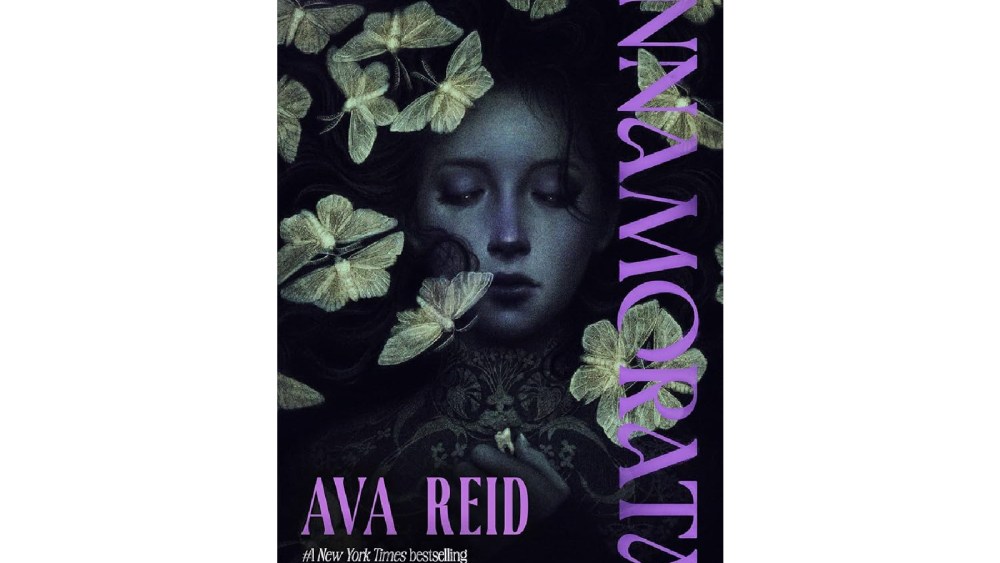
Ava Reid’s latest novel, “Innamorata,” ended with such a twist that the author says she would make a $1,000 wire transfer to any reader who could predict it.
In the epic fantasy novel, released Tuesday from the author of “A Study in Drowning” and “Lady Macbeth,” her protagonist, Agnes, was slaughtered and posthumously raped by her love Liuprand on the orders of her cousin Marozia, then left dead in the bowels of Castle Crudele. But before the book ends, our omniscient narrator reveals an even more shocking ending: Agnes, thought to be sterile, now grows life in her corpse.
Reid, who just completed a new cut of the sequel to ‘Innamorata’, has a further explanation for what’s going on here.
“She inadvertently accomplished Adele-Blanche’s mission,” Reid said Variety this week. “But it’s important to remember that everything that grows in Agnes’ womb is just that much from Liuprand as it is hers. That’s my opaque tease of what’s to come. My other thing was that names are really important, and I chose all the names – they’re all pretty much historical names – as specific references. And sometimes they refer to the character’s fate. So I’d pay attention to the names of the House of Blood characters, especially if you want a hint as to where the sequel is going. And I would look at Minoan culture and Greek tragedy. There are elements of ‘The Oresteia’ that are very much in the Agnes-Marozia-Liuprand love triangle, right down to the symbolic sacrifice of the daughter. And it’s clear that Agnes has an element of Cassandra’s vision of the future. We’ll see more of that element in Book Two as well.”
While Reid isn’t currently adapting “Innamorata” for the big or small screen — though she has a film project in the works for one of her previous titles — she will say she has no plans for any potential adaptation to be a live-action project.
“The only way I could see this happening is as an animated fantasy for adults, along the lines of ‘Castlevania,’ because I can’t fathom how you would adapt some elements of this with live human actors,” Reid said. “And I guess because it’s so much like classic fantasy, I wouldn’t want it to get the grittier gray aesthetic that a lot of live-action fantasy often gets. If it were a colorful, bombastic ’90s fantasy adaptation, but not the kind of boring, vaguely medieval, gray live-action. No shade, but the trailers for ‘The Odyssey’ don’t look very promising, just aesthetically speaking. But ‘A Knight of the Seven Kingdoms’ has made me hopeful for a return to that more, literally and figuratively, colorful age of fantasy.”
See below for more of it Variety‘s interview with Reid about the making of “Innamorata” and what’s to come next.
How did you come up with the idea for “Innamorata”?
Not all books come together in such a way that I immediately know what the book is and what I want it to be. And this was one of those books where, as soon as these disparate sources of information came together, I knew from page one what the book was going to be and what I wanted it to be – and it wasn’t a novel, of course. But this book is very meta in many ways, so I deliberately played with some of these romantic tropes. As if the ‘fated soulmates’ was something I almost parodied in this book. And forbidden love and romance and ‘Romeo & Juliet’, that also had a major influence on this book. From day one I knew this was going to be an escalation of what I’ve done before, but also a kind of return to my roots with ‘Juniper & Thorne’. I said this one is for the “Juniper” girls, and I think it really is. And “Juniper” was a book that was so important for me to publish early in my career and that not only raised reader expectations but also helped clarify my own identity as an author. And so I think this has paved the way for ‘Innamorata’, and I can write and publish it with confidence.
Agnes is dead at the end of “Innamorata” – but does that mean she won’t be a character in the sequel?
I will say that Agnes is a character in the second book, but she is not a POV character. And I made a joke in my Instagram Stories, because people ask about Waltrude – they love Waltrude so much, my unproblematic queen – “Waltrude will return in ‘Innamorata: Doomsday.’” Some of the returning POV characters are obviously Pliny, Maleagant (the sorceress of the outer wall), Ninian. What I don’t think readers will expect is that we have a new central narrator, and this is a character who is more of a side character in “Innamorata.” And the hint I gave to one of the readers was that there is a chapter named after this character, but they haven’t spoken any dialogue yet. So that’s my little hint as to where the sequel is going. And this sequel will go more in the direction of epic fantasy. Where the first book is more gothic, the sequel is more epic, grim, dark fantasy and court politics.
What else can you tease about the sequel?
The sequel is also divided into three books, but in this case they are three different storylines. Like in “A Song of Ice and Fire,” you have Catelyn and Rob, and then the King’s Landing section, then maybe Jon’s section and Dany’s section. So it’s more like that. [In the sequel,] Book One follows a certain set of characters in a certain location, and Book Two is a certain set of characters in a certain location, and in Book Three we bring them all together.
We’ll see more of the islanders and the other houses we haven’t seen yet, and how they understand the difference between themselves and the Seraphine. You remember, this is still a very new world order. It has only been about a century since Berengar came and their ancient customs were eradicated. Many of these houses still retain reminders of what used to be, and in Book Two we will see that quite a few customs survived the conqueror. We will see the looseness of the structure of this society. And we see hints of that, with Liuprand feeling like the island is being held together by popsicle sticks and tape.
What did you see as your main influences for “Innamorata” and what are your influences for the upcoming sequel?
I’ve always thought of ‘Innamorata’ as a real, true, classic fantasy. It’s not romance. But it’s also a strange, almost “Into the Spiderverse” of different kinds of fantasy. You have the Gothic fantasy of the influence of country houses from ‘Gormenghast’. The grim, dark, epic influence of ‘A Song of Ice and Fire’. You have the classical epic influence from the Renaissance of the ‘Orlando Innamorato’.
And in Book Two there are also many other classic fantasy influences. ‘The Death of Arthur’, ‘Le Morte d’Arthur’ by Thomas Malory has a big, big influence on the sequel. “Dune” also had a major influence on the sequel. I just got tagged in a review that said, “This has the politics of ‘Dune,'” and that made me so happy. We have a devious matriarch, one of my favorite character archetypes. This one is a take on many of the “chosen one” archetypes, and that trope in fantasy. We will see more influence from Cretan history and Cretan culture, because that was a big part of it too, and that will play a bigger role in Greek history. The Minoan culture had a great influence on the things that happen in the sequel. My editor, I like the way she describes things. She said the sequel is a kind of “death metal, chivalric romance.”
This interview has been edited and condensed.