Immigration lines less than 30 minutes in Cancun? Here’s what’s improved and what’s still causing delays
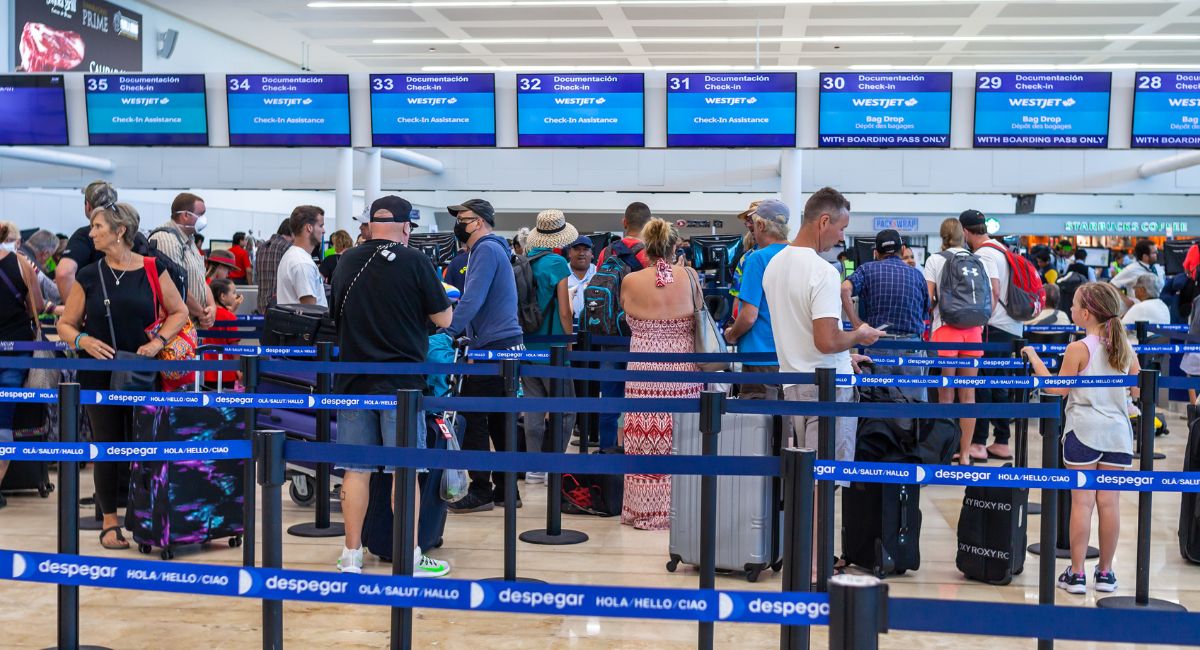
Cancun International Airport has long been a stress test for peak season arrivals: multiple international banks landing in minutes, limited processing space and lines that can wipe out the first hour of a vacation.
Ahead of the 2025-2026 peak season, Quintana Roo officials have been pushing a new message: entry processing is being redesigned with speed in mind.
Recently local reporting quotes Governor Mara Lezama’s statement Immigration wait times have been reduced to a maximum of around 24 minutes, with a commitment that these will “not exceed 30 minutes” during peak season.
Other state communications, linked to coordination with Mexico’s National Migration Institute (INM), say improvements in personnel and infrastructure have already reduced wait times to as little as 20 minutes in some periods.
What has changed: staffing, automation and a clearer service standard
The most important operational shift is a broader reliance on Mexico’s automated migration filters—self-service border control gates, often called e-gates.
Mexico’s diplomatic guidelines describe these filters as automated immigration controls that allow eligible passengers to enter “in a personal, expeditious, safe and free manner,” without direct interaction with an officer, and confirm that they are operating in Cancun Terminals 3 and 4.
Eligibility is specific and also explains why some travelers still see traditional lines. Requirements include are 18 or oldertraveling for tourist purposes, do not travel with minorsand holding one ordinary electronic passport from an eligible country (including the United States, Canada, the United Kingdom and much of Europe).
On the supply side, Quintana Roo’s communications agency has linked improved performance to more agents and infrastructure, reporting that wait times at Cancun airport have been reduced to only 20 minutes.
Discussions were also held with the INM Commissioner on expanding e-gate capacity and streamlining inadmissibility procedures – an operational detail that matters because secondary processing can slow down a concourse even if most travelers are moving quickly.
Local reporting adds that officials are preparing for increased visitor numbers in 2026 and have discussed the installation another 20 e-gates next year – an expansion intended to push more passengers through automated lanes.
What still causes delays: the bottleneck has not disappeared; it has been moved

Even if passport control speeds up, an ‘expedited immigration’ experience does not guarantee a quick exit. The main bottlenecks are known – and in some cases are exacerbated by faster immigration.
Luggage delivery is now the swing factor. When immigration flow improves, passengers can reach baggage claim faster than ground crew can unload and deliver baggage. Travel reporting has explicitly highlighted this discrepancy: If you clear immigration in minutes, you may still find yourself standing at a carousel waiting for checked luggage.
Not everyone can use the e-gates. Families with children, travelers under 18 years of age and other categories must use manned counters. At peak times, those lines can swell, even if the e-gates are moving quickly, because eligible and ineligible flows are processed differently.
Technology uptime is important. Automated lanes are exceptionally fast when they are functioning. When kiosks are unavailable or operating below capacity, passengers are diverted to manual inspection and the wait time cap becomes more difficult to maintain during clustered arrivals.
The “Shark Tank” after customs can cause minutes and confusion. A recent report described the hallway pitch that attracts new visitors: uniformed salespeople asking, “Taxi?” and “Information?” – a presentation that can hold up travelers and redirect them to expensive transportation or timeshare counters. Cancun sun
How to use the improvements: a realistic arrival playbook
The best way to take advantage of Cancun’s faster processing is to combine it with practical risk management:
Confirm your terminal and eligibility. Automated migration filters are confirmed in Terminals 3 and 4, with strict eligibility rules (18+, tourism, no minors in your party, eligible e-passport).
Consider the 30-minute claim as a target, not a guarantee. Officials and local reporting indicate a maximum of 24 minutes and a high season standard of 30 minutes, while state communications cite periods as short as 20 minutes. Your experience will still depend on arrival banks, staffing levels and system uptime.
Reduce exposure to luggage. When speed is important, traveling with carry-on only is the most reliable way to translate faster immigration into a quicker exit. If you need to check luggage, plan for buffer time.
Book transportation in advance and avoid requests in the terminal. The most consistent pain point for travelers remains the confusion between official services and aggressive sales. Meet your driver outside; don’t stop for “help” offered in the hallway.
Cancun’s arrivals hall is not frictionless. But the combination of extensive staffing, wider availability of automated gatesAnd public performance standards signals a sustained operational effort to make the two-hour immigration story the exception, not the norm.