Illustrations by Blemmyes (ca. 1175–1724) – The Public Domain Review
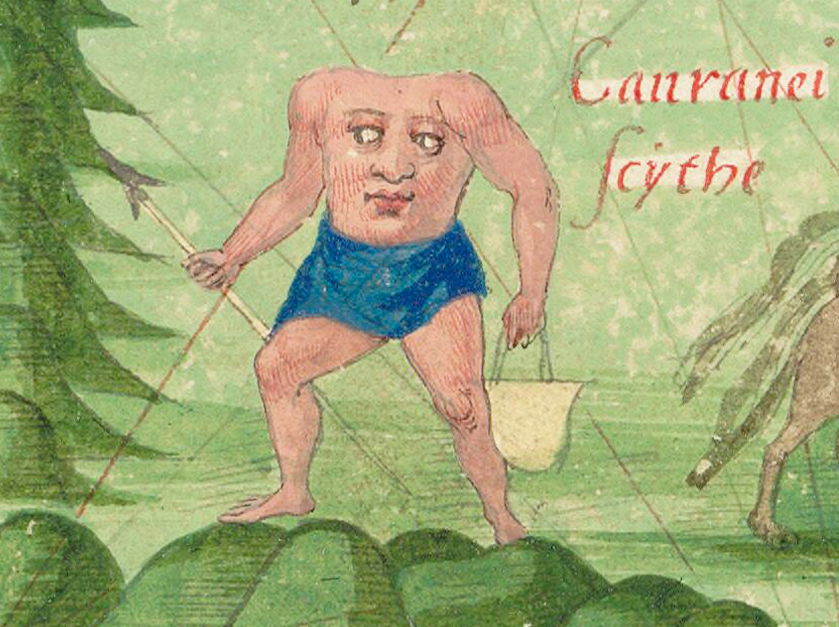
No matter that a tribe of headless humans never existed, their inclusion in ancient histories made them popular fodder for later bestiary and travelogue traditions. Beginning with their appearance at the end of the tenth century Wonders of the Eastthe Blemmyes often look as confused as we do – staring at the viewer, as if trying to figure out where exactly their neck went wrong. In these illustrations, Blemmyes often have equally strange bedfellows. The thirteenth century Rutland Psalter illustrates a headless archer aiming an arrow at some sort of merman playing the trumpet with his butt; a manuscript from about 1475 of the Miroir Historical has a Blemmye jumping around with a dog-faced friend and a man with a tongue like an elephant’s trunk; an illustration from Giovanni Battista de’ Cavalieri’s monster book from 1585 shows a Blemmye who regrets what he wished for: he finally has a head and a neck, but it is grafted onto an angry swan. Sometimes they are terrifying, brandishing clubs and crossbows, and sometimes unexpectedly cute, as in a sixteenth-century copy of Zakariya al-Qazwini’s The wonders of the creatures and the wonders of creation (1280), where an orange Blemmye is embarrassed by the bipedal jackals dancing above his missing head.