How Australia and NZ rules on plant milks differ from overseas, where cows make the only ‘milk’
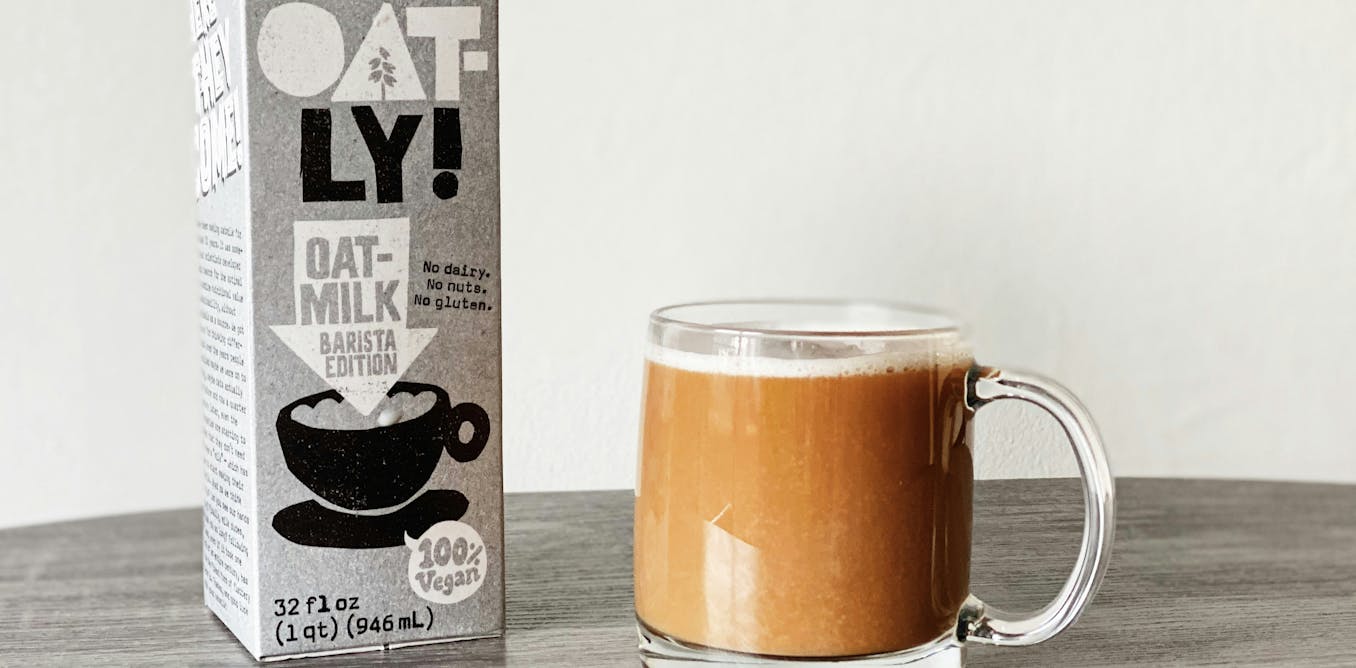
Last month, the UK Supreme Court ruled that plant-based drinks maker Oatly could not use the phrase “Post Milk Generation” as a trademark, effectively banning the use of the word “milk” on their cartons.
The decision marked the end of a long legal battle between the Swedish drinks manufacturer and the British dairy industry. Dairy UK, which represents the country’s dairy farmers, has objected to Oatly’s trademarking of the term ‘post milk’, saying its use of the term ‘milk’ is deceptive.
The UK Supreme Court upheld Dairy UK’s case, citing UK regulations that limit the use of “milk” to its use to describe food derived from “mammal secretions”. In Great Britain and the European Union, only cow’s milk can be called “milk”.
But what are the rules for plant-based drinks in Australia and New Zealand? And are consumers here confused by the word “milk” on everything from soy to almond and oat drink cartons?
What are other countries’ rules regarding the labeling of ‘milk’?
The British regulations referred to in the Oatly case were actually based on European Union rules, which had been adopted by the United Kingdom before Brexit.
EU regulations have been in place for more than ten years. The words “milk”, as well as other dairy words such as “cheese”, “butter” and “cream”, are all prohibited from being used to describe plant-based products sold in the EU.
According to EU rules, only cow’s milk can be called simply “milk”. Any other type of mammalian milk must be identified, such as “sheep’s milk” or “goat’s milk.”
In the United States, by contrast, some plant-based drinks may be labeled as “soy milk” or “almond milk” because these names have been established through common usage.
But there is a long-running bipartisan campaign to ban the word “milk” from being used for anything other than dairy there, too.
Critics argue that the U.S. Food and Drug Administration has failed to enforce its own detailed standards, defining milk as “the milk secretion” […] obtained by completely milking one or more healthy cows”.
US Democrat Senator Tammy Baldwin, who led a nearly decade-long campaign, says:
Calling non-dairy products “milk” or “yogurt” that do not contain dairy and instead come from a plant, nut or grain harms dairy farmers […] and causes consumer confusion about the nutritional value of dairy products versus imitation products.
What is allowed in Australia and NZ?
Demand for plant-based drinks is growing in both Australia and New Zealand.
Australia and New Zealand have a shared food regulator, Food Standards Australia New Zealand (FSANZ). In 2016, the regulator updated the trans-Tasman Food Code to allow plant-based foods and drinks to use terms such as milk.
Using soy milk as an example, the regulations say:
The context in which foods such as soy milk or soy ice cream are sold is indicated by the name soy; which shows that the product is not a dairy product for which a dairy standard applies.
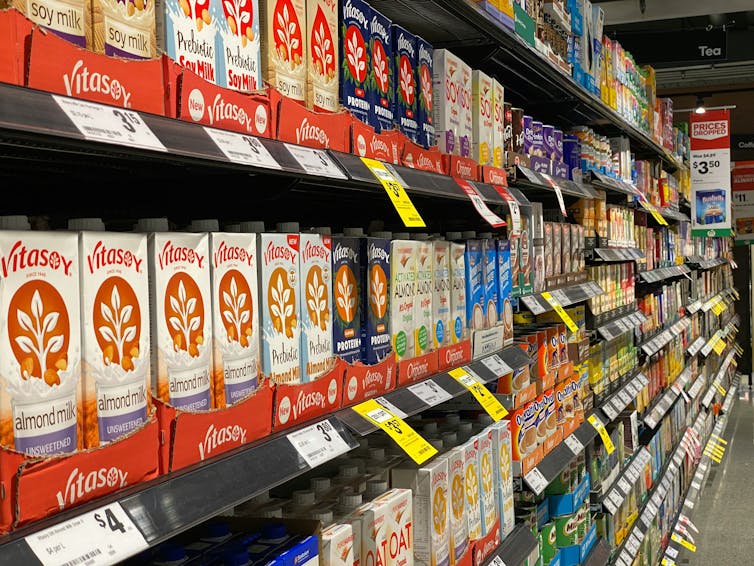
That’s why you see “almond milk” sold in supermarkets in Australia and New Zealand. The same products must be sold as almond drinks in the EU and the UK.
However, in recent years that decision has been revised again.
Consumer research into plant-based milk
One of the dairy industry’s main concerns is that using “milk” for plant-based drinks could mislead consumers. As Ben Bennett, president of the Australian Dairy Farmers, said last week:
Words are important. When consumers pick up a product labeled “milk,” it must come from a cow – not a marketing department.
In response to these long-standing concerns, the food regulator has conducted several studies, including a 2025 consumer research report involving almost 3,000 Australians aged 18 to 90.
That report found that these consumers were generally able to quickly and confidently distinguish plant-based beverages from their dairy counterparts. It also showed Australians were largely aware of the nutritional difference between dairy milk and plant-based products.
Franki Chamaki/Unsplash, CC BY
So ‘oat milk’ is here to stay
On January 30 this year – less than a fortnight before the UK court ruling – Australian Agriculture Minister Julie Collins announced that the government would work with the Alternative Proteins Council to “strengthen existing voluntary labeling guidelines” into a new code of practice for the industry.
Those existing guidelines provide examples of how plant-based drinks can be labeled in Australia and New Zealand, such as ‘oat milk’ or ‘almond milk ice cream’.
So if you ever go shopping in Britain or Europe, keep an eye out for oat drinks on the supermarket shelves. But in Australia and New Zealand, you can expect oat milk to remain on those cartons.