Hold your ground: how a community in Brazil deals with rising tides
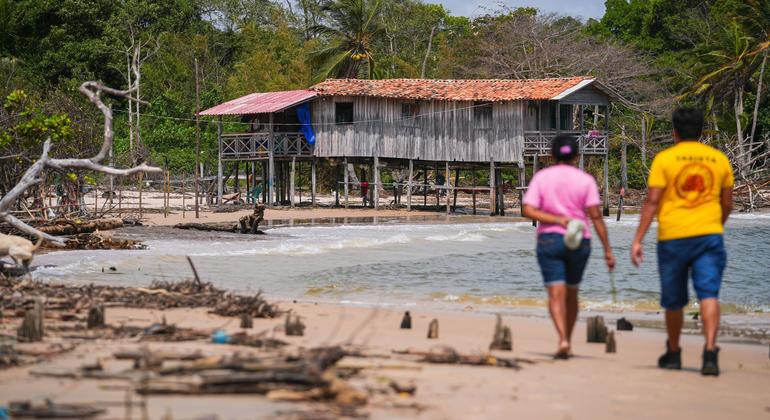
From there, she and her husband fished, planted crops and raised animals. “I was a very happy person on that little piece of land – that was my paradise,” she says.
Then came the night that changed everything. The rain came with thunder and lightning that tore through the darkness and shook the small houses along the shore.
Ivanil was forced to move due to rising tides and coastal destruction.
In Vila do Pesqueiro, a small traditional community facing increasingly rapid tides and coastal erosion, families gathered during the storm that would change their lives.
Nearly two years later, the memory remains vivid for Ivanil – every sound, every flash of lightning, a reminder of how close the sea had crept.
When the tide moved through the community in February 2024, it took with it the land they had called home for generations.
Ivanil and her neighbors had no choice but to leave their home and rebuild their lives further inland. The distance was short, less than a kilometer, yet the change felt enormous.
“Even though we haven’t moved far, it feels like a completely different world,” Ivanil explains. “This is a mangrove area – hotter, noisier and not a place where we can raise animals or grow crops.”
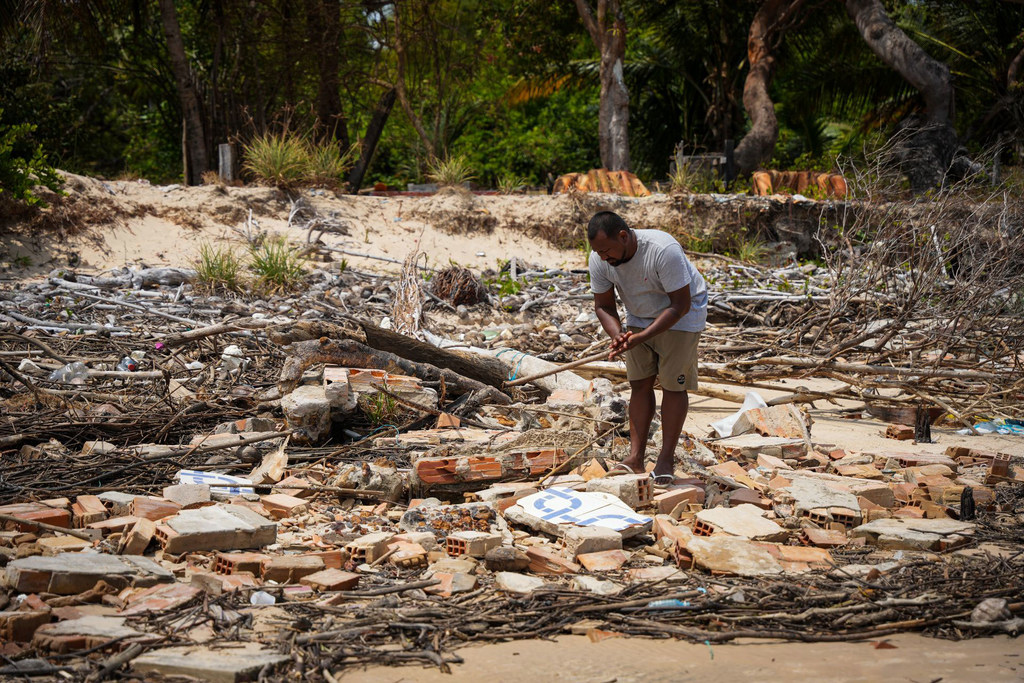
Jhonny, Ivanil’s son, searches the rubble of destroyed houses.
Vila do Pesqueiro is home to approximately 160 families in the Soure Marine Extractive Reserve, a protected area.
It is located across the mouth of the Amazon River from Belem, where the international community is currently meeting at the UN Climate Change Conference known as COP30.
The displacement of people due to extreme weather and climate change is one of the key issues that will be discussed.
Reserves such as Soure Marine are designed to protect the livelihoods and culture of traditional peoples while promoting the sustainable use of natural resources.
Fishing remains the community’s main source of income, while local gastronomy and small-scale tourism help families keep their heads above water.
Precarious existence
But as the tides continue to rise, livelihoods and homes become increasingly vulnerable.
For many in the village, the changes have become deeply personal. Living next door to Ivanil is her son Jhonny, a fisherman and university student who had just passed his entrance exams for a degree in biology when the tide hit.
He grew up watching the ocean change year by year, with stronger tides and faster erosion gradually reshaping the coastline he once knew.
Jhonny remembers how quickly everything started to change. Each season the water crept a little closer, until one day it reached their house. “The place where our houses used to be is now under water,” he said.
He often thinks about the families still living near the water, knowing stronger tides are expected next year. “For me, moving is not just about safety,” he says. “It’s about protecting the place and the people who have shaped my life.”