High school assistant coaches play hidden role in shaping athletes
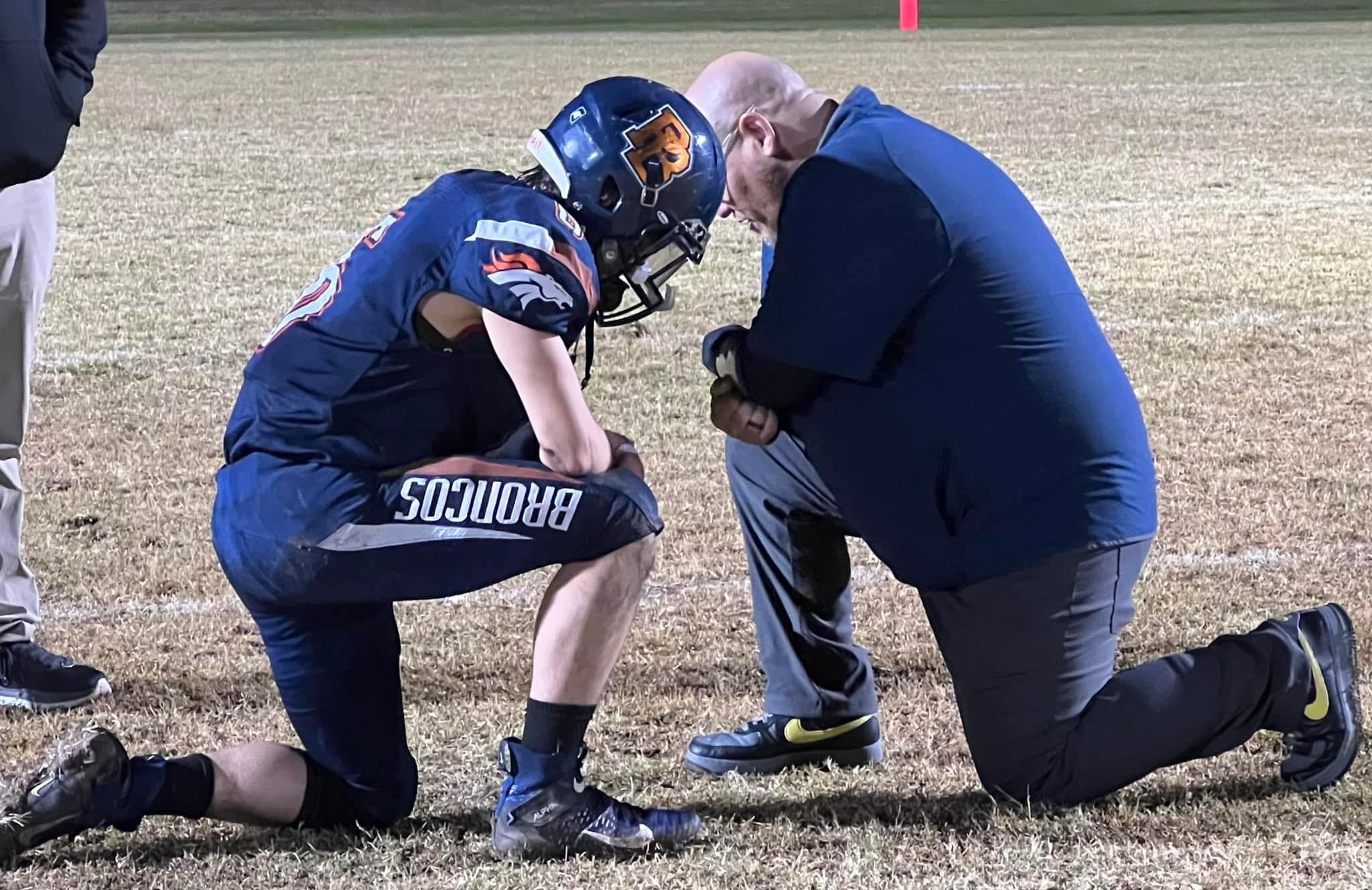
MESA – The words hit hard.
“I just wanted to thank you for believing in me when no one else did.”
That’s what Marco Cano, a former defensive backs coach at Eastmark High School in Mesa, heard in the middle of the night when one of his former players called from Germany before he was deployed to Afghanistan.
The call was unexpected, but it captured something Cano had always believed about coaching. High school football assistant coaches may stand in the background on Friday nights, but their influence often reaches well beyond the sideline. It helps shape a young man into who he will become off the field.
Before most students have finished breakfast, assistant coaches are already on the field working, focusing on preparation and watching video. There are no press conferences or spotlight moments, but there are unseen moments when they shape men into leaders.
“To me, coaching is a chance to leave something behind,” Cano said. “If I can guide a young man to make better choices, work harder and care about others, then I’ve done my job. Sometimes you don’t realize the difference you’re making until years later, like a call from a former player overseas, telling you that your belief in him mattered.”
They certainly don’t do it for the money. Many Arizona assistant football coaches receive stipends partially funded by extracurricular tax credit donations, up to $3,000.
New Apache Junction football coach Daniel Gentry understands the power that assistant coaches wield. Gentry started out as an assistant coach at Poston Butte High in San Tan Valley before joining Eastmark as an offensive coordinator.
Gentry’s journey into coaching was shaped by a mentor, his high school football coach, who took him in and guided him through a difficult childhood, an experience that made him want to coach and give the same guidance to others.
“I started coaching to pay forward what my coach did for me,” Gentry said. “Both of my parents went to prison when I was young, and my football coach, Steve Coburn, took me under his wing. He taught me what it took to be a man, and I wanted to do the same for other kids.”
Gentry sees the role of a coach as more than just plays and drills; it’s about preparing players for life.
“It’s not just Xs and Os,” he said. “It’s teaching them how to handle life, make good choices and hold themselves accountable.”
An assistant coach’s influence isn’t limited to interaction on the football field. It also extends into the classroom. Josh Krize, Eastmark’s defensive coordinator and a classroom teacher, helps players develop habits that improve their performance in class and on the field.
For him, coaching and teaching go hand in hand.
“I’ve had parents reach out and tell me their kid’s grades went up after working with me,” Krize said. “It’s not just about football. If I can help them be better students and better people, then I’ve done my job.”
For many assistant coaches, football isn’t a full-time job, it’s a commitment layered on top of career and family. Cano, Gentry and Krize all balance full-time jobs along with coaching. Cano is a construction manager in Phoenix and Krize is a full-time teacher at Eastmark, showing that mentorship often comes at the cost of personal time and routine.
“It’s not about the money,” Krize said. “It’s long hours, early mornings, late nights. But if I can help even one kid get better, on the field or in life, it’s worth more than anything else.”
The influence of assistant coaches is clear in the players they mentor. Maximo Cano, Marco’s son, a standout senior at Eastmark, can preach about the ways his coaches have helped guide him in life during his high school career.
“They don’t just teach football, they push me to work hard in school and in life,” Maximo said. “My coaches care about who we are as people, and they’ve helped me grow into a more disciplined player and better person. I really appreciate all the time and effort they put in.”
The impact of his coaches isn’t measured in stats or trophies. Maximo believes it is measured in how he and his teammates tackle every-day challenges in school and their future after high school.
“My coaches are always there for us, not just on the field,” Maximo said. “They push us to be better students and better teammates, and that makes a big difference in how we handle life outside of football.”
Across the United States, thousands of high school assistant coaches balance careers, families and long hours to invest in their players. They rarely receive recognition, but many play a vital role in shaping young lives, just as Cano, Gentry and Krize have impacted their players, with influence that lasts long after the final whistle.
Related

Source link