Gay dating show ‘The Boyfriend’ leads Netflix Japan Unscripted Push
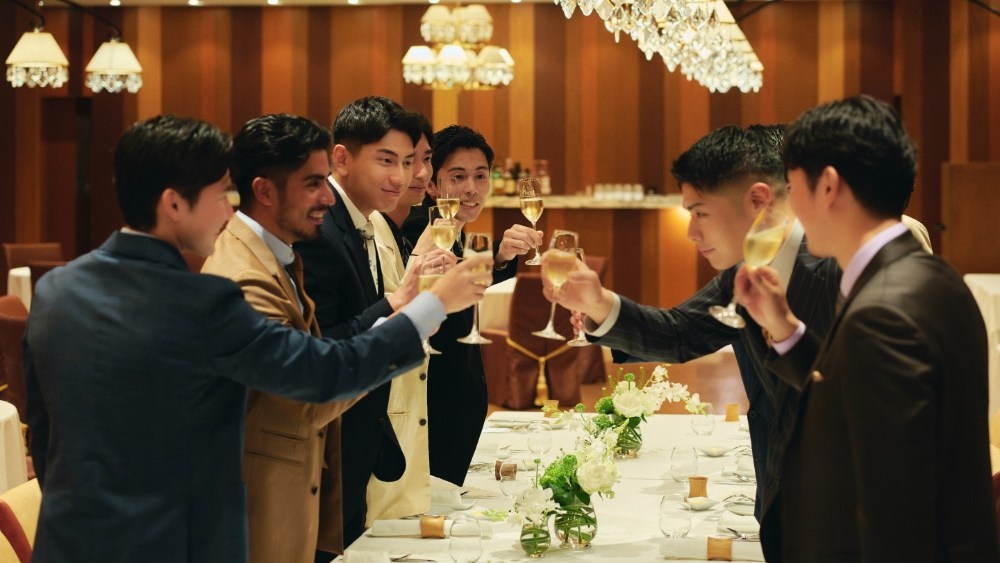
The breakout success of LGBTQ+ dating series “The Boyfriend” has boosted Netflix’s Japanese unscripted slate, with Ota Dai, who oversees the streamer’s Japanese unscripted division, crediting a deliberate rejection of conventional reality TV formulas for its unexpected international resonance.
The expanded slate now includes the revamped series ‘Badly In Love’, which reached No. 8 on Netflix’s Global Top 10 Non-English Series chart, along with new launches ‘Final Draft’, Japan’s first physical survival series, and ‘Offline Love’, which completely removes phones from the dating equation.
“What I am most aware of is not incorporating large game-like elements or a strong overarching plot,” says Ota. Variety. “Instead, once I have provided a basic setting, I simply try to watch over the participants so they can spend their time there as they are.”
That philosophy extends to titles as different as “Badly In Love,” which focuses on yankii (delinquent youth) culture, and “Love Village,” now in its second season with participants aged 35 to 60 – the first Japanese reality show to focus on this demographic. Ota attributes the approach to avoiding what he calls the variety convention of turning people into consumable character symbols.
“Once you put labels like ‘the butt of jokes’, ‘the hopeless’ or ‘the master of love’ on someone, that’s where their story is captured,” Ota explains. “I deliberately chose people who are difficult to label – people with layered identities in terms of age, gender, background and romantic experience – and followed them over a long period of time.”
The strategy has proven to be particularly effective with an international audience. “Badly In Love” created major buzz on social media within hours of its release, landing in the top 10 rankings in Korea, Singapore, Hong Kong and Taiwan, despite its extremely local subculture. “What surprised me was that foreign viewers, who are probably unfamiliar with Japan’s yankii subculture, became excited about the characters’ emotions at almost exactly the same points as Japanese viewers did,” Ota says. “I was able to confirm that moments like an outlaw or someone on the edge of society honestly confronting their own past or clumsy ways of expressing affection are received as something very universal.”
The breakthrough confirms Netflix’s ‘Local for Local, then Global’ philosophy. Rather than diluting specific cultural elements, Ota argues that maintaining local intensity and creating accessible entry points through subtitling and editing enables authentic engagement. “There is no need to dilute or overemphasize a specific culture or character to create a global version,” he says. “By keeping the local intensity as it is and presenting things honestly – while carefully creating an accessible entry point – you can be confident that viewers around the world will love diving in.”
Season 2 of “The Boyfriend,” which doubled the cohabitation period from one to two months in a Hokkaido setting, showed how longer timelines create space for relationship complexities that the first seasons failed to capture. “We were able to see developments that didn’t happen in Season 1, like someone having one romance end and then moving on to a new love, and couples forming and graduating halfway through,” Ota says.
Cast members reflected on how the expanded format reshaped their understanding of relationships. Bomi, 23, who started looking for his first boyfriend, found his idealized beliefs challenged. “I only looked at the bright side of love,” he says. “While nurturing love, you may have arguments or you may have relationship problems – these are the aspects I have never imagined. Love is not just about loving each other. That in itself cannot sustain the relationship.”
For Izaya, 32, confronting past relationship patterns proved transformative. His previous long-term relationship taught hard lessons about communication. “We tried to hide things. It became such a relationship that we hid some things that we couldn’t say,” he reflects. “In the future, I want to be able to face and communicate with a partner and say things that I really think.”
Studio host Durian Lollobrigida, who returned along with Megumi, Yoshimi Tokui, Chiaki Horan and Thelma Aoyama, describes the role as translator and viewer representative. “Basically we are like one of the viewers, and we just follow and enjoy the boys’ drama,” Durian explains. The expanded timeline created opportunities for a more nuanced view. “When the time is longer, there is more time to look at each other and spend time with each other. There is a more complicated display or portrayal of people’s feelings compared to Season 1.”
Ota remains focused on balancing emotional authenticity and participant well-being. “We make it a rule not to introduce game-like elements or impose a forced overarching structure that would conflict with the genuine emotions of the participants,” he says. “The only way to create an authentic reality show is to let people participate as they are, with their true selves, and just keep filming them for as long as possible.”
Mental health care is active throughout production, with aftercare explained in advance. “I believe that providing viewers with emotionally moving experiences and protecting the lives and well-being of cast members are two things that should always be considered together,” Ota emphasizes.
Looking ahead, Durian hopes for greater representation in the coming seasons. “I want a more feminine, ladylike type of person – we call it one in Japanese – but also different body shapes or people from different backgrounds. I hope there is more room for that.”
Ota measures success in multiple dimensions, in addition to ratings. “What I personally focus on is: how many people watched the film to the end and came to love it? And how many people does the work continue to impact after it’s over, and how deeply?” he says. “Even though the numbers aren’t huge, when we get responses from viewers who say the show has fueled their lives in some way, or saved their hearts, I think that’s a form of success too.”