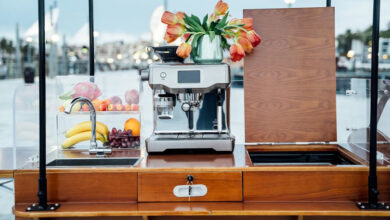
Florida’s immigrant entrepreneurs are creating jobs and prosperity in their communities
Immigration to the US is often presented as a problem to be managed, controlled or punished. Immigrants are often ridiculed for crossing the border without permission or “taking jobs” from American citizens.
This rhetoric has intensified while Donald Trump was in the White House. Trump and officials in his administrations have repeatedly characterized immigrants as a drain on national resources.
But research on immigrants tells a different story.
I am a business and cultural historian who studies how corporations shape and are shaped by the societies and historical contexts in which they operate. Since 2021, I have led the Gainesville Business History Project, a research initiative at the University of Florida that studies the long-term patterns of the city’s business history.
Nearby history
Our project takes a near history approach, recognizing that companies around us, even small ones, are part of the historical record that we, as consumers, also actively shape. Our team of 10 researchers conducted in-depth interviews with more than 40 business owners and entrepreneurs in Florida.
About 22% to 23% of the state’s residents – about 5 million people – are foreign-born. This is much higher than the national average of 14%.
In 2023, foreign-born residents of Florida made up nearly 50% of the workforce employed in pillars of the state’s economy, including agriculture, tourism and construction.
A 2025 study found that 267,700 of these Florida immigrants – about 5% – were entrepreneurs.
Our interviews revealed many stories that show how immigrant-founded businesses can grow into trusted institutions that define a place’s identity. These stories illustrate some of the ways immigrants contribute to their communities.
Latin market La Aurora
The story of La Aurora, a Latin American supermarket that has been in business in Gainesville for nearly 25 years, shows how businesses are culturally embedded in the community and how immigrant-owned businesses are often connected to long-term local networks.
Aurora Ynigo crossed the Mexico-US border in the early 1990s. She went straight to Miami, where she met her husband Peter. In the late 1990s, they moved from Miami to Gainesville for Peter’s work. At the time, there was limited access to Spanish products in the university city of about 180,000 inhabitants. So in 1999, the family decided to open a Latin American store that Aurora would manage.
For years, the couple and their parents created a weekly shopping list, which included many items requested by customers and friends who had immigrated to Gainesville from Peru, Cuba or Colombia. They then drove 400 miles to Miami, where they searched all over the city for the items, especially at grocery stores there like Sedano’s and Presidente. They then drove back to Gainesville with fresh food in large coolers to fill the shelves at their University Avenue location.
After 27 years in business, La Aurora Latin Market on University Avenue features its own butcher shop, fresh produce and other products from across Latin America and the Caribbean. It also makes freshly baked Latin American breads, pastries and cakes. And it has become a place where the Hispanic community – a demographic that has grown significantly over the past decade – can reliably find trusted products.
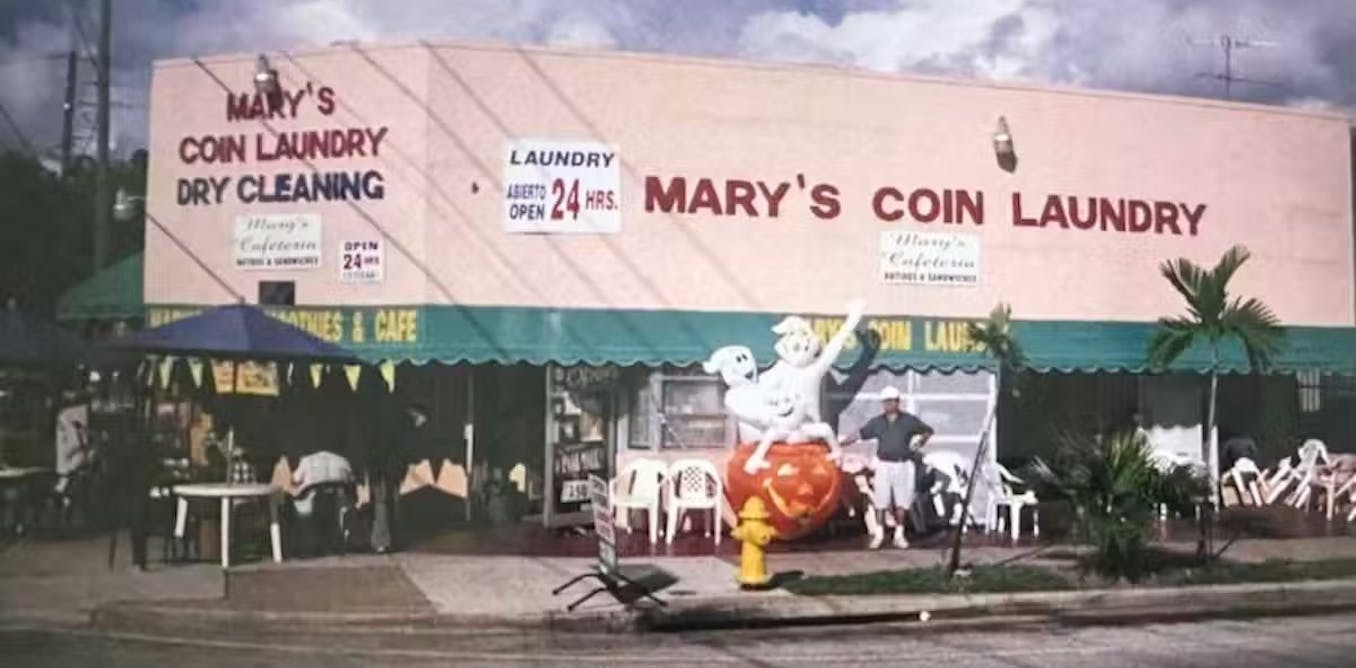
Mary’s Café and coin laundry
For more than four decades, Mary’s Café and Laundry has operated along Miami’s now central and busy 27th Avenue.
The company has remained in the same family for three generations. It goes back to Eumelia Morales Fernández, who immigrated to Miami from the city of Santa Clara, Cuba, in 1970. Like many immigrant women, she first worked as a seamstress. She then got a job in a shoe factory before buying a small supermarket with her husband on 32nd Avenue in Miami in 1988.
After purchasing the building where the cafe and laundromat still stand, they installed washing machines and dryers and opened a small cafeteria next to the laundromat. They named the business Mary’s Cafe after Eumelia’s daughter, who later ran the business before passing it on to her own daughter, Vicky, who currently manages it.
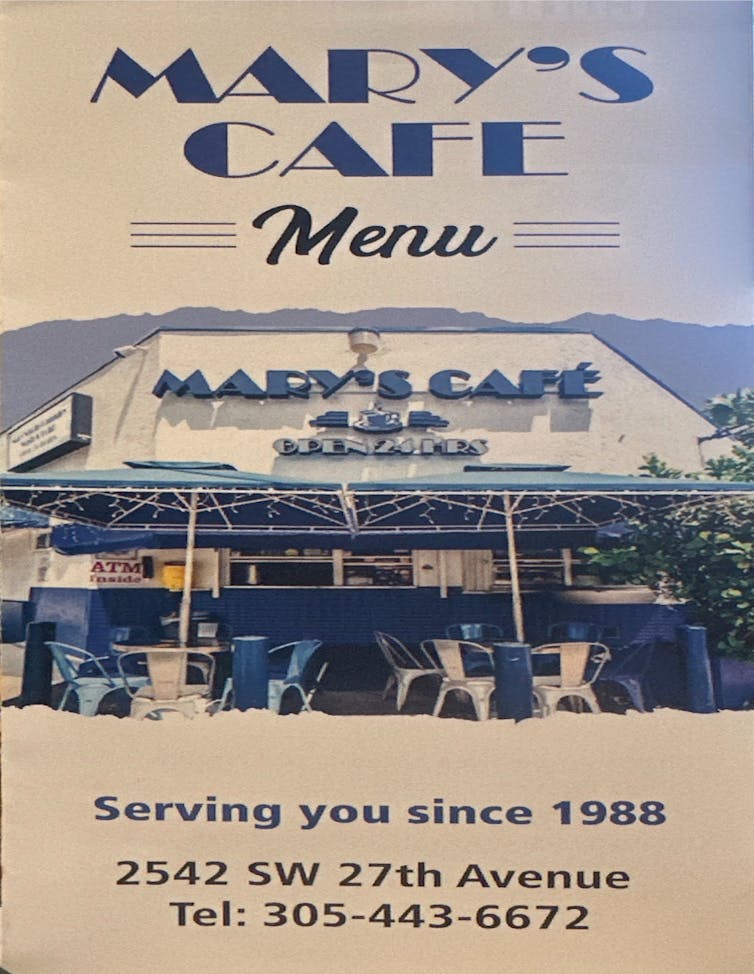
Photo by the author, taken in 2025CC BY-NC-ND
Mary created the menu, which has changed little since the cafe first opened. The cafe has its own kitchen for tostadas and pastelitos and serves coladas and cortaditos daily in this central Miami location. Everything is still made in-house.
The building also houses a small retail space, currently a watch repair business run by another member of the family. Previously, the space was home to a Chinese takeout restaurant owned by another Cuban family.
I was able to interview both Eumelia and Vicky. Vicky told me she hasn’t changed much in the way she coordinates the work and supplies at Mary’s. The biggest change she has had to make is learning to use social media to promote the business.
16th Avenue Diner
Gilberto Argoytia Miranda owns the 16th Avenue Diner. The restaurant is an icon of Gainesville’s southern cuisine and has been in business for more than 50 years.
Argoytia Miranda is the restaurant’s eighth owner. He bought it in 2021. He had experience in the industry while living in Mexico City, where he had been operating food trucks since 2010.
He knew he wanted to work in the restaurant industry, but he didn’t immediately open a Mexican restaurant, despite the limited number in Gainesville. Instead, he studied the local market by working for various restaurants, including delivering food through DoorDash. This experience allowed him and his family to gain a better understanding of Gainesville’s food scene.
The restaurant had to keep its soul, as Argoytia Miranda calls it, so that the regular customer base could keep coming. He and his family did not want to replace an eatery with local significance and tradition. In fact, he sees this continuity as an asset, because the place remains recognizable.
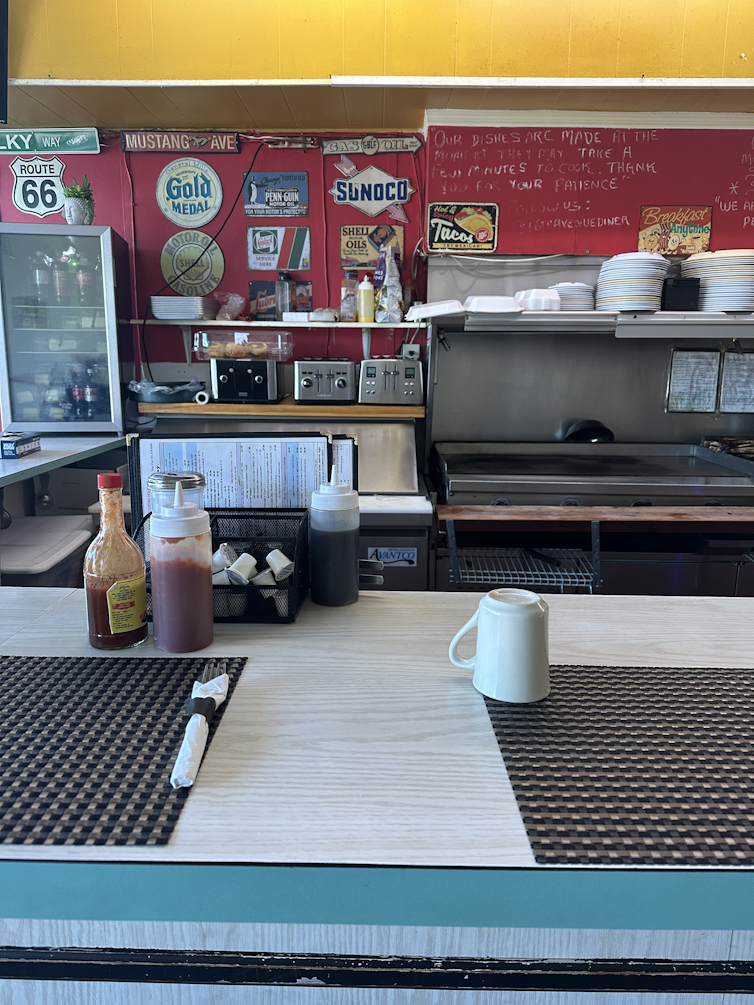
Photo by the author, taken November 2025CC BY-NC-ND
Argoytia Miranda rarely changes his menu, because he understands that people have liked it for years. He sees no need to reinvent the core of the restaurant, its Southern cuisine and its Americana atmosphere.
Little by little, he told me in 2025, he plans to experiment with adding more Latino flavors to the menu. But new dishes will only become part of the official offering if customers enjoy them.