Donald Trump nominates Kevin Warsh as Fed chairman to replace Jerome Powell
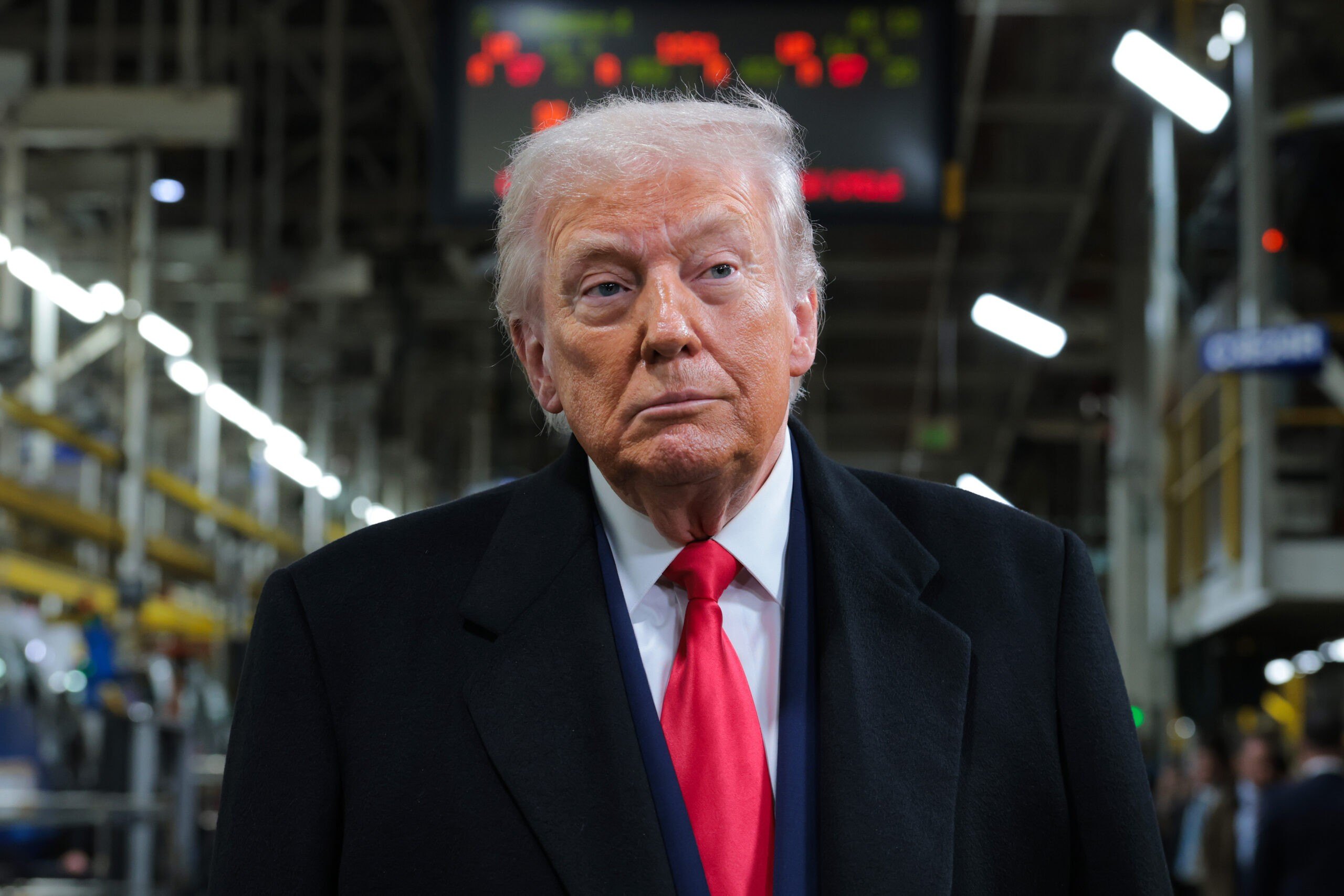
President Donald Trump has announced that he is nominating Kevin Warsh to become the next Chairman of the Federal Reserve Board of Governors.
Trump made the announcement in a Truth Social Post On Friday morning, Warsh said he had “conducted extensive research into economics and finance. Kevin has issued an independent report to the Bank of England proposing reforms in the conduct of monetary policy in the United Kingdom. Parliament has adopted the report’s recommendations.”
The announcement comes amid the Federal Reserve’s decision to keep interest rates stable and Trump’s heated criticism of the Fed Chair Jerome Powell.
In addition to setting interest rates, Powell joined the 10-2 majority on the Federal Open Market Committee Wednesday to vote in favor of keeping the Fed rate unchanged within the current range of 3.5% to 3.75%. This is 75 basis points lower than at the beginning of September, before three consecutive quarter-point cuts.
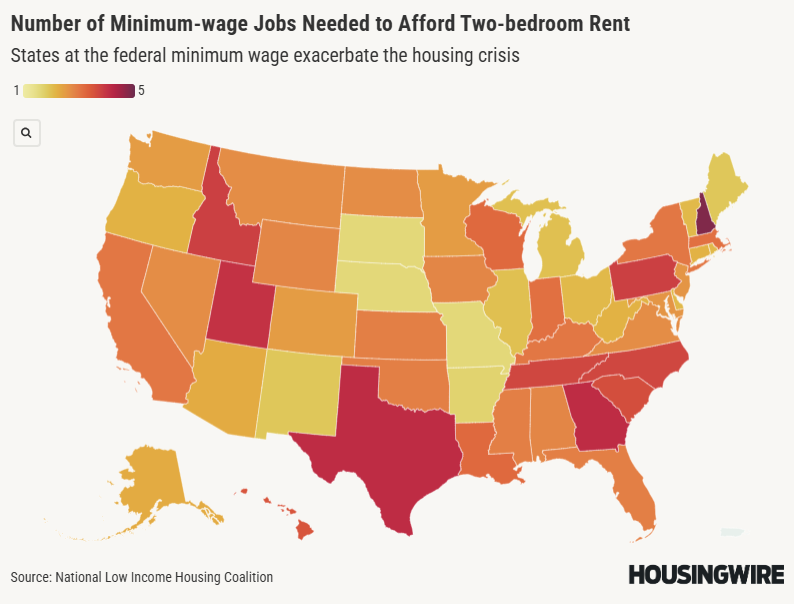
Over the same period, mortgage rates fell from 6.5% in early September to 6.09% last week, near the lowest level in three years. Freddie Mac.
‘Jerome ‘Too Late’ Powell refused to cut rates again, even though he has absolutely no reason to keep them that high’ Trump wrote on his Truth Social social media platform following the decision. “We should have a substantially lower rate now that even this idiot admits that inflation is no longer a problem or threat.”
Warsh’s election as the next chairman of the Federal Reserve will obviously be read as a signal that rate cuts are coming and fast approaching. However, Realtor.com® senior economist Jake Krimmel says that conclusion is “too simple and perhaps too short-term oriented.”
“As one of 12 voting members, a new chairman guarantees no change in Fed policy, regardless of who is confirmed,” he said.
“We know that Warsh is likely to push for cuts. That was very clearly a condition of the nomination. However, we should not assume that the new chairman’s power and influence on the Federal Open Market Committee (FOMC) will look the same as in recent years.”
Krimmel adds that “automatically projecting Jerome Powell’s internal Fed influence onto Warsh could be a mistake.”
Trump has publicly criticized Powell for not cutting rates. He has also called on the central bank to cut interest rates to 1%, claiming this would lower government borrowing costs and boost the housing market.
Following his appointment, Warsh will now take the board seat currently held by an economist Stephen Miranwho has held this position since September.
But he faces an uphill battle if he chooses to push for more rate cuts. It’s likely he will face resistance from the other members of the board, who Krimmel said are “more comfortable with open disagreement.”
“Warsh is not inheriting a clean slate at the FOMC,” he says. “Although the commission he would lead in 2026 is data-dependent and focused on the dual mandate, it is not ideologically unified.
“The new rotating voters, alongside an administration more comfortable with open disagreement, are likely willing to push back if the data doesn’t support a particular path.”

Kevin Warsh has advocated for change at the Federal Reserve
In Warsh, Trump has a candidate who served as Fed governor from 2006 to 2011 during the depths of the global financial crisis and who is advocating for what he calls “regime change” at the Fed.
In public comments, Warsh has promoted more aggressive rate cuts and substantive reforms to the Fed’s policy framework, saying current policies are holding back economic growth and causing a housing market recession, with first-time homebuyers struggling to afford a home.
Warsh was born in Albany, NY. He studied public policy with an emphasis in economics and statistics at Stanford University, where he received a bachelor’s degree with honors in 1992. He then attended Harvard Law School, where he focused his studies on the intersection of law, economics and regulatory policy, earning a law degree in 1995.
He also completed courses in market economics and debt capital markets at Harvard Business School and the Massachusetts Institute of Technology’s Sloan School of Management.
What’s next for Jerome Powell?
Powell’s term as Fed chairman officially ends on May 15, and while the majority of his predecessors have chosen to step down from the board altogether, he is under no obligation to do so and is actually eligible to remain in his seat until December 31, 2028.
Krimmel notes that mounting political pressure on the Fed could see Powell retain a role as governor, especially if he believes his presence “could provide institutional continuity and limit how much a new chairman can influence the commission on his own.”
“It would also create a different internal dynamic at the FOMC, one with less automatic consensus, more dissent and a chairman who has to work harder to gather votes,” Krimmel added. “Appointing a chairman is still one of the 12 votes, but how disagreement is interpreted is much more important in this environment.”
On January 28, after the Fed announced its decision to keep interest rates steady, Powell was asked by reporters about his plans for his future at the central bank, but he said he had not yet made a decision.
“No, and I really don’t have anything for you to do about that today,” he said. ‘I don’t want to go into it. There is a time and place for these questions, but not something I will address today.”