Diego Ávalos from Netflix describes the Spanish strategy at Málaga Talent
Netflix’s Diego Ávalos used a Málaga Talent appearance on Tuesday not only to explain how the streamer sources, develops and finances projects in Spain, but also to send a broader message to the local business community: Netflix wants to be seen as accessible, flexible and closely connected to the creative community it hopes to work with.
Speaking to Silvia Iturbe, an executive at Mafiz – Málaga Festival Industry Zone, before a packed house at the UNIA Puerto location, Ávalos – Netflix’s VP of Content for Spain, Portugal and Turkey – offered a public snapshot of the company’s Spanish assignment logic: multiple entry points for projects, varied deal structures and a strategy driven less by algorithms than by connection with the audience.
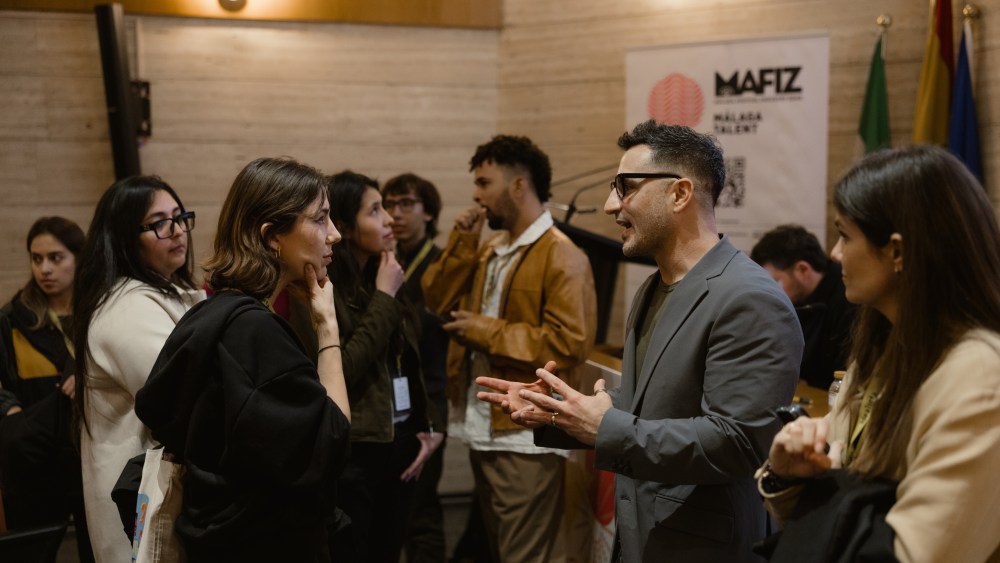
What gave the session an extra dimension, however, was the way Ávalos interacted with the audience. Relaxed and eloquent, he switched easily between the broad strategy and the practical mechanisms of development. To a room full of emerging creators, many of whom likely view streamers as distant gatekeepers, the presentation suggested something more open, personal and more in tune with the daily realities of Spain’s production sector.
“There is no time to talk to us,” Ávalos said, emphasizing that projects can reach Netflix in many forms – as a bible, a script package, a rights-based pitch or a more advanced production that already carries broadcaster backing or public financing.
He cited the TV3 series “Génesis” as an example of a title where Netflix came in after regional funding had already been raised, using series for Spain, Latin America, the US, Canada and much of the EU. ‘The Asunta Case’, on the other hand, was described as a project that grew out of Netflix’s previous relationship with Madrid-based Bambú Producciones, growing from an initial idea to a bible, pilot and eventual greenlight.
That contrast underscored one of Ávalos’ key points: Netflix doesn’t work with a single development template. Some projects arrive very packaged. Others start with an idea, a rights hook, or an early creative conversation. The priority, he said, is less the format than whether the material clearly communicates the story, creative vision and audience potential.
The session also provided a revealing glimpse into the size of Netflix’s Spanish pipeline. Ávalos said the company receives between 1,500 and 2,500 projects per year and reads them all, adding that the team strives to respond to every submission. He also highlighted the breadth of Netflix’s production relationships, noting that the company has worked with more than 60 Spanish production companies over the past seven years.
Netflix, he suggested, does not operate through a small circle of recurring suppliers or a single engagement model. The company can work directly with producers, writers and directors and, if necessary, help connect emerging creators with more established production partners if a project requires stronger industrial packaging.
Ávalos also praised the strength of Spain’s manufacturing sector, telling the young audience that the future of the industry lies with them and treating the session less as a formal business performance than as a real exchange. His connection with the chamber reinforced the image of a Netflix executive who was closely linked to the local business community and alert to the ambitions of emerging talent.
He also pushed back firmly on the idea of Netflix ordering based on algorithms, instead describing data as a compass rather than a blueprint. That distinction is central to Netflix’s local field. Ávalos pointed to broad local comedies, thrillers, character-driven dramas and action titles as categories that have worked particularly well for the company in Spain, while acknowledging that breakout exceptions such as ‘Nowhere’ and ‘The Platform’ show the limits of rigid regulations.
One of the most notable clarifications during the session related to ownership. Of the more than 1,000 Spanish titles Netflix has launched over the past seven years, Ávalos says, the company has intellectual property rights to less than 25%, with the vast majority structured as acquisitions or other partner-led models where the rights remain with producers, creators or writers.
That point led to a broader argument about Netflix’s role. According to Ávalos, the streamer is not so much replacing the independent sector as working through it. Netflix executives don’t take producer credits, he said, because the creative and industrial heavy lifting belongs to outside producers, writers and directors.
Festivals, meanwhile, remain an important part of that system, both as launch pads for titles and as spaces where executives can identify new voices, new formats and shifts in creative energy. Ávalos also noted that short films remain a useful talent discovery tool, even if short distribution is not central to Netflix’s local strategy. To the Málaga Talent audience, Ávalos made it clear that Netflix does not want to be seen just as a buyer or client, but as a partner that listens to Spain’s broader creative landscape.