Diamondbacks remember aftermath of 9/11, visit to Ground Zero
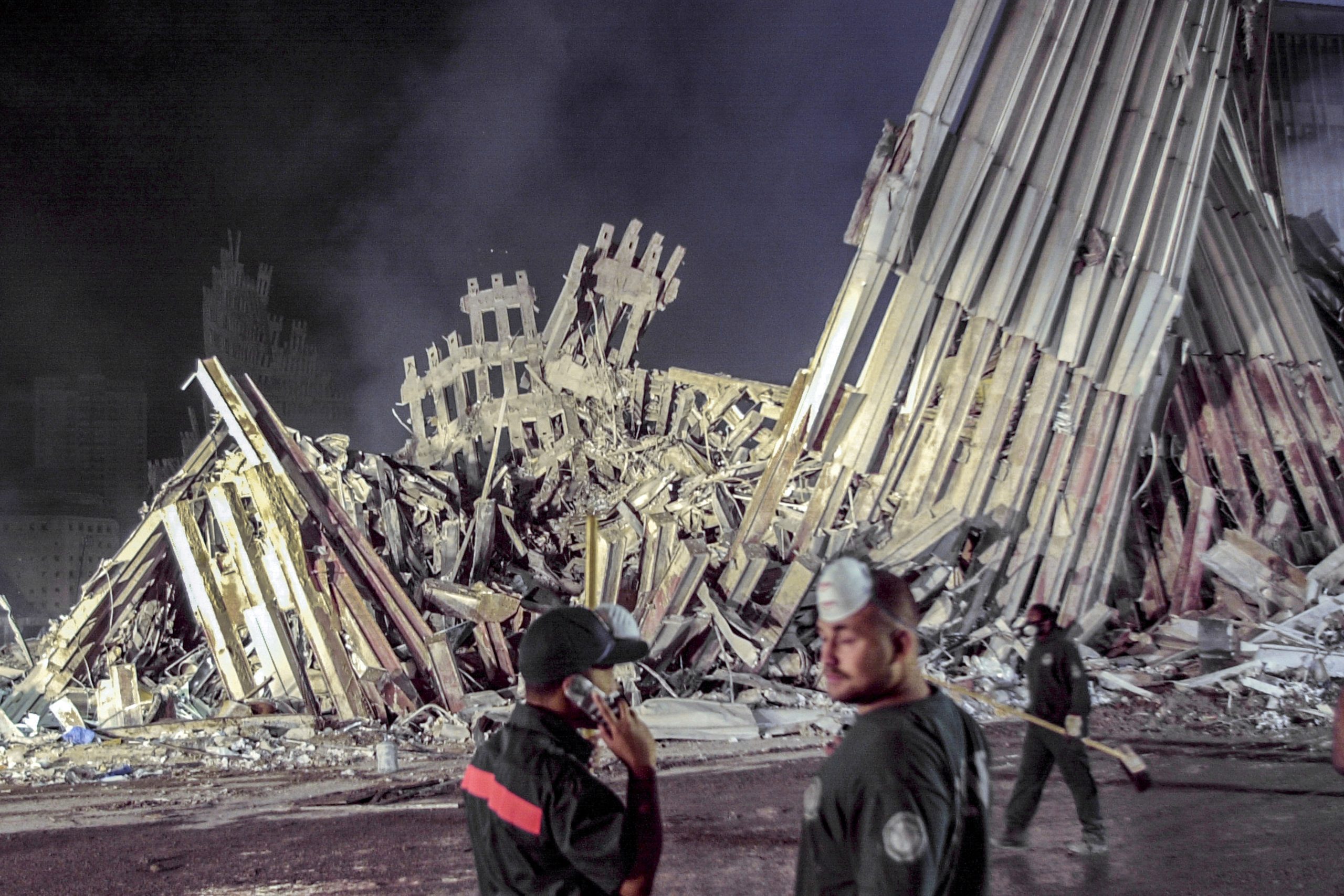

PHOENIX – The images of the World Trade Center towers collapsing on Sept. 11, 2001, still loomed heavily over the country when the 2001 World Series began a few weeks later.
The New York Yankees, three-time defending champions, looked to continue their dynasty against the Arizona Diamondbacks, who were aiming to be the fastest franchise in MLB history to win their first championship.
But none of that felt real.
Diamondbacks infielder Tony Womack sensed the overwhelming weight of what happened that day.
“After 9/11, baseball didn’t exist,” Womack said. “A lot of humans lost their lives so baseball didn’t exist.”
Jay Bell, another member of the Diamondbacks’ infield during that fateful season, echoed the confusion and fear that Americans felt after terrorists commandeered four planes and deliberately crashed them into New York’s Twin Towers, the Pentagon in Virginia, and a field near Shanksville, Pennsylvania.
“There were just so many questions that nobody had answers to,” Bell said recently, reflecting on the distress Americans felt across the nation. “We weren’t sure what was going to happen.”
Bell was one of the many Diamondbacks who visited Ground Zero during the World Series, seeing first-hand the devastation left in the wake of the tragedy that killed 2,977, including 343 members of the FDNY.
“It was a surreal experience,” Bell said. “To play the Yankees in the wake of 9/11 and to have the opportunity to go down to Ground Zero, it was extremely impactful and humbling to look at something that devastating.”
Luis Gonzalez, the Arizona outfielder who hit a game-winning bloop single off Yankees reliever Mariano Rivera in the bottom of the ninth inning of Game 7 to seal the Diamondbacks’ first World Series title, still can’t shake the grim memories of what he and his teammates felt and saw when they journeyed to the tip of lower Manhattan.
“It was so strange. The smoke was still there. The smell was still there. There were ashes and things smoldering,” Gonzalez said. “Anytime they would locate a body, they would stop, and kind of have a procession of carrying that out. It was almost like stuff that you would see in a movie, but we were looking at it in real time.”
The team visited other important locations during an off-day between games, including Ten House, the fire station across the street from the World Trade Center.
“We went to the actual firehouse, which is right across the street, which is still standing, believe it or not,” Gonzalez said. “They explained to us everything that was going on.
“I would say 94-95% of the guys ended up going to Ground Zero. (Diamondbacks pitcher) Curt Schilling gave a speech in the command center. It was pretty well done, and it was pretty emotional.”
Womack, however, chose not to join his teammates who went to Ground Zero, as the aftermath of the attack was still heavy in the air.
“I didn’t want to smell death,” Womack said. “I just couldn’t. I was OK with paying homage to the people who passed away and the people left behind dealing with grief, but no, thank you, sir. I could not go there.”
Bell recalled how different the games were following the terrorist attacks, with the heightened anxiety of what could happen next permeating not just throughout Yankee Stadium and Bank One Ballpark, but throughout everyday existence.
“There was a lot more security,” Bell said. “Even the players were having to go through metal detectors. There were snipers on the roof.
“You definitely understood what point we were at in history, but once batting practice started, we knew we had a job to do, and we were going to do our best.”
Even after the airspace over North America was shuttered for days and professional sports took a hiatus following the attacks, life had to continue.
Although it was important to pause and reflect on what happened on Sept. 11, Womack believed that getting everyone back to something “normal” was important.
“That’s why we paused,” Womack said. “That was the biggest thing. And then once it came back, baseball became a remedy for the world, to try to get back to normalcy as much as you can.”
Major League Baseball halted all games for six days. Baseball did not return to New York City for 10 days.
Former Diamondbacks owner Jerry Colangelo felt it was a blessing to be in a position to help provide some relief from the anxieties facing Americans at the time.
“Well, there’s a lot of uncertainty in life,” Colangelo said. “I’ve looked at it this way. I was blessed to be in a position to have a chance to have something like that happen.”
Baseball was part of an important moment of healing for the United States, which Bell felt was good for everyone involved.
“As I look back in retrospect, we returned to play rather quickly, and it was a good thing for the psyche of the players, but it was also good for the psyche of the United States,” Bell said. “And the way everything happened, it just seemed right to have New York in the World Series.”
One of the more interesting dynamics that the Diamondbacks faced at the time was their designation as the “bad guys” against the Yankees.
Womack doesn’t even think it would have been right to win the World Series in New York.
“I believe in karma,” Womack said. “We played well in all three games in New York, but it wasn’t meant for us to win in New York because of 9/11. It wasn’t meant for us to celebrate in New York when everybody was still grieving and trying to figure out what happened on 9/11.
“We did everything right, but it wasn’t meant for us to win in New York.”
After winning the first two games at home, the Diamondbacks lost all three games at Yankee Stadium by one run each time. Two games went into extra innings.
Gonzalez, who famously hit the walk-off single in Game 7, knew the Diamondbacks were aware of the country’s rooting interest but also knew they were still focused on their goal of winning the World Series.
“We knew a lot of people were rooting for them,” Gonzalez said, “but we were a group that didn’t lose focus. We understood the magnitude of what was going on in the world.”
Even though most of the nation may have been cheering for the Yankees, Bell felt that when the Diamondbacks eventually beat New York at the BOB in Game 7, the moment still meant a lot to everyone involved.
“Although a big part of what happened took place in New York, it affected the entire world,” Bell said, “so while most people were pulling for New York because of that, it still meant a lot to the rest of us.”
The Diamondbacks and the Yankees provided Americans with a distraction from the very real fear and anxiety experienced around the globe. The 2001 World Series is considered one of the best of all time.
And as the games captured the attention of fans worldwide, people began to understand and digest the tragic events that had taken place.
This was what America needed at the time.
Related

Source link