Despite new tariffs on beef, China is far from closing the door on trade with Australia
Australia has been reminded once again that China is not always a reliable trading partner.
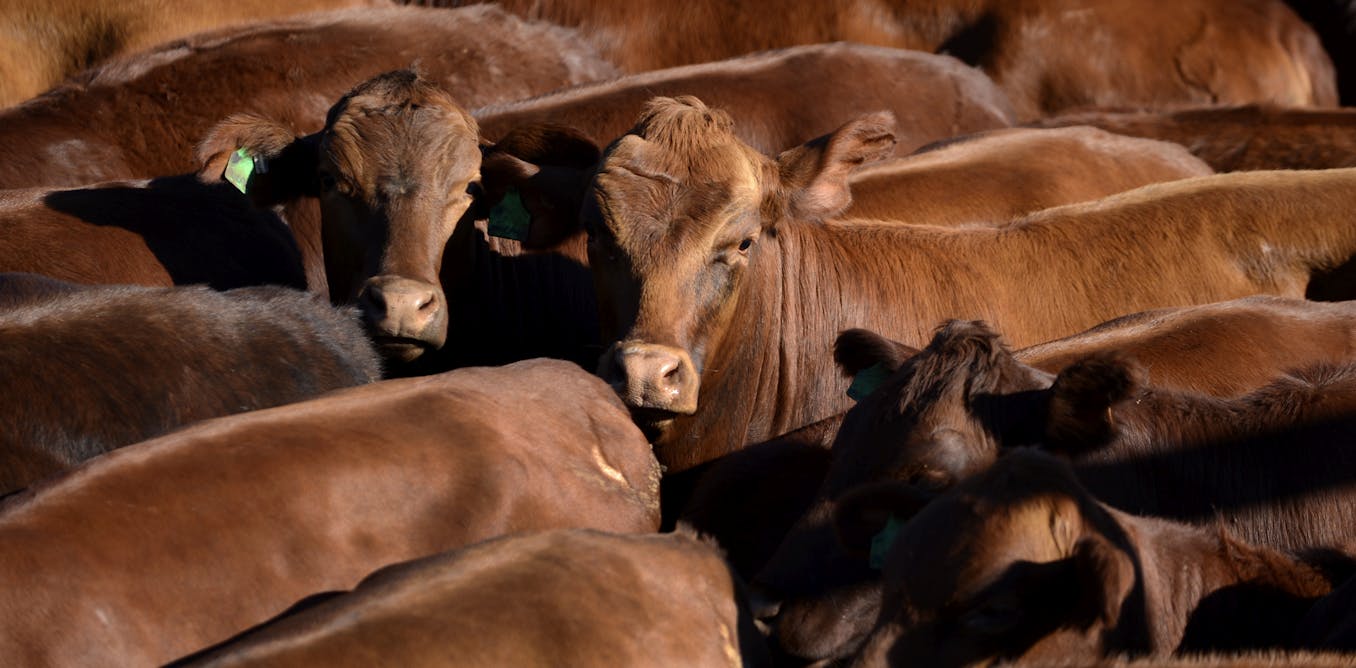
Last week, on New Year’s Eve, Chinese authorities announced new trade restrictions to protect the country’s domestic beef industry.
From January 1 and until the end of 2028, countries such as Australia will be allocated an annual quota. Any beef exports to China above this volume will be subject to a 55% tariff.
These new restrictions do not distinguish Australia in the way that previous Chinese trade restrictions did when relations deteriorated in 2020. Nevertheless, the local beef industry quickly responded that it was “extremely disappointed.” Some voices have warned of a “serious impact”.
The Australian government also said it had “serious concerns” and that Australia’s status as a free trade agreement partner with China should be “respected”.
Smaller producers that have drawn up business plans around supplying the Chinese market are the most vulnerable.
These latest Chinese restrictions reinforce a broader narrative that China is so focused on achieving self-sufficiency and ‘mercantilism’ (maximizing exports and minimizing imports) in its trade policy that, as journalist Robin Harding has argued:
There is nothing China wants to import, nothing it doesn’t believe it can make better and cheaper.
But the reality is not that simple.
Still a major importer
Chinese critics, concentrated in the United States and the European Union, point to a trillion-dollar trade surplus as Exhibit A supporting this narrative.
Many ignore that China, as a percentage of its economy, actually imports more (17.2% vs. 14.3%) than the US.
Meanwhile, the size of its trade surplus, as a percentage of the Chinese economy, lags behind that of Germany, South Korea and Taiwan. Yet Washington and Brussels rarely accuse these economies of ruthlessly shutting out foreign competition and encouraging domestic “excess capacity.”
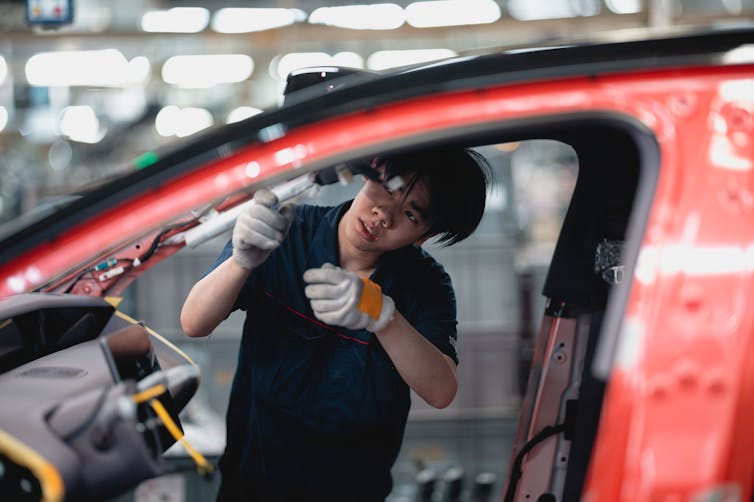
The problem for countries like the US and Western Europe is that China is now proving to be a formidable competitor in areas where they were previously dominant, such as the production of high-value-added vehicles.
But for countries like Australia, which has an economy highly complementary to China’s, the picture looks very different.
ALEX PLAVEVSKI/EPA
Still Australia’s largest customer
In 2024-2025, Australia exported $69 billion more to China than it imported. In contrast, Australia’s largest trade deficits are with the US and EU.
Exports of many Australian goods and services to China are at or near an all-time high.
As prices have come to a boil, Australia exported 2% more iron ore to China in the first ten months of 2025 than the previous record set a year earlier.
And it’s not just the traditional mainstay of minerals.
China is also Australia’s largest market for agricultural, forestry and fisheries products, worth $17 billion in 2024-2025. Ditto services such as education and tourism, which together generated more than $18 billion.
China’s desire to buy what Australia is good at, and the ability of Australian exporters and Chinese importers to mitigate risk, means there is little reason to believe China’s status as Australia’s most important economic partner will decline in the near future.
Will beef producers take a hit?
Some industry voices have suggested Australian beef exports to China could fall by a third, or about $1 billion, over the next year.
But given the context, having learned the lessons from previous Chinese trade restrictions, Australia’s beef industry is already highly diversified, with China only accounting for about 17% of total beef exports.
Simply put, if China doesn’t want as much Australian beef as before, many other countries will happily accept it, even though they may not offer quite the same prices as Chinese importers.
Overall, beef sales to China are also likely to fall by significantly less than a third. The China-Australia FTA has given local beef exporters a tariff-free quota of 205,000 tonnes, even under Beijing’s new restrictions.
The latest data shows that total Australian beef exports to China in 2025 were around 265,000 tonnes. In other words, if 2025 volumes were repeated this year, less than a quarter of exports would be vulnerable to higher tariffs.
Mark Schiefelbein/AP
How markets could adapt
It is also possible that the remaining impact can be offset in creative ways.
For example, Australian exporters could stay within allocated quotas if they send more of their most valuable chilled grain-fed cuts to China, while sending more of their less lucrative frozen grass-fed cuts to other markets.
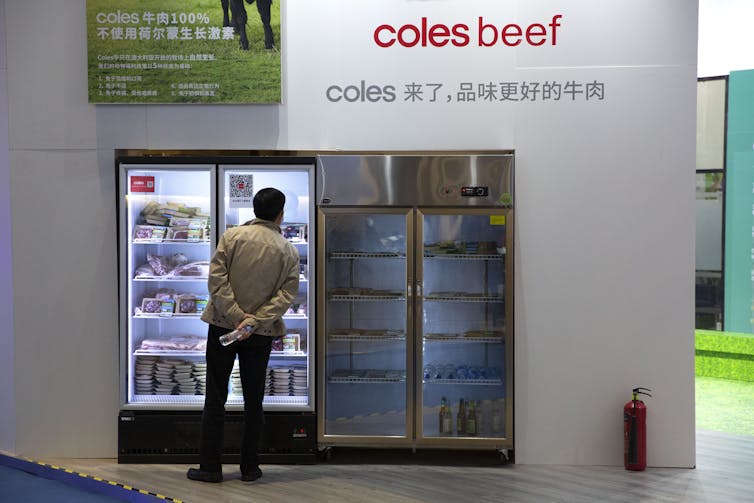
Chinese supermarkets also do not want to lose customers by sharply increasing prices by 55% once the quota is reached. Instead, at least in the case of frozen beef, they might respond by spreading a smaller price increase over sales throughout the year.
A resilient relationship
It’s a safe bet that beef is just the latest case study in the resilience of Australia-China trade and the importance of the Chinese market to local prosperity.
Yes, Beijing can behave badly. And Australian producers and Canberra will rightly complain.
But the economic fundamentals, such as Chinese customers wanting access to competitively priced, high-quality Australian goods and services, are difficult to change.