Deadly typhoon destroys dozens of homes in Alaska, forcing hundreds of residents into shelters
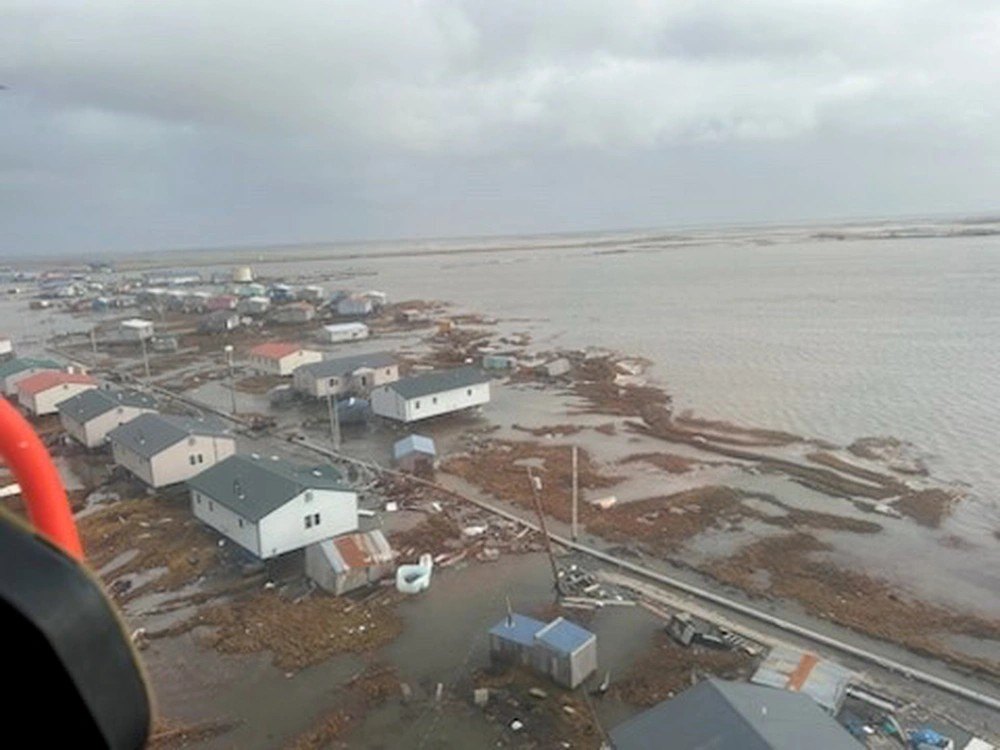
Alaska residents are still dealing with deadly flooding from the remnants of Typhoon Halong, which swept away villages and destroyed roads and homes.
The record storm killed at least one person and damaged major roads and infrastructure, including a regional airport.
According to the Alaska Division of Homeland Security and Emergency Management (DHS&EM), the storm barreled into western Alaska, bringing hurricane force winds and unprecedented storm surges to some of the state’s most remote communities.
Among the hardest-hit areas are Kipnuk and Kwigillingok, small Alaska Native villages located along the west coast of Alaska, several hundred miles southwest of Anchorage.
Storm surges and heavy rains have been ongoing since last week due to another storm, worsening the situation this weekend.
DHS&EM confirmed that “Coast Guard and National Guard crews have rescued at least 51 people to date from two of the hardest-hit communities: Kipnuk and Kwigillingok.”
“Every effort will be made to help those affected by this storm. Help is on the way,” Governor said. Mike Dunleavy wrote in one Facebook post on October 12.
The extent of the flooding broke historical records.
“At Kipnuk the water reached 2.5 meters above the normal high tide mark,” the meteorologist said David Kramerfrom the National Weather Service. It surpassed the previous record of 1.4 meters set in 2000.
“The wave at Kwigillingok was several meters higher than the last record high,” he said Alaska Public Media.
Meanwhile, a 2022 report prepared for the local tribe by the Alaska Institute for Justice shows that the frequency and severity of flooding in the low-lying area has increased in recent years, according to CBS News. The report calls the community’s relocation an urgent need.

Rescue teams were faced with urgent and dangerous circumstances. Alaska State Troopers confirmed that a woman missing in Kwigilingok was found dead and two others from the same village are missing.
About 1,400 survivors took refuge in community shelters, with many staying in local schools, according to the state research center.
The DHS&EM added that U.S. Coast Guard responders were deployed to Kipnuk and Kwigillingok to assist with “search and rescue and community support.”
Mark Robertshead of the State Emergency Operations Center, told Alaska Public Media that the storm is taking its toll on affected residents.
“It was very scary – very, very scary – for people,” he said.
The governor issued a disaster declaration for the October 2025 West Coast Storm, citing “a sea surge above high tide that flooded several communities.”
Initially, the declaration included the Regional Education Presence Areas (REAA) of Kashunamiut, Lower Yukon, and Bering Strait, along with the Northwest Arctic and North Slope Boroughs.
After worsening conditions, the state amended the disaster declaration to add Yupitt, Pribilof Island and Lower Kuskokwim REAAs, as reported in a later DHS&EM update.
Communities and individuals in these areas are now eligible for state assistance and individual disaster recovery programs.
Damage to infrastructure was widespread. The DHS&EM stated that multiple communities “reported damage to critical infrastructure and homes.”
The State Emergency Operation Center deployed field supervisors and requested personnel from the Alaska National Guard and Alaska State Defense Force to provide on-site support.
Typhoon Halong initially formed southeast of Japan around October 3 and reached Category 4 strength with sustained winds of 130 to 155 mph before moving northeast toward Alaska.
By the time it reached the Alaskan coastline, it had lost tropical status but retained dangerous wind speeds and water gusts.
“This event is far from over,” Roberts said. While some areas may be spared from the next storm, others “could experience a greater impact.”
The State Emergency Operations Center works with state and non-governmental partners, including the Department of Transportation and Public Utilities, the Department of Public Safety, the Department of Health, the Red Cross and tribal organizations.
Despite the current federal government shutdown, federal response elements remain ready to support state operations.
Residents affected by the disaster can now apply for individual state aid from ready.alaska.gov/Recovery/IA.