Concerns about Milano Santagiulia Ice Hockey Arena tempered
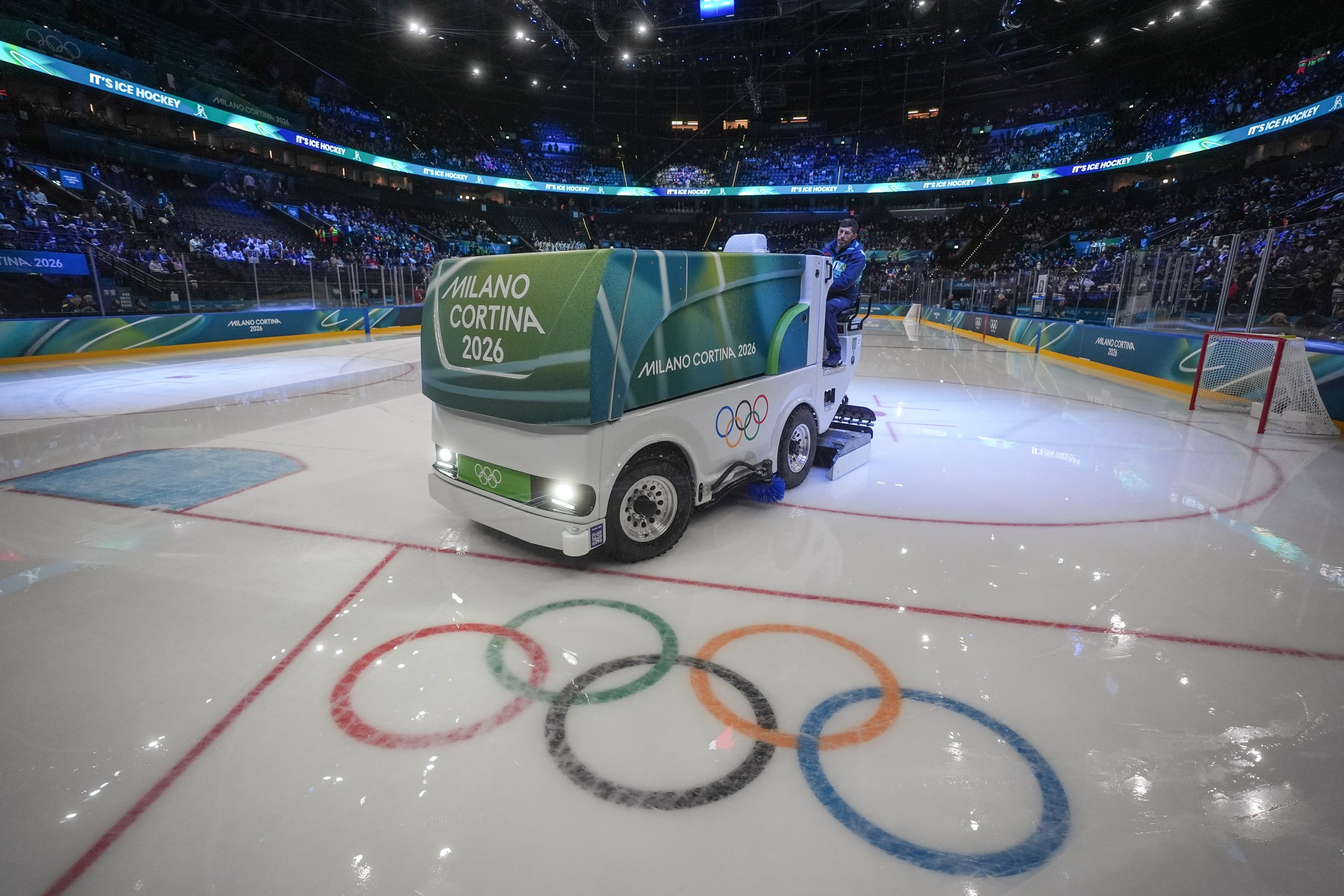
TEMPE – With the preliminary rounds of the men’s ice hockey tournament at the 2026 Milan Cortina Olympics coming to a close, and with the medal games of the women’s ice hockey tournament set for Thursday, uncertainty about the ice at the Milano Santagiula Ice Hockey Arena has been replaced by a product that has pleased hockey fans around the world.
Just six weeks ago during the first test event of the rink, a small hole in the ice developed during the first period of play between two Italian teams. While the hole was filled quickly, skepticism from the event spectators, as well as viewers who saw videos of the hole on social media, skyrocketed.
But through two weeks of play on the ice at the Olympics, no concerns about the playing surface have come to light. For the players, their worries are about medaling, not the conditions on which they’re playing.
“Guys don’t care,” Florida Panthers forward Brad Marchand told Forbes. “No one’s talked about it. No one’s worried about it.”
Patrick Schuler, the head ice technician at Mullett Arena in Tempe, thinks the concerns may have been misplaced from the outset.
“When you put a brand new sheet in, it’s better to break it in before it reaches full potential,” Schuler said. “A brand new sheet could potentially be a little more fragile than a sheet that’s been skated on a few times. So having a little bit of damage on the first time out isn’t super unusual. It gets more durable the more it gets skated on, so I think the media probably blew it a little out of proportion.”
As overseer of ice maintenance at Mullett, home of Arizona State’s hockey teams, Schuler has studied the science behind keeping the ice conditions consistent as the NCAA program, as well as multiple club teams at the university, tear it up nearly every weekend.
While teams are only on the ice for a few hours a week, Schuler and his crew must preserve the ice around the clock, outside of overnight hours, where he said he lets the ice heat up a few degrees with no one on it.
“You start with a concrete floor,” Schuler said. “You have pipes in the floor that run brine through, and we basically just put thin layer after thin layer of water. Then we do our paint jobs, flood water on top of that until we get anywhere between an inch and a quarter, inch and a half thick.”
While each rink across the globe has unique circumstances due to climate, elevation and an assortment of other factors, the temperature and the distance between each pipe in the floor must stay consistent in all rinks to ensure each thin layer of ice stays frozen around the clock. In the U.S., a majority of the rinks conform to NHL measurements of 200 by 85 feet, but different sizes are far from rare in the NCAA.
Whenever ASU travels to play a pair of teams in the NCHC, Colorado College and St. Cloud State, it skates on Olympic-sized rinks at 197 by 98 feet. Multiple ASU skaters last year, after playing the Huskies at the Herb Brooks Hockey Center, mentioned the difficulty of adjusting to the wider rinks, but the 13-foot difference likely pertains to personal preference rather than any dissimilarities in the ice surfaces.
“It depends on the equipment,” Schuler said. “If the floor was put in correctly, the pipes are the proper distance from the floor, they go all the way to the edges of the rink and they keep the air temperature where it’s supposed to be, there’s really no reason why a bigger sheet or smaller sheet shouldn’t maintain just as well as any other one.”
While the rink in Milan was originally expected to be the same size as an NHL rink, it is about 3 feet shorter, sitting at 196.85 by 85 feet, with the 3 feet being taken out of the neutral zone. The dimensions met the regulations of the International Ice Hockey Federation, allowing construction of the rink to continue in December.
“From what I heard, I think they did the smartest thing they could, which was making the deficit in the neutral zone,” Schuler said. “That’s the area that’s going to be the shorter dimension, and the actual offensive and defensive zones are correct.”
With talent scattered across each country, hockey has assisted in a 93 percent increase in viewership of the 2026 Milan Cortina Olympics compared to the 2022 Beijing Olympics. With the medal round of the men’s hockey games beginning Wednesday, viewership is likely to rise even more.
While concerns surrounded the Milano Santagiulia Ice Hockey Arena heading into the 2026 Olympics, the ice has delivered. Fans have packed the 14,000-seat venue consistently since the opening rounds began on February 5, as for the first time since the 2014 Sochi Olympics, NHL players are competing in the Olympic Games with the opportunity to represent their country in front of the entire world.
“People see it different ways,” France captain Pierre-Édouard Bellemare told ESPN. “I’m 40 years old, I’ve been waiting for 24 years to come to an Olympics. And now I have the privilege to be here. And I remember telling my wife, ‘Even if it’s concrete I will go and I will be there.’ So no, I never was worried.”
Related

Source link