Can you whiten teeth if you have a gum recession?
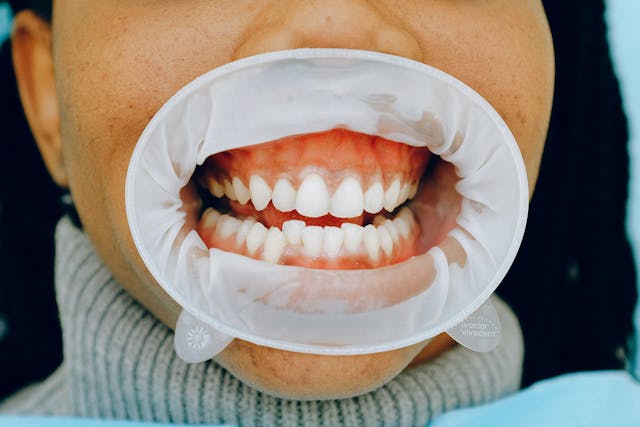
A brighter smile is one of the most requested cosmetic dental treatments in Australia. That said, if you have receding gums, you may wonder if teeth whitening is safe or even possible. The short answer is yes. You can whiten your teeth if you suffer from receding gums, but this must be tackled carefully and under professional guidance.
Before starting any whitening treatment, it is essential that you have your gums assessed by an experienced dental team, such as: Clover Dentistry. Gum recession changes the structure of your teeth and exposes areas that respond differently to whitening agents, so a customized plan is critical.
Here’s what gum recession means for whitening, the risks associated with it, and how you can safely achieve a brighter smile.
What is gum recession?
Gum recession occurs when the gums pull back from the tooth, exposing more of the tooth surface and sometimes the root. This may happen gradually and may not be noticeable in the initial stages. Common causes include:
- Periodontal (gum) disease
- Aggressive brushing of teeth
- Grinding or clamping
- Age-related changes
- Orthodontic movement
- Genetics
When the gums recede, the protective enamel layer may no longer cover the entire visible tooth surface. Instead, dentin (the softer layer beneath the enamel) can become exposed.
Why gum recession changes the whitening process
Teeth whitening treatments mainly work on the enamel. Professional whitening gels contain peroxide-based agents that penetrate the enamel and break down stain molecules. However, exposed root surfaces behave differently. This is why:
- Root surfaces do not whiten in the same way – Tooth roots are covered with cementum instead of enamel. Cementum is thinner and more porous, meaning it absorbs bleaching agents more quickly, but does not lighten as predictably. In many cases, roots do not whiten significantly at all.
- Increased sensitivity – Gum recession often causes tooth sensitivity because dentin contains microscopic tubes that connect to the nerve. Bleaching products can temporarily increase this sensitivity.
- Risk of gum irritation – If whitening gel comes into contact with already fragile gums, it may cause irritation or discomfort. This is especially relevant with over-the-counter kits without custom trays.
Is it safe to whiten teeth when gums have receded?
In many cases yes, but only after a proper dental evaluation. The most important considerations are:
- Is the gum recession stable or progressing?
- Is there active gum disease?
- How severe is your tooth sensitivity?
- Are the exposed roots extensive?
If gum disease is present, whitening should be postponed until it has been treated. Cosmetic procedures should never take priority over gum health. A dentist may also recommend desensitization treatments before whitening to reduce discomfort.
Professional whitening versus at-home kits
If you suffer from gum recession, professional whitening is highly recommended over kits from the supermarket or online.
Professional whitening
- Custom-made trays minimize gel contact with gums
- Controlled gel concentration
- Controlled treatment duration
- Desensitizing options available
- Adjustments made based on sensitivity
Over-the-counter kits
- One-size-fits-all trays
- Higher risk of gum irritation
- No professional control
- Potential for uneven results
Precision is important in gum recession. Poorly fitting trays can cause whitening gel to build up around exposed root areas and gum lines, increasing irritation and sensitivity.
Managing sensitivity during bleaching
If your dentist determines that whitening is appropriate, they may recommend the following:
- Use a desensitizing toothpaste for 2-4 weeks beforehand
- Space treatments further apart
- Shorter whitening sessions
- Whitening gel with lower concentration
- Application of fluoride or remineralizing agents
Temporary tenderness is common even in patients without gum recession, but careful planning significantly reduces discomfort.
What if bleaching isn’t the best option?
In some cases, bleaching does not produce the desired results, especially if the exposed roots remain darker than the enamel. Alternative cosmetic options may include:
- Composite bonding – Tooth-colored resin can be applied to the root surface to create a more uniform appearance.
- Veneer – For more advanced cosmetic issues, veneers can provide consistent color and coverage.
- Gum grafting – If the recession is severe, a gum graft may be recommended for both aesthetic and protective reasons before bleaching is considered.
During a comprehensive consultation, your dentist can explain which approach best suits your oral health and cosmetic goals.
When should you avoid bleaching?
You should avoid teeth whitening if you:
- Active periodontitis
- Severe untreated sensitivity
- Exposed roots covering large areas
- Cracked enamel
- Persistent gingivitis
Whitening should always be a final step, not the first, in a broader oral health plan.
Long-lasting care after bleaching
If you continue with whitening, it is essential that you maintain the results while protecting your gums:
- Use a soft-bristled toothbrush
- Avoid aggressive brushing
- Provide regular professional cleaning
- If necessary, discuss sharpening with a night watchman
- Limit stain-causing foods and drinks
The most important thing is that you continue to monitor the health of your gums. A recession in itself is not reversible, so preventing further progression is crucial.
The bottom line
Yes, you can whiten your teeth if you suffer from gum recession, but this must be done carefully and under professional supervision. Gum health should always come first. A personalized assessment ensures that bleaching is both safe and effective, while minimizing sensitivity and protecting exposed root surfaces.
If you are considering whitening and have noticed receding gums, book a consultation first. With the right approach, it is entirely possible to achieve a brighter smile without compromising the long-term health of your teeth.