Booked to travel through the Middle East? Here’s why you shouldn’t cancel your flight
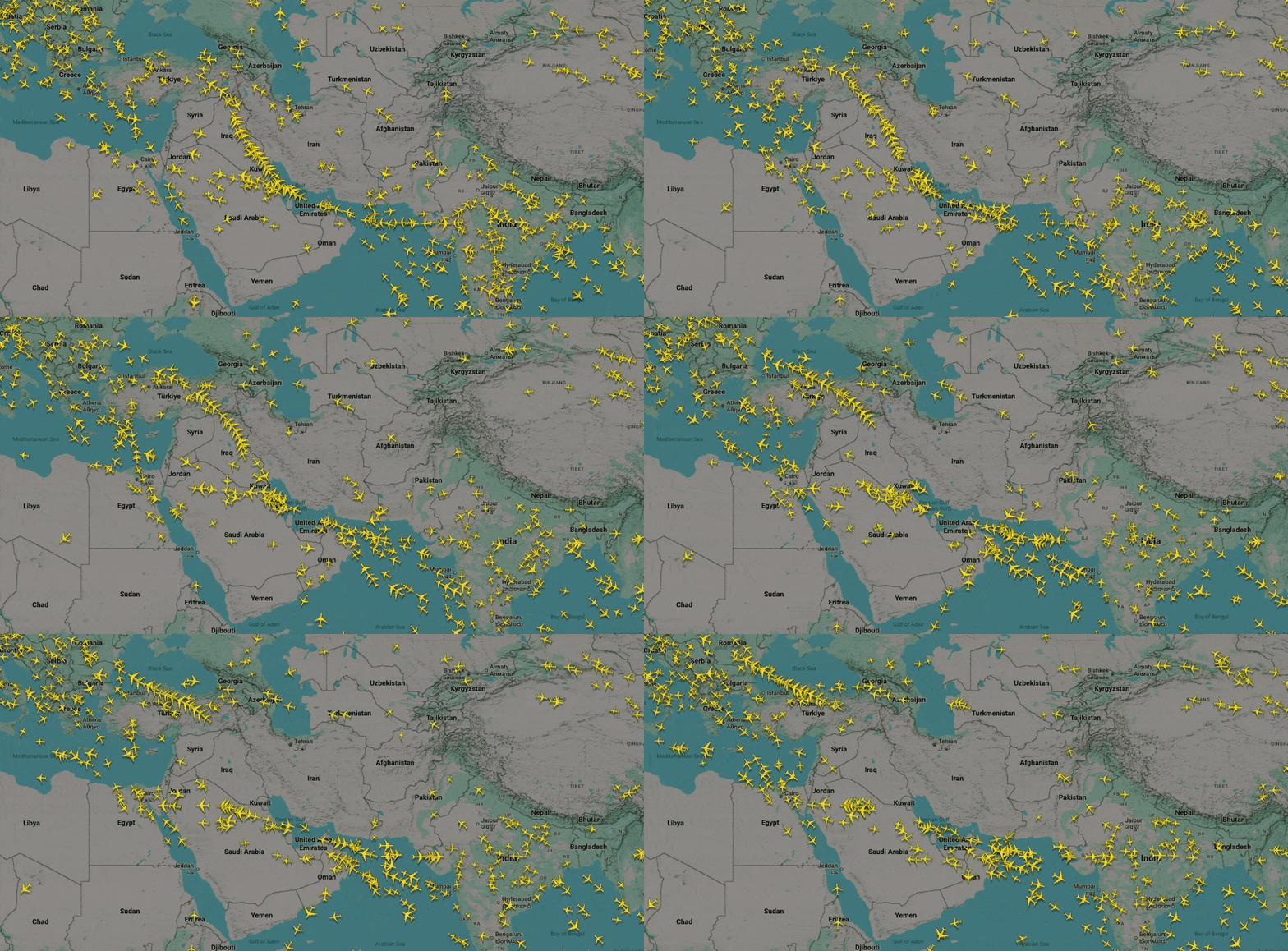
Travelers are advised not to cancel their tickets for flights through the Middle East and to check with their airline as the airspace remains closed indefinitely.
If travelers cancel a ticket, they may lose some of their consumer rights and the ability to claim refunds.
The US and Israeli bombing of Iran and the closure of its airspace and airports are affecting all global airlines flying through the region. The closures will have a flow-on effect, causing significant disruption to the global aviation sector that could take weeks to resolve.
Tens of thousands of travelers have been affected
The Middle East is home to three of the world’s largest airlines: Emirates and Etihad, both based in the United Arab Emirates (UAE), and Qatar Airways, based in Qatar.
Over the past twenty years, the region has grown into the global hub of international aviation. It is not only the three airlines that call the region home that are affected by the current conflict.
Emirates has informed all passengers that it has suspended all flights to and from Dubai until 3pm UAE time on March 2.
Passengers who booked on or before March 5 have two options: rebook on an alternative flight or request a refund. Etihad has issued similar advice. Qatar refers travelers to its app.
Other airlines flying through the region, such as Lufthansa, have also issued announcements to their passengers.
The operations of Virgin Australia and Qantas are not directly affected by the airspace closure. However, some passengers may be affected if they travel on partner airlines. It is essential that people planning to travel contact their airline.
Travel cancellation insurance is unlikely to be useful as acts of war that disrupt travel are explicitly excluded from cover.
It could take weeks to clear the backlog of travelers from last weekend. US President Donald Trump has said the operations could take “four weeks or less”.
Tens of thousands of travelers are stranded in the Middle East waiting for airspace to reopen so they can continue their journey.
The General Civil Aviation Authority in the UAE has announced that the UAE government will bear the costs of accommodating all stranded passengers in their country. There are around 20,000 people stranded in the UAE, and many more in other countries in the region.
Plans are in place to keep passengers safe
Airlines are closely monitoring rising tensions in the region. They are used to dealing with unexpected operational disruptions.
With the major closure of airspace in the Middle East in June 2025 still fresh in people’s minds, airlines quickly incorporated this experience into their decisions this time.
The current situation is somewhat different than in June 2025. Following the US and Israeli bombing of targets in Iran this weekend, Iran responded with missiles and drones that hit both civilian and military targets in several countries in the region.
Dubai International Airport and Abu Dhabi’s Zayed International Airport were both hit by drone strikes or debris. Both airports are for civilian use. They are not military assets.
It is not the first time that airports in the region have been attacked. In January 2022, Houthi forces in Yemen launched a drone attack on Abu Dhabi airport. Three people were killed.
Airlines hubs have few alternatives
Some airlines affected by the airspace closure may adjust their schedules and routes to avoid the area, in an effort to reduce the impact on both their passengers and their business profitability.
However, the airlines that call the Middle East home have built their networks and highly profitable businesses using the hub-and-spoke model. They take passengers to the hub, a transfer point, and then fly them to their destination. Now that the airspace is closed, these airlines can no longer bring in or fly out passengers.
It would be virtually impossible for the major airlines in the Middle East to temporarily move their bases to another country.
They are large organizations. Emirates currently operates a fleet of 261 passenger aircraft. Simply finding a place to park all the planes would be a major challenge.
Complex systems within systems
Running an airline is like putting together a complex jigsaw puzzle with constantly moving pieces.
In addition to aircraft, airlines require large teams of pilots and cabin crew, as well as extensive catering, cleaning, refueling and maintenance operations. These systems are highly integrated and location-specific. This makes it extremely difficult to move or replicate them to another country at short notice.
Currently, Middle Eastern airlines have large numbers of aircraft, crew and passengers stranded in the far reaches of their networks. For all airlines, the safety and security of their passengers and crew is their priority.
When the skies reopen, airlines will face significant challenges in clearing the backlog of stranded passengers. Additional flights and timetable adjustments will probably be necessary.
It is still unclear how long the airspace will remain closed. But airlines will already be working on plans to quickly and safely restore full operations when the time comes.
Will this latest airspace closure reduce demand for travel across the Middle East? It is possible in the short term. But people will continue to travel. The Middle East’s aviation hubs are geographically located for global connectivity. The hope is that the current military action and regional instability will be short-lived.