Bob Horner’s greatness remembered as Golden Spikes announcement nears
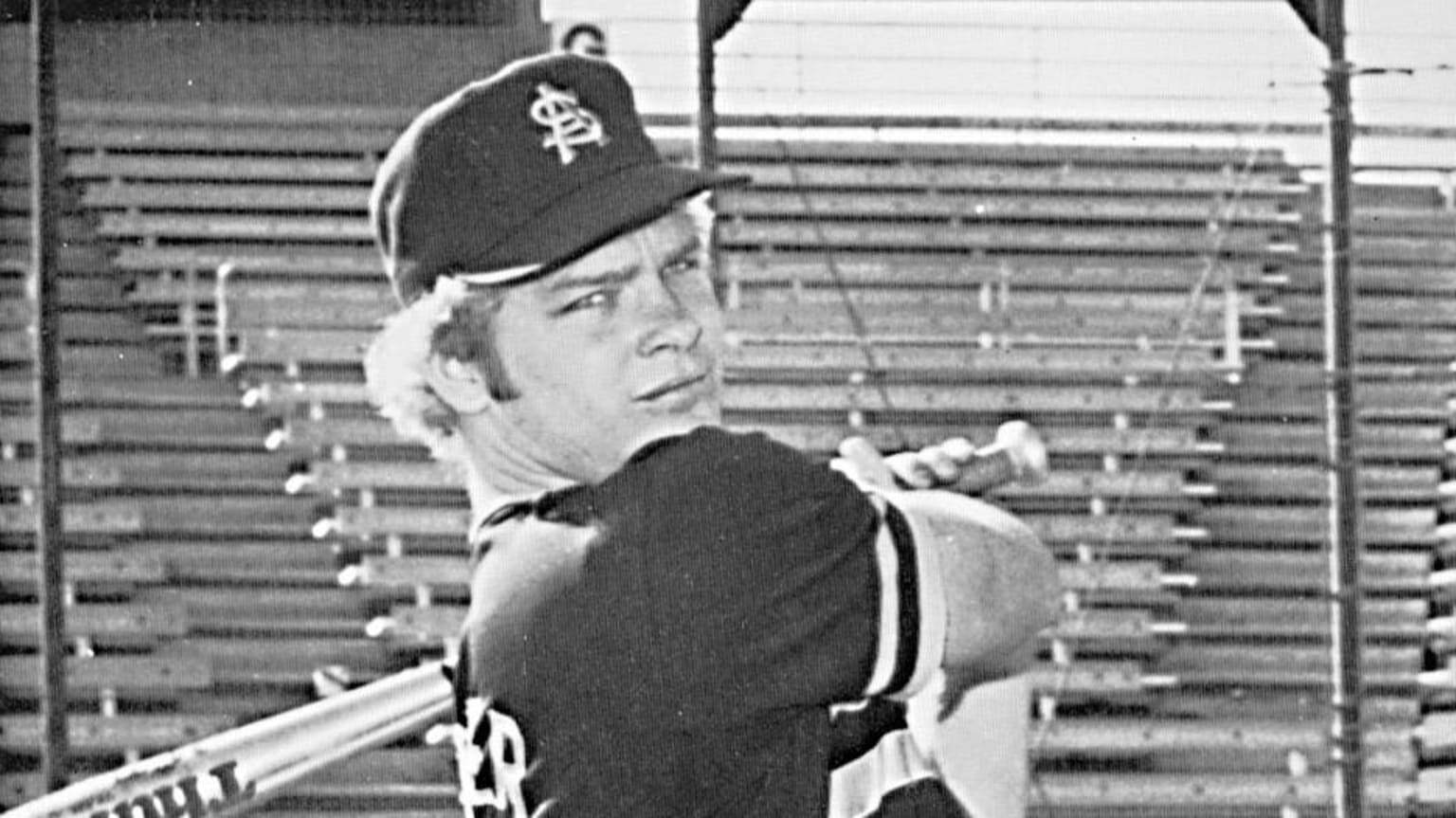
PHOENIX – It takes a lot to become a legend in any sport, requiring not just accolades but dominance.
That is exactly the path Arizona State infielder Bob Horner took during his career, not only cementing himself as a legend at ASU, but within the sport of baseball, especially at the college level.
“He won the Golden Spikes and Rookie of the Year in the major leagues,” Atlanta Braves legend Dale Murphy told Cronkite News. “That is something that will never be done again.”
Horner, who died in May at 68, not only led the Sun Devils to a College World Series title in 1977, winning MVP of the tournament, but was also the recipient of the inaugural Golden Spikes in 1978. USA Baseball will name the 2026 winner of the award, which honors the top amateur baseball player in the United States, Monday. ASU’s Landon Hairston is one of three finalists.
Born in Junction City, Kansas, and raised in Glendale, Horner played four years of baseball at Apollo High School, breaking numerous school records at the time. He was on the radar of practically every scout and school in the country and chose ASU over all of them.
“He signed him to a letter of intent,” Patsey Brock said of her late husband, former ASU coach Jim Brock. “It was a big question mark as to whether he would go pro at that point or if he would come to college, so of course, we were absolutely thrilled.”
Horner stood out immediately.
He helped lead the Sun Devils to the 1976 College World Series, hitting .339 with nine home runs and 42 RBIs. The Sun Devils lost in the semifinals to the University of Arizona, but still won 65 games and the Western Athletic Conference Championship.
And he never let it go to his head.
“Bobby was the type of person who didn’t come in in a flamboyant manner,” Brock said. “He was just one of the guys on the team. He was well liked and he helped them win.”
He somehow followed this up with a better season as a sophomore, leading the Sun Devils to their fourth national championship in 1977. Horner put the team on his back, leading the way by hitting .389 with 87 RBIs and setting a school record with his 22 home runs.
“He was such a natural athlete,” former ASU baseball player Dave Hudgens said. “Great hands, good arm, could hit anybody, great eye at the plate, just so advanced for his age.”
He still had one more year at ASU though and he capped off his Sun Devils career with a season that will forever be in the record books of college baseball, including breaking his own record.
Batting .412 with 100 RBIs, Horner hit 25 home runs, setting an ASU record, one that would stand for the next 22 years. He led his Sun Devils to another WAC title and their fourth consecutive College World Series appearance, the third for Horner.
Following the end of the regular season, Horner was not only a First-Team All-American again, but became the inaugural winner of the Golden Spikes.
“There was a lot of excitement about him and where he would end up after college,” Brock said. “He was very published. …. And he didn’t ever flaunt it, he just went about his business for that next step.”
This award came as no shock to his teammates or coaches, who saw how advanced and how skilled he was.
‘Nothing bothered him’

Hudgens, who was a former major league hitting coach for many years, noted what made him stand out the most.
“One thing he did so well was he had a slow heartbeat,” Hudgens said. “Nothing bothered him. He was very confident, not to the extent where he was cocky, but he just fit in really well with everyone on the team. But he was just so much of a better hitter than anyone else.
“He could have played in the big leagues his sophomore year, that’s just how good he was. We would occasionally play against a spring training team and he looked like one of the regulars.”
Horner finished his time at ASU with a .383 career batting average, 229 RBIs and 56 home runs.
Following this began a stretch that saw Horner do something almost no one in baseball history has been able to do.
After the Atlanta Braves drafted him first overall in the 1978 MLB Draft on June 6, Horner finished out his college career, losing to eventual national champion USC on June 8.
Just eight days later, Horner made his MLB debut with the Braves, where he hit his first career home run off Hall of Famer Bert Blyleven.
This started off a rookie year that saw him win the National League Rookie of the Year award over future MLB legend Ozzie Smith, despite playing in only half the games.
“Bob did not lack confidence,” Murphy said. “He showed up and we’re all like, ‘Oh my gosh.’ He was every bit as good as he said he was.”
Just one year after leaving, Arizona State honored him by inducting him into the Sun Devil Hall of Fame, just the 11th person inducted and only the second to be inducted just a year following the end of his time there.
After joining the Braves, he fit right into the lineup, sliding in at third. Horner and his agent told the Braves that he didn’t need the minors, and he turned out to be more than correct about that.
“We had all faced Bert Blyleven before, and we knew what kind of major league stuff he had,” Murphy said about Horner’s first game. “Bob just didn’t look like he was phased at all.”
After that, everyone quickly realized that Horner was not a normal prospect.
Although most players have issues adjusting to major league pitching, Horner was such a natural and pure hitter that he didn’t need any time. He went from college to major league pitching like he was going from tee ball to coach pitch.
“Horner had the most pure swing I have ever been around,” Braves teammate Chris Chambliss said. “I’ve been around a lot of good hitters but Horner, he was one of those guys that we talked about a lot. He could walk out of bed in the middle of the winter or something. And, you know, he’d be right on time.”
An example for others
As a leader both on and off the field, players looked to Horner his whole career for help. As someone who was known for having such a pure and easy swing, other players saw him as an example for ways to improve their own game.
At the same time, he was known to be just as fun on the field as off. His teammates often talked about how good of a person he was away from the ballpark.
“He was really down to earth,” Chambliss said. “He knew how to have fun, and he never took the game seriously, which is a great trait in baseball. He just had a great attitude about the game.”
Between the baseball game on the field or the card games the team would often play after, these Braves teams were extremely close, and Horner was one of the main catalysts to that. They used the card games as ways to connect with each other off the field and it served as a great way for Horner to show his personality in the clubhouse.
“His sense of humor was outstanding. He was a great teammate,” Chambliss said. “He was this guy, man, you know, if he was mad at somebody, he almost didn’t show it.”
There is no telling what he might have accomplished if injuries didn’t derail him throughout his career. Multiple injuries to his shoulders, legs and wrist left Horner frequently struggling to stay on the field. Despite this, he never shied away from one of his best traits: his power.
“I think he had a body that was built for hitting,” Murphy said. “He had good hands, you know. Not only fielding, but you … just kind of need to be blessed with good hand-eye coordination. I also think just the length of his arms. I know that sounds weird, but I truly believe that he kind of had a body that was built for hitting.”
During the 1986 season with the Braves, Horner became just the 11th player in major league history to hit four home runs in a game, a feat that has been accomplished just 10 more times since.
Following 1986, Horner became a free agent for the first time.
Stops with the Tokyo Yakult Swallows and St. Louis Cardinals followed before he opted for retirement in 1989.
His legacy
In his 10-year MLB career, Horner hit almost 170 doubles and over 200 home runs despite playing in just over 1,000 games.
Years later, he was part of the College Baseball Hall of Fame’s inaugural class in 2006, along with former ASU coach Bobby Winkles.
Horner’s impact on the game of baseball came mostly through what he did in college, but that doesn’t discount his 10 years in the majors.
“Barring any injuries, there’s no telling what Bob could have accomplished,” Murphy said. “A remarkable hitter, best I ever played with and one of the best hitters I’ve ever seen.”
When one of the best hitters of a generation says another is the best hitter he has ever seen, that says something.
Decades after leaving Arizona State, Horner’s records, accolades and influence remain woven into the fabric of ASU baseball. For many who played with him and watched him, he remains the standard by which all others are measured.
Related

Source link