Beyond Tokyo: Eight cherry blossom destinations in Tohoku and nearby regions, connected by Shinkansen | News
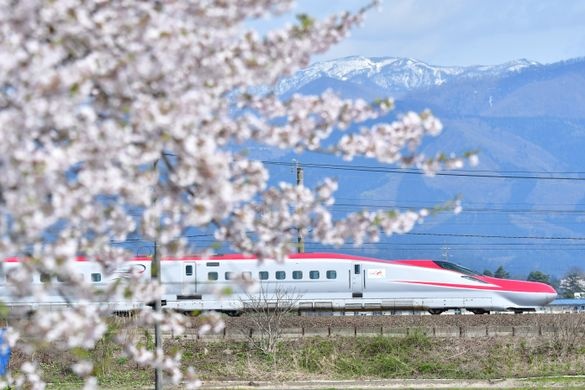
Japan’s Tohoku region covers the northeastern part of Honshu and includes six prefectures: Aomori, Iwate, Miyagi, Akita, Yamagata and Fukushima. Surrounded by mountain ranges and river valleys, with castle towns and rural landscapes scattered throughout, the area becomes one of Japan’s most attractive spring destinations when the cherry blossoms reach their peak.
Many locations in the region bloom later than Tokyo, typically reaching their best viewing period from late April to early May, although the exact timing varies by year and latitude. Because the bloom progresses gradually from south to north, travelers can follow the season by rail, connecting several destinations in one itinerary.
Miharu Takizakura, Fukushima
A millennial weeping cherry tree
Located north of Tokyo in Fukushima Prefecture, Miharu Takizakura is considered one of Japan’s most famous individual cherry trees. Estimated to be over 1,000 years old, this enormous weeping cherry stands alone on a hillside and attracts visitors from all over the country every spring. The usual high season falls at the end of April.
Hirosaki Park, Aomori
Castle grounds surrounded by blossoms
Hirosaki Park in Aomori Prefecture is known for its more than 2,500 cherry trees surrounding a former feudal castle. During the peak season, petals often cover the park’s canals, creating a phenomenon known locally as hana-ikada, or “flower rafts.” It is considered one of the most important cherry blossom locations in Northern Japan.
Samurai District Kakunodate, Akita
Weeping cherries along historic streets
On the Japan Sea side of Honshu, Kakunodate is in Akita Prefecture, famous for its preserved samurai dwellings. Rows of weeping cherry trees line the streets, while nearby riverside paths offer additional blossom views, making the city great for walking during the season.
Koiwai Farm, Iwate
A lonely tree with Mount Iwate in the background
At Koiwai Farm in Iwate Prefecture, a single cherry tree stands in open pasture with Mount Iwate behind it. The contrast between lingering snow on the summit and pale pink blossoms below has made this scene a familiar spring sight in the region.
Hitome Senbonzakura, Miyagi
A blossom avenue by the river
In southern Miyagi Prefecture, more than a thousand cherry trees line the banks of the Shiroishi River. Collectively known as Hitome Senbonzakura – literally ‘a thousand trees at a glance’ – the long stretch of blossom attracts visitors who walk along the riverside paths and view the reflections on the water at night.
Cherry blossoms with Mount Gassan, Yamagata
Snow-capped peaks and spring flowers
In Yamagata Prefecture, cherry trees bloom against the backdrop of Mount Gassan, whose peak often retains snow well into spring. The contrast between white mountain ridges and pale blossoms creates a distinctive seasonal landscape, popular for photography and leisurely walks through the countryside.
Takada Castle Park, Niigata
A performance on the water in the dark
Takada Castle Park in Joetsu City, Niigata Prefecture, features more than 4,000 cherry trees along its canals and waterways. The park is known for its nighttime illuminations during blossom season, which offers a different atmosphere than daytime visits.
Ueda Castle Ruins Park, Nagano
Blossoms between historic stone walls
In Nagano Prefecture, the Ueda Castle Ruins Park combines cherry trees with stone ramparts and gardens left over from the former fortress. Visitors can stroll the grounds while enjoying views of flowers framed by historic structures.
Access from Tokyo by Shinkansen
All these destinations are connected to Tokyo via Japan’s high-speed rail network.
Typical travel times are about 1 hour 20 minutes to Fukushima, 1 hour 30 minutes to Sendai, 2 hours 10 minutes to Morioka and about 3 hours to Shin-Aomori. Because bloom dates vary by city, travelers can plan routes north that follow the season through multiple prefectures.
Planning the trip
Because the timing of cherry blossoms varies across the region, Tohoku lends itself well to routes that combine several cities by train. The seasonal scenery along the way and the changing local character from stop to stop add to the appeal of spring travel in eastern Japan.
Seats on Shinkansen services can be reserved in advance via JR East Train Reservation
During the flowering season, demand is usually high, so booking early can make trip planning easier.
From Tokyo, travelers can plot a route north and turn a spring visit to eastern Japan into a multi-stop train journey around cherry blossoms.
A paradise for Sakura seekers! For information see here https://www.jreast.co.jp/multi/sakura/