Arizona legislators wrestle with impact of Big Beautiful Bill budget cuts
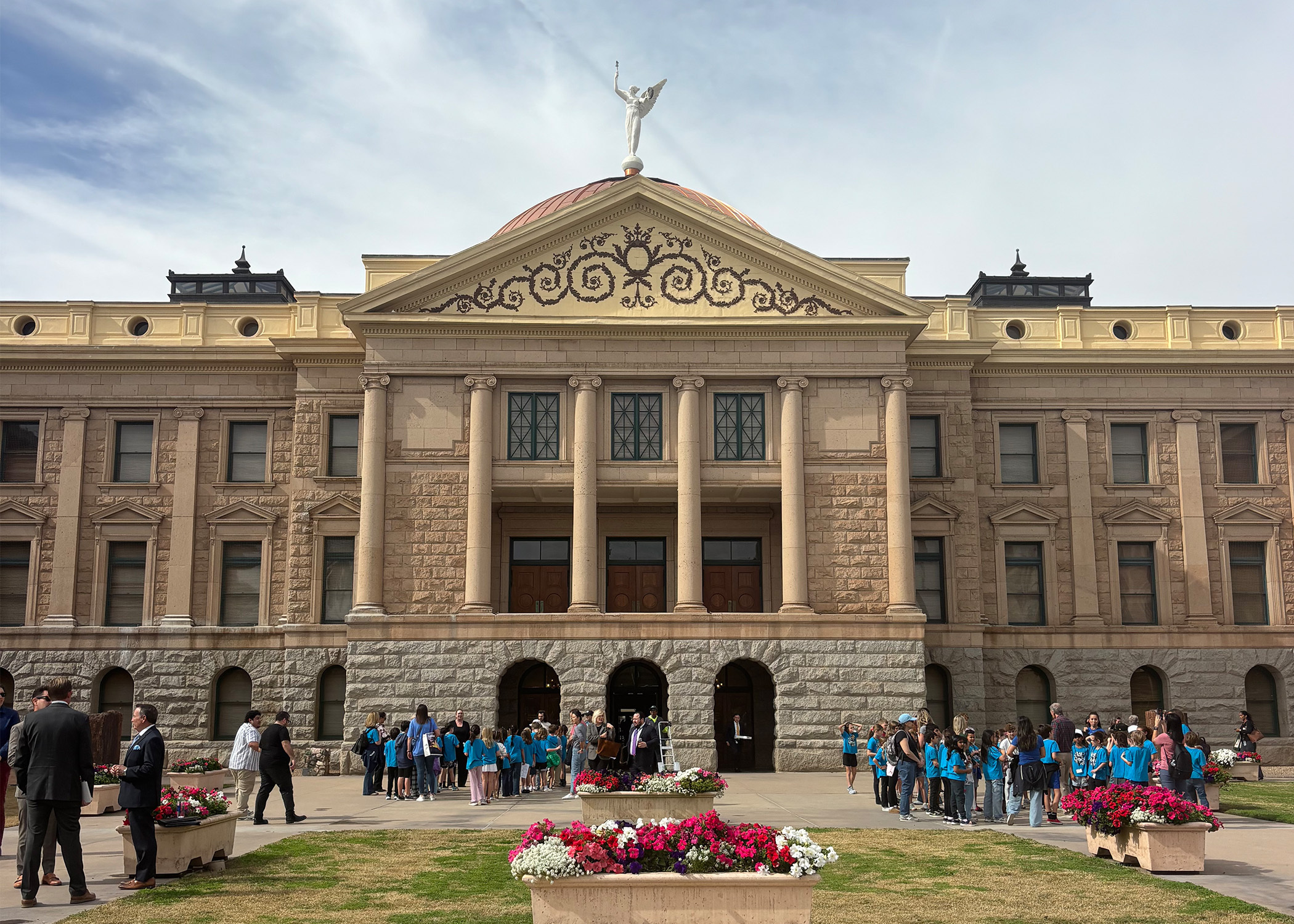
PHOENIX – Arizona risks steep penalties if it does not comply with new federal regulations. The Big Beautiful Bill left state legislators with three budgetary options going into the new session: go above and beyond to conform with the bill, do the bare minimum or not conform at all.
“In the six years that I’ve been here, this is the first time that we have not gone into session saying, ‘yeah, we’re going to rubber stamp conform to the federal and keep right on marching,’” said Rep. Stephanie Stahl Hamilton, D-Tucson.
The Grand Canyon Institute, a non-partisan economic think tank, analyzed the state’s options, concluding that significant conformity with new regulations would create a deficit of more than $300 million and cut funding to other agencies; minimal conformity leaves a small surplus but would not fund all other priorities; and non-conformity would fund other state agency priorities but risk penalties for being out of compliance with the new regulations.
Stahl Hamilton said the biggest impact of HR 1 will be felt in health care and that “a lot of our social services, Medicaid, food, benefits are going to get hit hard.”
The state does not have enough money in its “rainy day” fund to backfill all of the programs that will be impacted by the bill, she said.
According to Dave Wells, research director at the Grand Canyon Institute, the state needs $26.25 million for its SNAP program to hire additional staff to reduce its error rate from 10.39% to below 6% by the end of fiscal year 2028. The error rate measures both underpayments and overpayments. If the error rate is not addressed, the state could face a federal penalty ranging from $150 to $200 million.
Wells, who worked at Arizona State University for 25 years, believes that higher education may be one of the areas the state draws money from to comply with the new regulations.
“There’s been a persistent erosion of the state support for universities,” Wells said.
Tax increases could help to offset some deficits in the state budget but are very difficult to pass as they require a two-thirds vote in both the House and Senate, according to ASU professor and economic expert Dennis Hoffman.
“We’re going to cut income taxes again this session to conform with the Big Beautiful Bill,” Hoffman said. “So it just means that there’s less limited resources to go around to support other things.”
Beyond state agency cuts, changes to Medicaid eligibility will require 200,000 to 300,000 Arizonans to submit paperwork to AHCCCS, the state’s Medicaid program, to keep their coverage, Humble said. Those affected are part of the expansion population, or people with incomes between 100% and 138% of the federal poverty level whom the state considers able-bodied.
Will Humble, executive director of the Arizona Public Health Association, said he expects the new legislation will impact rural Arizona the most, where roughly 39% of the population relies on Medicaid for health care.
“The real risk is that people aren’t going to meet the requirements,” said Humble. “What’s happened in other states that did this is the state agency often messes up the rollout and makes it really difficult or impossible for people to submit the paperwork to establish they’re meeting the work requirements.”
Other cuts within the past year will impact investment into Arizona’s economy. The state was set to receive $156 million as part of the Solar For All grant in 2026 before all outstanding grants were cut by the Environmental Protection Agency on Aug. 7, 2025.
“We get hurt by the loss of support for renewables because we’ve kind of gone in that direction,” Hoffman said.
Arizona is not required to adopt a balanced budget each year, but the state constitution makes it difficult to finance a long-term deficit, unlike the federal government.
Related

Source link