APS looks to overhaul funding system, asks Arizona utility regulators for yearly increases through formula rates
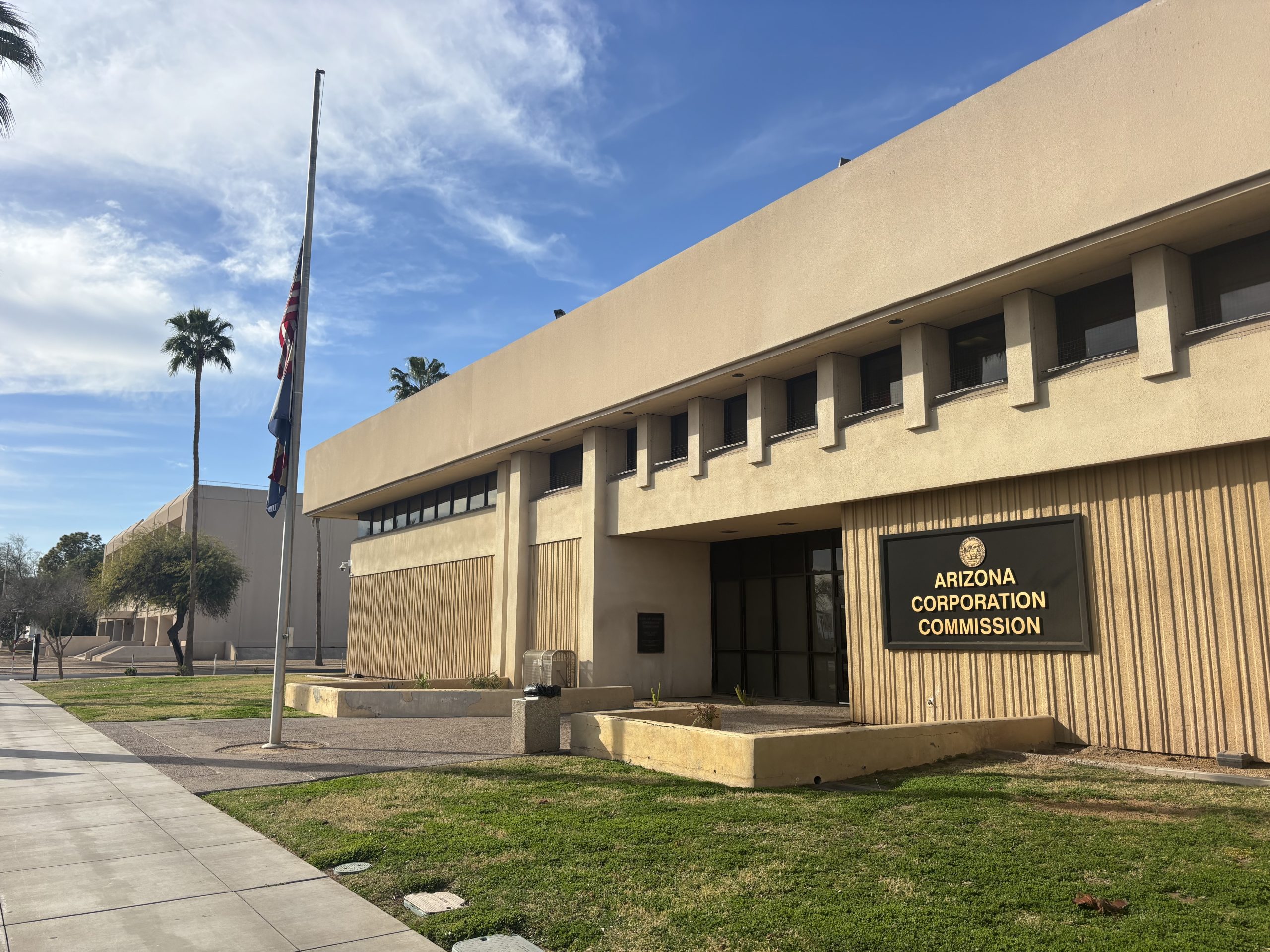
PHOENIX – Edward Van Ness’s hands shook as he approached the microphone at an Arizona Corporation Commission in downtown Phoenix.
On the panel in front of him sat a judge and one of the five members of the commission – which will ultimately determine how much his energy bill costs next year. Van Ness, the president of the Sun City Homeowners Association, said he was there to speak for his neighbors. He’s fought the APS rate increases for years as his neighbors struggle to keep up with the cost of living.
This was the second to last public comment session before the APS rate case hearing begins in May.
Most Sun City residents are retirees on fixed incomes. According to Van Ness, many have reached the point where they have to decide: “well, do I pay my bills, or do I buy food?”
Arizona’s largest energy company, APS, is seeking a major overhaul to the way it charges customers. Residential customers could see an average increase of 16% in their monthly power bill, or about $20 a month, as APS looks to raise revenue by $579.2 million.
For some APS customers, the $20 per month increase seems untenable.
“Let’s face it, it’s got to be pretty demeaning to your aspect of life,” Van Ness said. “And could be, you know, ‘why am I sticking around? I can’t afford to live anymore, so I might just wanna die,’ and that’s a heck of a thing to have to think about in your life.”
Much has been made about the toll a rate hike will have on customers struggling to make ends meet. But that has overshadowed what some consumer advocates say could be the most impactful change – APS is asking regulators to change its funding method, which may reduce oversight. The proposed formula rates would allow APS to increase rates incrementally every year without another rate case for five years.
Current APS rates are based on what the company spent in 2021 and 2022, according to Anne Carlton, the utility’s manager of regulatory compliance.
“With the economy changing so dynamically since then and everything becoming so much more expensive, you can imagine that every piece and part that we use to maintain the grid has become more expensive, up to 70% higher, even above 100% higher,” Carlton said.
The approval process for a proposed rate increase is called a rate case, but if APS’s formula rate proposal is approved, this could be its last for the next five years. APS already uses formula rates for transmission lines that connect to other states, though this type of rate has never been applied to residential customers.
Under the formula rate system, APS would perform a yearly cost of service study for each customer class and then adjust its rates up or down based on the results. According to Carlton, this would allow for more incremental increases based on current data, instead of going back every few years with older data.
“We’re going to perform a cost of service study every year as part of a formula,” Carlton said. “Which would ensure that if we have very large customers like data centers going and driving up costs, that we can continue to assign them costs every single year, whereas under traditional rate making, if you had a big change in a customer class like data centers, it would take you three years to fix it.”
Diane Brown is the executive director of Arizona PIRG, a nonprofit consumer advocacy organization that filed an intervention in the rate case and has been hosting town halls with APS customers around the state.
“Typically, a company comes in every few years, seeking cost recovery for major capital expenditures,” Brown said. “With formula rates, the increase could happen on an annual basis for up to five years, with less scrutiny from intervenors and ratepayers due to condensed timelines and an overlay and likely overlap of rate cases happening simultaneously.”
Intervenors are interested parties who file to be involved in the rate case process. They are allowed to present witnesses, review data and scrutinize the utility’s proposal. Grocery store companies such as The Kroger Co. and Walmart have filed interventions into the APS rate case, along with Attorney General Kris Mayes and multiple activist groups.
“We’ve consistently heard that $20 more a month on average would greatly impact their lives and that of their household,” Brown said. “Individuals have shared heartbreaking stories about the need to forgo medicine or food due to recent rate increases.”
The proposed increase would be on average 14% across all customer classes, with an increase of 16% for residential; 6% to 8% for small, medium and large businesses; and 30% to 45% for data centers.
Additionally, APS is looking to double the Grid Access Charge for solar customers. Sometimes referred to as a “solar tax” by critics, APS uses the nominal fixed charge of $2 to $3 per month to cover the costs to serve residential customers who generate their own solar electricity.
Donna Levy is an APS customer from Peoria with 31 solar panels on her house. Levy pays APS more to use its electricity than what it pays her for her electricity. She said that APS buys back her electricity, for a “very small fraction of what we pay for when we need it.”
“A neighbor of mine wanted to put solar up, but after talking with APS, they said it wouldn’t be worthwhile,” Levy said. “And us older citizens, in our lifetime, you can never make back the money of what it costs to put the solar on your roof.”
The next step in the rate case will be the final hearing in May. Following a public comment session, APS and intervenors will present witnesses before a judge and the commissioners. The judge will issue a recommendation to the commissioners, who will ultimately decide whether or not to approve the rate increase and by how much.
The rate case will conclude before voters have the chance to weigh in, with the hearing phase likely to last a month. Two of the seats on the Arizona Corporation Commission are up for election in November.
“You can’t live without power,” Van Ness said. “I mean, you need to take a bath and you need to be able to cook your food. So it’s just a disheartening thing for me to know the people who are having to make dire choices that will affect them in the future, in today.”
Related

Source link