A modern battle over affordable housing is erupting in the birthplace of Thanksgiving
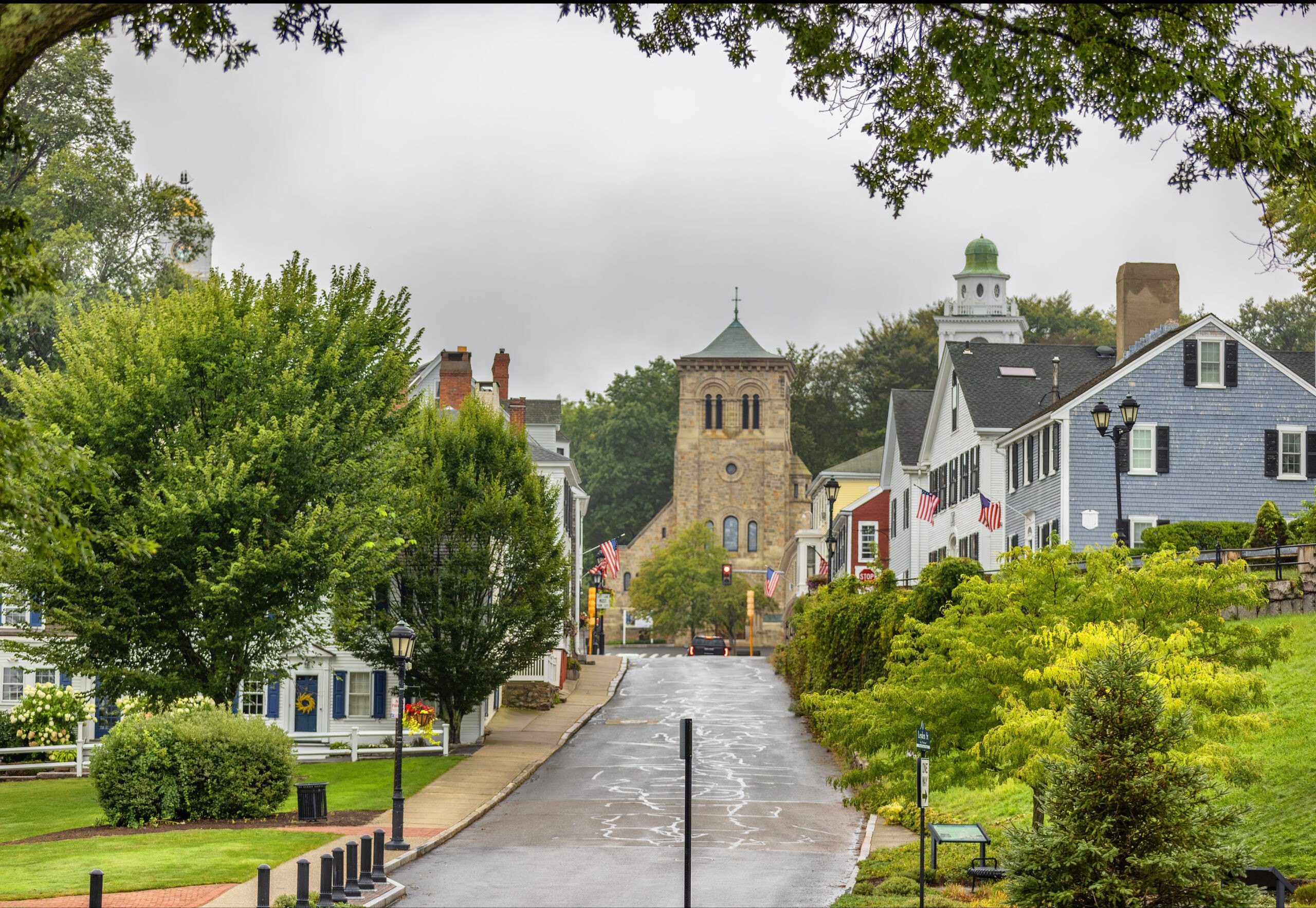
The sprawling city of Plymouth, Massachusetts, located on the state’s southern coast, is many things at once.
It’s called ‘America’s Hometown’. It is considered part of the greater Boston area and the beginning of the legendary Cape Cod. And now it’s a new front in the ongoing battle to create truly affordable housing in the United States; However, ‘affordable’ is a term in the eye of the beholder.
Many agree that Plymouth is in dire need of truly affordable housing. The battle is over whether the state’s Chapter 40B program actually delivers this, and whether it’s possible to preserve Plymouth’s charm while allowing it to continue developing into a potential coastal gem.
Can there be such a thing as building affordable housing that makes everyone, from existing residents to relative newcomers to local government, happy?
The state of affordable housing in Plymouth
According to Plymouth’s Select Board, which serves as the city’s executive branch, Plymouth has built more than 4,500 homes in the past eight years. Still, Select Board members have said any new development that could evade the city’s control would be akin to a “hostile takeover.”
“Plymouth is in dire need of truly affordable housing,” said one board member Deb Iaquinto wrote to Realtor.com® in an email. But she claims the latest proposals under the state’s Chapter 40B program won’t deliver what the city actually needs.
The development in question is presented by Pulte Homes: 163 condominium units on two lots totaling less than 10 acres in what officials describe as an already busy North Plymouth neighborhood. The projects would join more than 1,000 other units built or approved through 40B in recent years as part of a state program designed to increase affordable housing throughout Massachusetts.
The catch-22 of 40B
Massachusetts’ Chapter 40B program requires 10% of the housing stock in each municipality to be designated as affordable. To incentivize developers, projects with 20% to 25% affordable units can bypass local zoning rules, including restrictions on lot size and density.
The problem, according to Plymouth officials, is that the state is pegging the price for these affordable units to income levels in the Boston area, which are significantly higher than average incomes in Plymouth.
“As a result, rents for these units in Plymouth are actually equal to (sometimes more than) market-rate units,” Iaquinto says. explained.
Additionally, Iaquinto argued that the development’s location does not have the infrastructure to support a project of this size.
“We are not against density, as long as it is in a location that has the infrastructure to support it and it complements the neighborhood. Good design is all it takes!” she said.


This isn’t your great-great-grandmother’s Plymouth
Plymouth has been around since the 17th century and is the largest city in Massachusetts by area; so big that it can take up to 40 minutes to drive from one side to the other on the highway. Despite its significance as a landing point for pilgrims and the symbolic birthplace of the American Thanksgiving, for decades it was primarily a summer town where downtown restaurants struggled to stay open through the winter.
Peter Zheutlina journalist who moved to Plymouth a year ago and writes for the local newspaper Plymouth Independent, describes the area to outsiders as “flyover country” – a place where people pass between Boston and Cape Cod.
That’s changed dramatically in recent years, Zheutlin says, driven in part by two massive planned communities: Pine Hills and Redbrook. These developments tend to attract affluent retirees and empty nesters, he says, and are helping to change the character of Plymouth, which has deep roots as a hub of rope manufacturing, fishing and shipping.
But Zheutlin sees enormous potential: the view of the waterfront, where you can spot whales and dolphins, is spectacular. The city has a philharmonic orchestra, an arts center that books major acts and a growing restaurant scene.
But, Zheutlin says, “There are properties very close to the waterfront that have been abandoned.
“Is Plymouth about to become the next Portland, ME, or Portsmouth, NH?” he asks, referring to other small towns on the East Coast that have become hip destinations. “Plymouth could be heading in the same direction.”
This mix of potential and decline, of affluent newcomers and working-class former residents, sets the stage for Plymouth’s current housing tensions.
Can locals afford to stay?
Jane Coita real estate agent who has worked in Plymouth for 26 years sees the connection and distance firsthand. She works with young buyers – often first-time buyers – who are now struggling to afford houses in the area.
Mortgage payments, private mortgage insurance, and the cost of necessary repairs have made owning a home an expensive proposition, even for people with stable incomes.
“Plymouth used to be a very affordable city to live in, and it really looks like the new Cohasset or Scituate,” Coit says. “It’s a coastal town and a lot of people have come and invested.”
The numbers back this up: in September 2025, the average price of a home in Plymouth was $749,500, up from $549,900 in 2023.
Yet the state’s “affordable housing” designation has not kept pace with that transformation.
“The cost of affordable housing in Plymouth is still high,” Coit said. “It’s not cheap housing.”
For Coit, the issue is that truly affordable housing must serve the next generation of Plymouth residents.
“That’s actually our kids buying it, right?” she says. “So they can stay in this town.”
When growth causes tension
In one Letter from June 2025 To the state’s opposition to the Pulte projects, Select Board members detailed how much Plymouth has already built. The list includes The Oasis 40B (320 rental units), The Walk 40B (320 rental units) and Kanso Plymouth 40B (a city-backed 300-unit project currently under investigation).
“This unprecedented growth has placed significant strain on municipal services and threatens the city’s ability to provide critical life and safety support to the community,” the letter said. “The 911 call volume at these locations has far exceeded all expectations, causing both the fire marshal and police chief to reconsider their deployment strategies.”
The letter asks for a “well-deserved break” so city services can meet demand.
For Coit, the problem is not growth itself; it’s how the city manages it.
“Many of them have run this city the way it was run 30 years ago, and it needs to change because their mentality is resistant to change,” Coit said of the city government. “I think we need a hired mayor who gets elected, who can do his job and be accountable.”
She argues that when the city opposes development, “we end up getting things we didn’t want” — referring to projects like The Oasis, which she said became an apartment complex after the city rejected a developer’s proposal for single-family homes.
“That’s where the resistance hurts us,” Coit says. “To work with developers so that it is something that is beneficial for the people who live here and the children who grew up here.”
Building a different future
There’s a twist in Plymouth’s story: the city is trying to claw its way out of 40B requirements. Once a community reaches the 10% affordable housing threshold, it enters what is called the “safe harbor,” which means it can reject $40 billion projects without the state lifting them. According to Iaquinto, the city is close to that threshold.
The distinction is important because not all 40B projects follow the same path. Some developers are working with cities on design and mitigation measures. Others, operating within their legal rights under the program, are taking a more aggressive approach.
Plymouth is also pursuing other strategies, including a proposed land bank that would allow the city to proactively purchase land for housing, open space and municipal uses – rather than always reacting to developer proposals. That plan is currently awaiting state approval.
Who gets to call Plymouth home?
It is clear from speaking to people across Plymouth that no one is opposed to affordable housing in principle. The disagreement is over the process, the pace and whether the current system is achieving its stated goal.
Coit, despite her frustrations with city government, acknowledges the challenge.
“It’s hard to have both,” she says when asked whether Plymouth can maintain its character while facilitating growth. But she believes the North Plymouth area that Pulte is targeting “needs this growth” and that “whatever they do there will be great.”
For his part, Zheutlin sees the tensions as part of Plymouth’s evolution.
“Change is inevitable everywhere,” he says. “You just have to embrace it and make sure you have a voice in it.”
As one of America’s oldest cities, Plymouth has seen about as much change as any other place in the country. In this final chapter of the city’s history, Plymouth grapples with whether the current system can provide truly affordable housing, or whether it will continue to work its way toward a goal that is increasingly out of reach.