One Old Song, and You’re Back in a Moment You Forgot
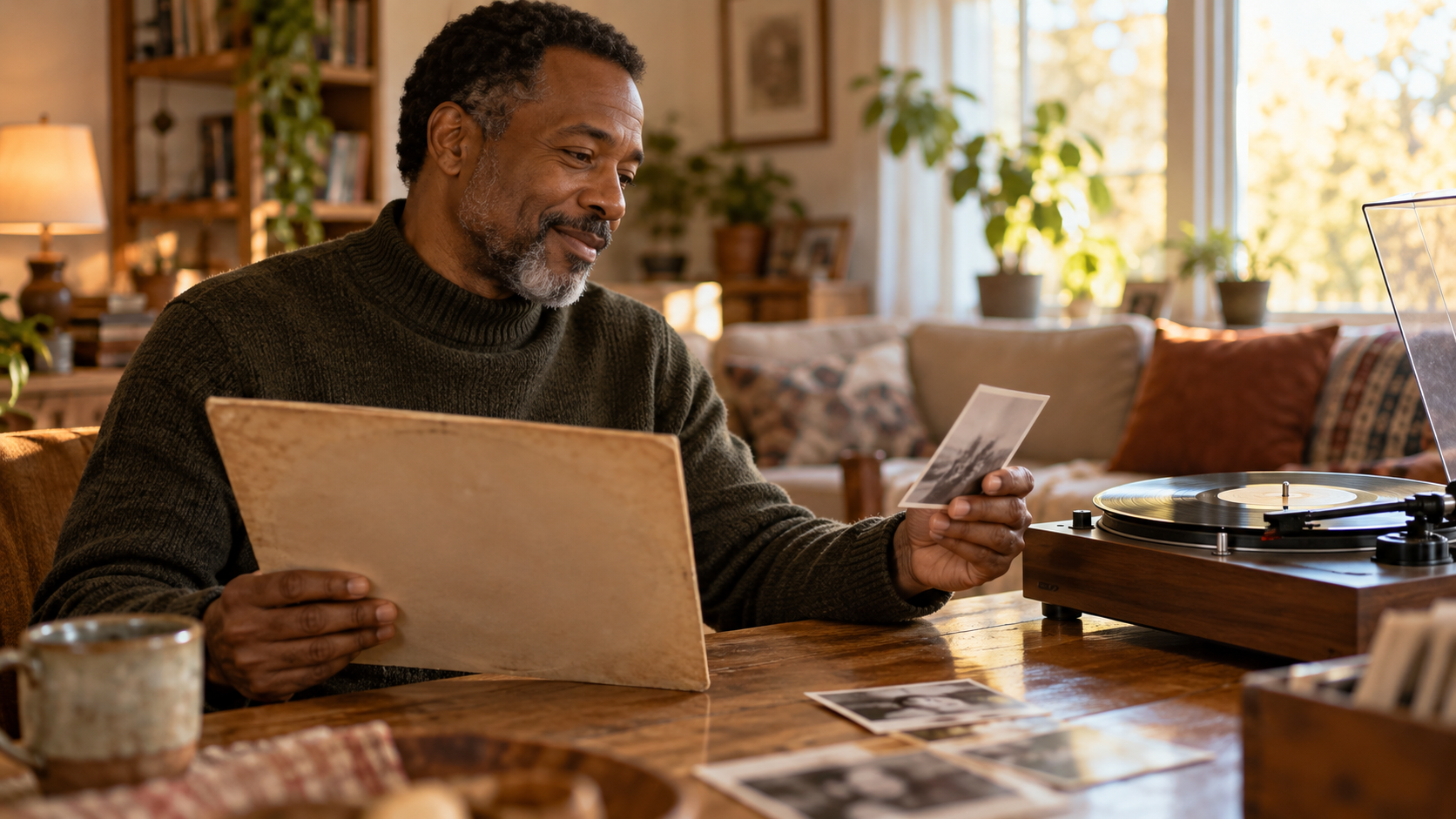
4 min read | Entertainment
The opening notes play. Before you remember the title, you remember the room.
A song comes through the supermarket speakers, and an ordinary errand takes an unexpected turn.
You remember the passenger seat of a friend’s car. Or the kitchen in a house your family left years ago. The detail arrives without an invitation: where someone stood, what the afternoon felt like, a conversation you had not thought about recently.
The connection between music and memory gives this experience a name. Researchers call it a music-evoked autobiographical memory: a recollection of your own life brought to mind by music.
The song is playing here. Your attention has gone somewhere else.
A Familiar Song Can Become a Memory Cue
A recording can accompany many ordinary moments before you realize it has become associated with them.
You might hear it repeatedly on the way to school or while working an evening shift. Years later, hearing it again can bring back that period.
Researchers at UC Davis have studied this connection by asking people to listen to music and report the memories it evokes. Their work examines how familiar songs connect with personal recollection and emotion. atonal.ucdavis.edu
The memory need not concern the song itself. You may remember who used to play it rather than anything about the musician who recorded it.
That helps explain why an otherwise unremarkable track can matter so much to one listener.
Your Favorite Song Is Not the Only One That Can Do It
A song does not have to be a personal favorite to belong to your past.
Imagine a track that played constantly at a former workplace. You might never have chosen it, yet its opening could still bring that workplace to mind.
This is a useful distinction between liking music and recognizing its place in your life. A song can be attached to a setting without being something you want on your current playlist.
Research into music-evoked memory also recognizes that people can experience strong recollections without remembering the song’s title or the performer’s name. PMC
You may know exactly who used to sing along before you can name the artist.
Songs From Younger Years Often Have an Advantage
Music from adolescence and early adulthood frequently occupies a large place in people’s memories.
Researchers describe a broader pattern called the reminiscence bump: adults often recall a disproportionate number of autobiographical memories from roughly ages ten to thirty. Studies have found a related pattern in memories evoked by music. durham-repository.worktribe.com
That does not mean later music cannot become meaningful. It means a song from your younger years may be connected to a period that is already well represented in memory.
The song’s release date is not necessarily the date that matters to you. A recording made decades before you were born can become part of your own history because a parent played it at home.
The Feeling Can Arrive Before the Explanation
Sometimes you recognize a change in mood before a clear scene comes to mind.
The opening feels familiar. You pause. Then you place it: someone’s wedding, perhaps, or a long commute.
A small UC Davis brain-imaging study found activity in a region associated with links between familiar music, autobiographical memory, and emotion. Stronger personal associations were reflected in participants’ responses. UC Davis
The finding does not turn a song into a recording of the past. Nor does a vivid recollection establish that every remembered detail is accurate.
It offers evidence that the emotional and personal parts of listening are connected, rather than separate experiences that happen to coincide.
The Same Recording Can Belong to Different Lives
Play a familiar song at a family gathering and ask where people remember hearing it.
One person may name a school dance. Another remembers washing dishes while the radio played. Someone younger may associate it with a film.
The recording is the same. The experiences attached to it are not.
That makes sharing music a way to learn something a photograph might miss. Instead of asking only whether someone likes a song, ask what it reminds them of.
Let them supply the details. A suggested answer can crowd out the recollection they were about to describe.
And leave room for someone who would rather skip the track. Familiar music does not always bring back a welcome moment.