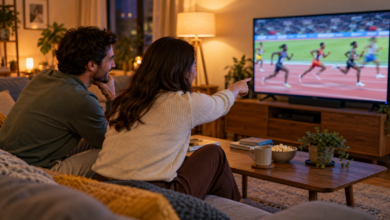
How to Watch a Sport You’ve Never Understood

5 min read | Sports
Everyone around you is shouting. You’re not sure what just happened. That’s a normal first game.
Someone invites you to a match. Your child joins a team. Or a friend puts on a game and starts talking about a decision you barely noticed.
You can enjoy watching before you understand every rule. Start with the objective, then find a few details that help you follow the action.
Soccer, basketball, and baseball offer useful examples because they organize play differently. Learning what to watch in each gives you a way into the game without memorizing a rulebook.
Start With How a Team Scores
Before learning formations or player statistics, identify what each side is trying to accomplish.
In soccer, the aim is to send the ball into the opposing goal. In basketball, players score by putting the ball through the opposing basket. In baseball, a runner scores by advancing around the bases and reaching home plate.
Then look at the scoreboard. Find the score and the measure of progress: the match time, the quarter, or the inning.
That gives the action some context. A team narrowly behind near the finish faces a different problem from one with most of the game still ahead.
Follow One Player for a Few Sequences
Trying to watch everyone can turn a game into a blur.
Choose one player briefly and notice what they do when the ball is elsewhere. A soccer defender may move sideways to close a passing route. A basketball player may position themselves to help a teammate get free.
Then return your attention to the ball.
In baseball, shift your focus with the play: begin with the pitcher and batter, then follow the ball toward the fielder. Between pitches, notice where the runners are.
You are building a picture of who does what. Player names can come later.
Learn One Rule That Explains the Whistles
A basic explanation will not cover every exception. It should, however, help you recognize why play stopped.
Soccer: Watch the Pass for Offside
Offside positioning is judged when a teammate plays or touches the ball, rather than when the attacker receives it.
An attacker in the opponents’ half may be in an offside position if they are nearer the goal line than both the ball and the second-last opponent. Being in that position alone is not an offense; the player must become involved in active play in a way covered by the rule. www.theifab.com
For your first few matches, watch the replay freeze at the pass. That pause often explains a decision that looked puzzling at full speed.
Basketball: Watch the Feet for Traveling
Players cannot move freely while holding the ball without dribbling. The rules govern their steps and use of a pivot foot, including when they start a dribble or gather the ball.
The exact application depends on the competition. NBA examples show traveling violations involving an illegally moved pivot foot or extra movement after gathering the ball. official.nba.com
When a traveling call happens, watch the player’s feet on the replay. Following the ball alone can hide the violation.
Baseball: Keep Track of the Outs
A team’s turn at bat ends after three outs. The teams then switch between batting and fielding.
For a beginner, the out count is a useful place to focus. It tells you how close the batting team is to losing its remaining chance to score in that half-inning.
You can learn the different ways an out occurs as you see them. Begin by watching what changes on the scoreboard after each play.
Understand What Makes the Game Move Forward
The clock means different things in different sports.
Soccer generally uses a running clock, with additional time allowed for time lost during play. Basketball stops its game clock in specified situations, so two minutes remaining does not necessarily mean the game will finish two minutes later.
Baseball has no overall game clock counting down to the finish. MLB does use a pitch timer, but the game advances through innings and outs.
Once you understand that structure, pauses become less confusing. You can tell whether the next action begins a fresh possession or continues an unfinished contest within the inning.
Use Replays to Answer One Specific Question
A replay is easier to follow when you know what you are looking for.
After a basketball whistle, watch the feet. After an offside decision, watch the attacker’s position when the pass is made. After a baseball play, check which runner or batter was ruled out.
Commentary can help connect those details. You do not need to understand every term the announcers use.
And if you are watching with someone who knows the sport, ask during a break: “What should I watch on the next play?” That gives them something more useful to explain than the entire game.
Notice the Setup Before the Action
Scoring highlights leave out much of what makes a play work.
Before a soccer corner kick, watch where attackers gather and how defenders respond. In basketball, notice the movement before a player receives an open shot. In baseball, check the runners before the next pitch.
These details give you something to anticipate. You begin watching for an attempt rather than waiting for the crowd to tell you that something happened.
You will miss things. So do experienced fans.
Choose a Viewing Experience That Helps
A professional broadcast offers close-ups and replays. A local game lets you keep your eyes on one player even when the ball moves away.
Try both if you have the opportunity.
At a school or community game, ask about spectator access and sit where you can see the playing area clearly. On television, watch a continuous stretch instead of relying entirely on highlights. The action between scoring moments helps explain the score.
For your next game, learn the scoring objective and choose one rule to watch for. Stay with a passage of play, then use the replay or a willing fan’s explanation to fill in what you missed.