Jamaica Tourism 3.0: from visitor economy to AI-enabled national development platform | News

Jamaica’s Tourism 3.0 agenda marks a decisive shift in the way the country defines tourism success. Below That of Minister Edmund Bartlett The new framework no longer positions tourism solely as an arrivals-driven industry, but as a national economic platform designed to strengthen local ownership, modernize regulations, expand workforce capacity and capture greater value within Jamaica.
Minister of Tourism of Jamaica
” height=”989″ width=”1233″ style=”border: 0;”>Hon Edmund Bartlett, Minister of Tourism of Jamaica
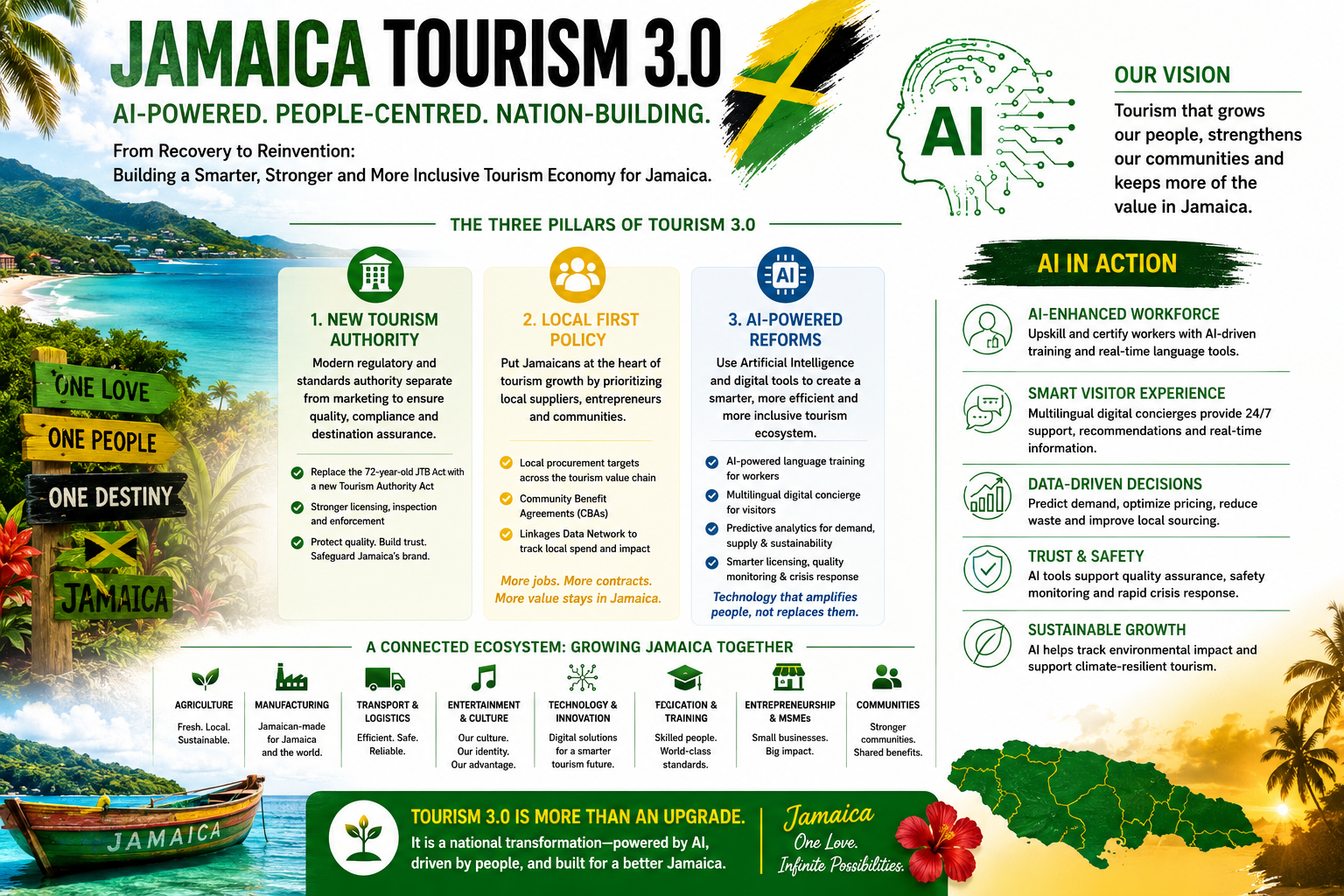
At the heart of the reform package is a proposed new Tourism Authority, which would separate destination marketing from regulation, standards, licensing, compliance and enforcement. This is an important shift in governance. The Jamaican Tourist Board would remain focused on promotion and destination development, while a new authority would be tasked with protecting quality, trust and destination security in a more complex tourism economy.
The second pillar is the Local First policy. This policy moves Jamaica beyond symbolic inclusion and toward measurable local economic participation. Farmers, manufacturers, artisans, transport providers, entertainers, creative entrepreneurs and micro-enterprises would be prioritized as suppliers to hotels, attractions and tourism operators. The policy also introduces purchasing targets, Community Benefit Agreements and a Linkages Data Network to track how much tourism revenue is left in the Jamaican economy.
The third pillar is AI-based reform. The most forward-looking opportunity of Tourism 3.0 is not only using AI for marketing, but also building a trusted digital infrastructure for the visitor economy. AI-powered language training can help employees serve a wider range of visitors worldwide. Multilingual digital concierge tools can improve real-time visitor support. Predictive analytics can help hotels, attractions and suppliers predict demand, reduce waste and improve local sourcing. AI can also support licensing workflows, service quality monitoring, crisis response, accessibility planning and workforce training.

But the reform must be people-oriented. Jamaica’s competitive advantage is not automation; it is culture, hospitality, creativity and community. AI should therefore be designed to empower Jamaican workers and entrepreneurs, not displace them. This aligns with global policy guidelines for AI in tourism, which emphasize responsible adoption, strong data protection, consumer protection and support for small businesses and workers as AI transforms the sector.
The most strategic version of Tourism 3.0 would treat data as a good of public interest. Jamaica could develop a national tourism data trust or establish a secure tourism data exchange that connects hotels, attractions, airports, cruise operators, farmers, manufacturers, transportation providers and training institutions. This would enable local suppliers to anticipate demand, meet quality standards, access financing and compete for tourism contracts. It would also give policymakers a clearer understanding of leakages, local procurement, labor shortages and community-level benefits.
This is where Jamaica can take the lead. Many destinations are experimenting with AI for personalization and booking efficiency. Jamaica has the opportunity to go further by using AI to reshape the economics of tourism itself: who supplies the industry, who owns the value chain, who gets trained, who gets contracts and how do communities benefit?
Tourism 3.0 should therefore be assessed against a new dashboard of national development statistics: the share of tourism expenditure retained locally, the number of Jamaican suppliers integrated into hotel and cruise supply chains, the percentage of tourism workers certified in digital and AI skills, the volume of local agricultural and industrial products purchased by the sector, the number of community-based businesses receiving contracts, and the level of visitor satisfaction delivered through both human hospitality and digital support.
The promise of Tourism 3.0 is that Jamaica can evolve from a destination that attracts the world to a platform that grows its own people. Its success will depend on implementation: clear legislation, transparent procurement, reliable data management, AI literacy, financing for small suppliers and measurable accountability. If done right, Tourism 3.0 can become a Caribbean model for inclusive, AI-ready and locally managed tourism development.