‘Green’ home features can earn developers 18% more, then save homeowners money in the long term: new study
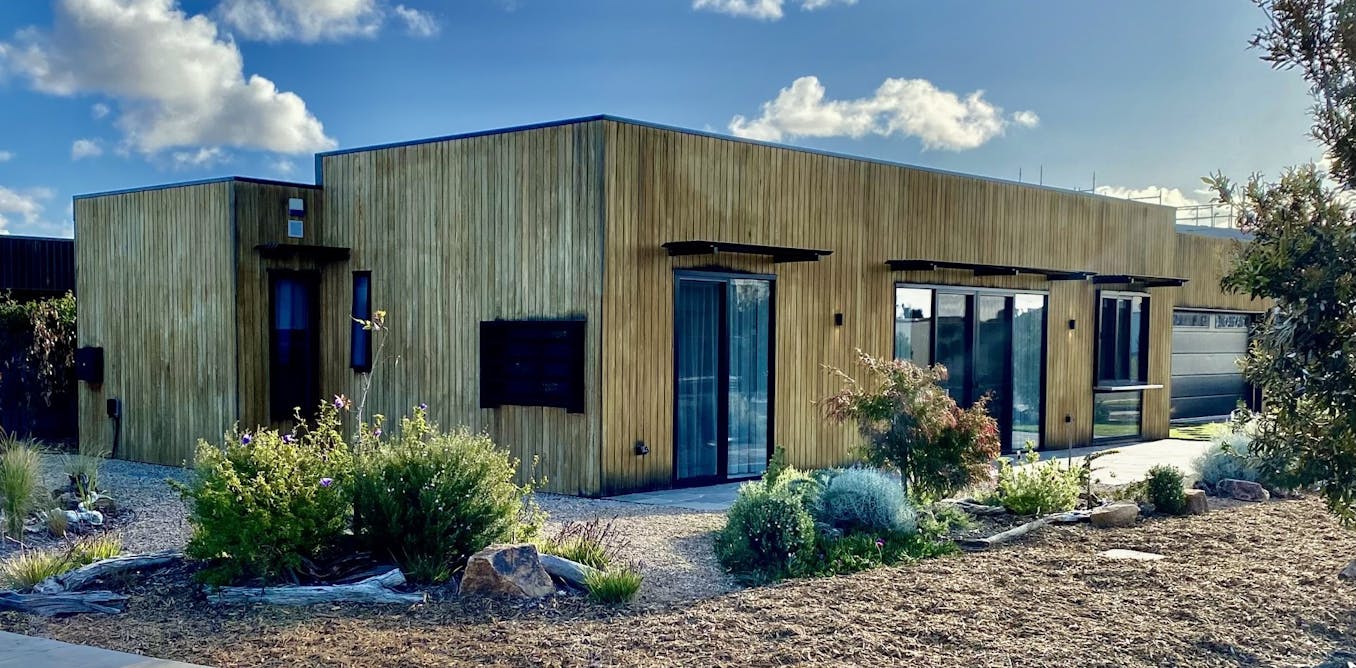
For years, builders and developers have treated “sustainable” homes as someone else’s problem. Solar panels, batteries, double-glazed windows, correct insulation, good ventilation and better materials have been thought to be too expensive, too niche and too unprofitable to include in new homes, so they were left out.
The result is predictable. Homeowners move in, receive high energy bills, feel uncomfortable temperatures, and eventually pay to retrofit the same features the builder skipped. But that often costs much more than it would have to include them during construction.
Homeowners get a poor outcome, because retrofitting an existing home is harder and more costly than designing it well at the start. This approach to building fills Australia with houses that underperform on energy efficiency, comfort and running costs for decades.
Our research reveals developers could actually make a bigger profit than they do now from new home builds that include more sustainability features.
What our research found
The Business Case for Sustainability program we have developed examines real case-study financial data from completed “build-to-sell” developments. These are projects where developers build and sell homes or apartments within a short time.
This is important because the standard objection to building sustainable houses has been that the financial benefits often go to the homeowner, not the developer – so developers won’t see any profits from being greener.
Our research directly tests that objection, using verified cost and income figures from completed projects.
Data was collected from 30 case-study projects and industry-wide reports covering more than 500 homes (in Victoria, New South Wales, South Australia, Tasmania and Western Australia). It shows that developers, in addition to long-term owners, do benefit financially from going green.
The key finding is that developers who embedded sustainability features from the design stage were able to charge a price premium at sale that exceeded the upfront cost.
In projects where multiple sustainability features were incorporated simultaneously, the research found an average 18% return on their investments in more sustainable initiatives.
That means for every dollar spent on greener features during design and construction, the benefit to the developer was $1.18.
The research is careful to measure this accurately. It calculates the additional upfront cost of each green initiative, then compares it against the sales premium (or other financial benefit) achieved.
Savings and profits go to the developer, sometimes before the sale. For instance, if they use sustainable house plans from the NSW government’s free housing pattern book, they can save thousands on architects’ fees.

Steven Markham/AAP
The green measures we looked at
Our research included solar panels, battery storage systems, correct building orientation to maximise passive heating and cooling, better water use, correct insulation, double-glazed windows, and greener building materials such as recycled aggregate and renewable timber.
Some of these measures generate immediate profits for developers through direct cost savings.
For example, avoiding gas-pipe installation reduces construction cost and removes ongoing gas use costs for buyers.
Why greener apartments make financial sense
Apartments stand out. The research highlights apartment developments as a particularly strong opportunity, because the combined upfront cost per apartment is modest relative to the total extra profit made from selling greener apartments.
The numbers are especially compelling in the current market, where apartment construction is growing again
after a prolonged slowdown.
One recent analysis of 20 building projects showed the average cost of meeting energy-efficiency targets for apartments was $6,547 per dwelling. The potential gain for owners was $21,000 in the first 12 months.
Buyers are willing to pay more for green housing
This is not happening in isolation. Major real estate listing platforms, the websites where most Australians search for homes, have introduced “sustainability” or “eco” filters.
Buyers can now search specifically for more sustainable homes and compare them directly with “standard” homes.
This now makes the green premium visible and measurable. This market signal is becoming hard to ignore. Buyers are willing to fork out more for eco-friendly and sustainable homes.
Australia is entering a sustained period of large-scale residential construction. Hundreds of thousands of new homes will be built over the coming years to meet the federal government’s housing targets, which aim for 1.2 million new homes over five years.
The decisions made at the design stage of those homes – by developers, planners and local councils – will determine how those homes perform on energy, comfort and running costs for the people who live in them, from day one.
Our research is ongoing and its data set is growing. But the direction is already clear: building green from the start is not just the right thing to do environmentally. The numbers say it is the right thing to do financially too – with better returns for developers in the short term, and lower living costs for homeowners in the long term.
Source link