Prince William faces farmer mutiny over plans to sell land
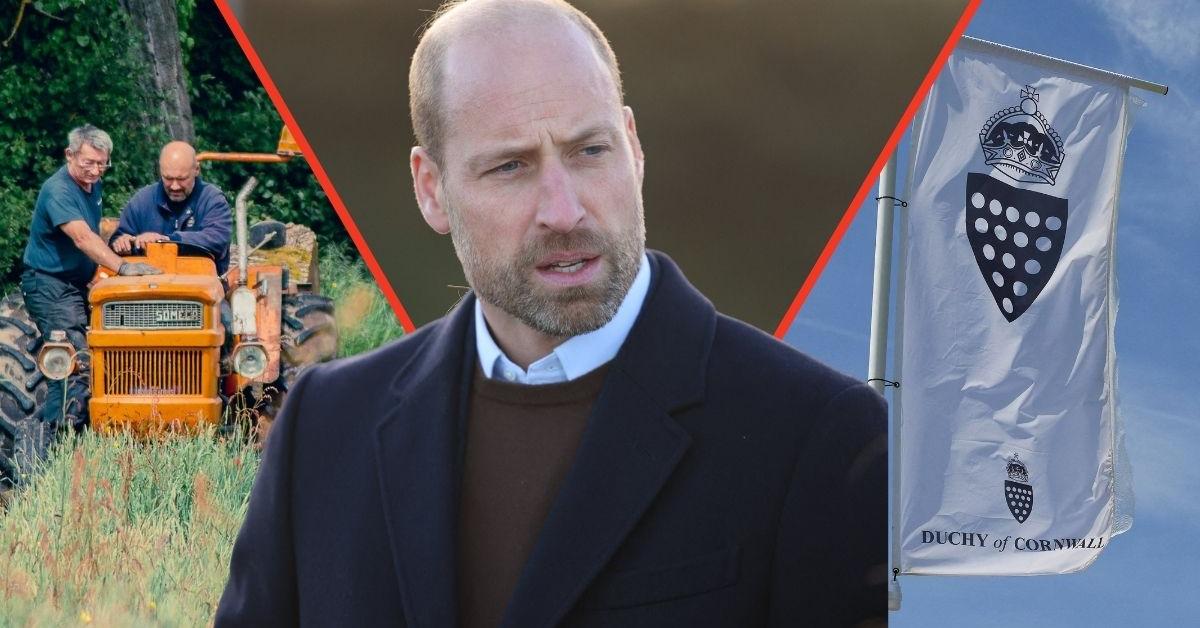
The huge estate, which dates back to 1337, has announced plans to sell around 20 per cent of its assets at Bradninch in Devon, which includes around 3,500 hectares of farmland, cottages, wetlands, allotments and community facilities.
The move is said to be part of a wider strategy to raise money for investment in housing and environmental projects, with reports suggesting as much as $670 million could be generated from future sales.
But the proposal has deeply upset many tenants and residents, who fear the sale could permanently change the character of the farming community.
A local source told us: “For many families, this is not simply a property transaction or a business decision in a spreadsheet. Some of these farms have been run by the same families for generations, in the knowledge that the Duchy provided a degree of security and long-term continuity. That sense of security has been shaken, and what people are struggling with most now is not knowing what the future holds.
‘There are certainly some leaseholders who are in a position to raise the necessary financing and take advantage of the opportunity to purchase their property. But there are plenty of others who simply don’t have access to that kind of capital. Farming margins are already incredibly tight, financing costs remain high, and many rural businesses are facing significant financial pressure. The reality is that not everyone can suddenly find the money needed to buy hundreds of hectares of land.
The insider continues: “That has caused a lot of unrest within the local farming community. Some families feel caught between a unique opportunity and an impossible financial challenge. They understand the appeal of owning the land, but they are also painfully aware that it may be out of their reach.
‘The biggest concern is what happens to those who cannot buy. Some fear they will lose not only the farms that support their livelihoods, but also the homes and communities that have been central to their lives for decades. These are people whose identities are deeply tied to the land they farm, and there is genuine concern about what their future will look like if ownership passes elsewhere.
“What we hear again and again is a sense of uncertainty. People are trying to make hugely important decisions about their businesses, their finances and their families without knowing exactly where they will be in a few years. That uncertainty is weighing heavily on many people across the region.”
Concerns are particularly high around Bradninch, a small town in Devon where much of the surrounding farmland belongs to the Duchy.
Residents said they are very concerned about the issue of the potential sale; Farmers could potentially become homeless unless another buyer comes in and they can be tenants of theirs on their farm.
Another local source said: “A significant part of the unease comes from the perception that some of the most important decisions about the future of this country are being made far away from the communities that will ultimately have to live with the consequences. People understand that large estates need to evolve and adapt, but there is a feeling among some residents that the voices of those most directly affected are not always heard loudly enough.
“For farming families and residents, this is not an abstract discussion about asset management or long-term investment strategies. These decisions have real implications for livelihoods, homes, businesses and the future character of the area. That is why there is such a strong desire for reassurance and clarity about what comes next.”
“Many people want confidence that the long-term future of the region’s agriculture remains a priority. Agriculture has shaped this community for generations, and residents are understandably concerned about any changes that could weaken that connection or make it harder for local families to stay on the land,” the insider said.
‘There are also concerns that the relationships built over decades between the Duchy and its tenants could be changed in a way that makes communities feel less safe. Historically, there has been an expectation of continuity and stewardship, and some fear that those traditional ties are being challenged by broader strategic objectives that may not fully reflect local conditions.
“Ultimately, residents are looking for transparency and reassurance. They want to know that decisions about the future of the estate are not just driven by wider financial or development ambitions, but that equal attention is given to the people, families and communities whose lives are intertwined with the land itself. That is where much of the fear comes from.”
A spokesperson for the Duchy of Cornwall said: “Where possible, Duchy tenants are given first refusal to buy their homes and farms, often at a discount, alongside support to help them think about what is good for them and their families.”
The spokesperson added: “For many of our farm tenants this is a really exciting opportunity – and from our one-on-one conversations we know that all of our farm tenants at Bradninch are exploring purchase options.”