Cannes welcomes Dominga Sotomayor, Lisandro Alonso and Manuela Martelli
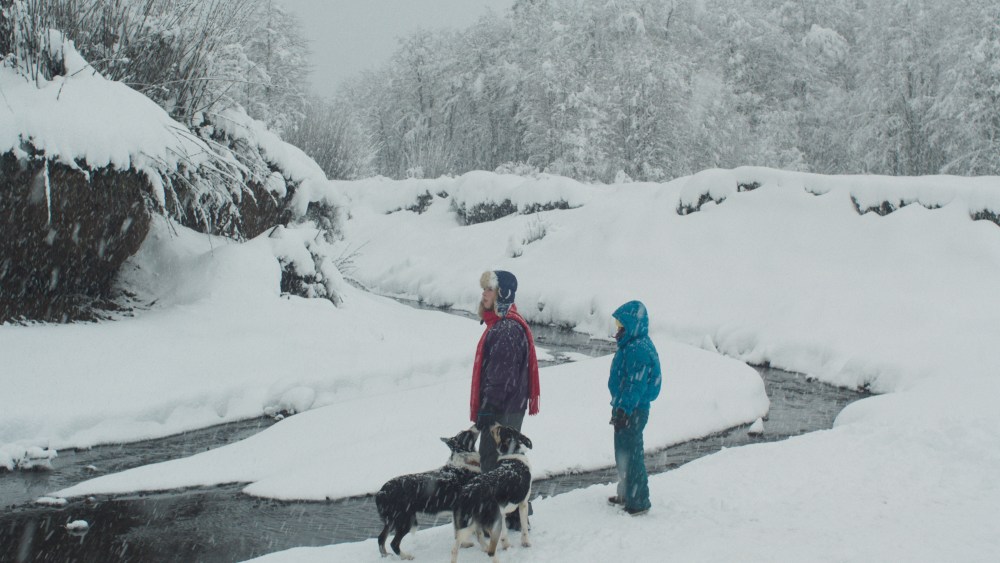
Chile is making a landmark appearance in Cannes this year, with new or consolidating companies taking the lead. Among them is Planta by Fernando Bascuñán with three projects – two of which are participating in Directors’ Fortnight: Domingo Sotomayor’s drama about a woman who adopts a stray dog, ‘La Perra’, and ‘Double Freedom’ by Lisandro Alonso (‘La libertad doble’). Picked up by Luxbox ahead of its world premiere in Cannes, it is the sequel to Alonso’s ‘La Libertad’, which debuted in 2001 at Un Certain Regard in Cannes.
Planta also brings the young boxer drama “For the Opponents” by Federico Luis (“Simon of the Mountain”) to the Cannes short film competition. Luis’ latest project, “The Dog Trainer” (“El entrenador de perros”), will be pitched during the festival’s La Résidence development program.
“We are very pleased with this triple presence in Cannes. It is unprecedented for a Chilean production company and we consider it a meaningful recognition of the work we have built. Over the past year we have really come into our own as a team at Planta and reaching this moment together – after such an intense 2025 – feels particularly important,” says Bascuñán.
He adds: “The collaborations we have forged have been essential, both with directors and creative talent as well as with national and international producers such as Augusto Matte and Rodrigo Teixeira. At Planta we operate from a deeply collaborative ethos that goes beyond co-production, where we are deeply involved in the overall development of each project.”
Founded in January 2025 by Alejandra García after twenty years at Wood Prods., Ronda brings “The Meltdown” (“El deshielo”) by Manuela Martelli (“Chile, ’76”) to Un Certain Regard – the first time a Chilean fiction film directed by a woman has achieved this distinction.
Ronda also has a great new market package, the spy thriller “Impunity” from Felipe Gálvez (“The Settlers”) at Cannes’ Investors’ Circle. “We are committed to the growth of new voices in Chilean cinema, such as Francisca Alegría, Martelli and Gálvez, while also being part of the careers of established talents such as Marcela Said, Marialy Rivas and Andrés Wood,” says García.
García announced three new projects at the beginning of Cannes: Manuela Martelli’s political melodrama “Estrella Solitaria”; a real-event-inspired thriller “Sacrificio” by Andrés Wood, a Sundance winner for “Violeta Went to Heaven,” and Rivas’s “The Mail Box of the Impure.”
Alexandra Galvis, director of promotional organization CinemaChile, said: “This is a historic Cannes for Chile. It follows on from the year before, when Diego Céspedes won Un Certain Regard, helping to consolidate something that is no longer coincidental or sporadic. This year not only celebrates the established producers we know so well, but also surprises with emerging production companies reaching historic milestones.”
Gabriela Sandoval, Storyboard Producer and Director of Producers Association APCT, agrees: “Year after year, Chile has consolidated a meaningful presence at one of the world’s most important festivals, driven by the power of its creative identity. What sets the country apart today is its ability to export diverse perspectives: voices with a clear point of view, rooted in their territory yet universally resonant.”
She points to Chile’s commitment to cinematic language, creative risk and a very special way of storytelling that has allowed Chilean cinema to build a lasting presence on the most important world stage: “This year’s presence in Cannes is a clear confirmation of that.”
Chile reaches this milestone in Cannes just as a right-wing government takes over, causing some unrest in the audiovisual sector. However, the appointment of Daniel Laguna, a screenwriter (“Recycled Lives”), as executive secretary of the Chilean Audiovisual Development Fund is reassuring. “Public funds in Chile operate on a stable annual framework, but some lines need to be updated to better reflect today’s reality,” he says. Variety.
He also emphasizes that current support for stimulus measures focuses on competitive funds to attract investment. “However, it is necessary to expand to tax-based incentives, and this will require clear dialogue to determine how to proceed,” he says. “Chile has a strong audiovisual talent. The next step is to tailor policies to that ability.”