Musk mulled handing OpenAI to his children, Altman testifies
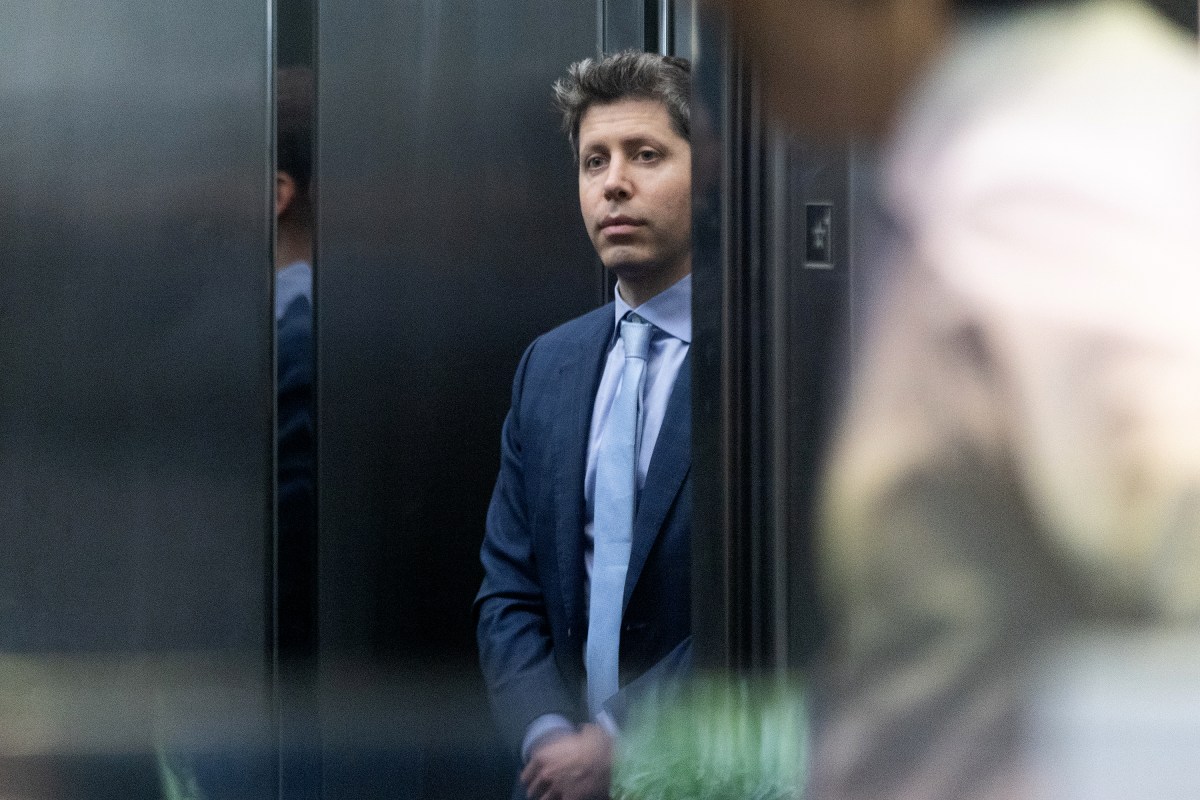
OpenAI CEO Sam Altman finally took the stand this morning to defend himself against his former co-founder Elon Musk’s lawsuit challenging OpenAI’s corporate structure.
Altman was immediately asked what he thought of Musk’s claim that OpenAI’s other founders “stole a good cause” when they launched a for-profit subsidiary to market products based on the company’s AI models.
“It feels hard to even wrap my head around that frame,” Altman said after several seconds of silence. “We have created one of the largest charities in the world. This foundation is doing incredible work and will do much more.”
Musk’s lawyers have been at pains to point out that OpenAI’s foundation, which now has assets on the order of $200 billion, had no full-time employees until earlier this year. OpenAI Board Chairman Bret Taylor testified today that this was simply due to the challenge of converting OpenAI shares into cash, which was accomplished with the organization’s most recent restructuring in 2025.
The central question from Musk’s lawyers is whether the company’s commitment to safety has wavered as its commercial power has grown. But Altman said that in 2017, during a crucial period when the founders were struggling to get the funding to power their AI models, Musk’s “specific plans around security concerned me.”
He described a “particularly chilling moment” in the debate when Musk was asked what would happen if he died while controlling a hypothetical for-profit OpenAI. In Altman’s speech, Musk said: “Maybe OpenAI should be passed on to my children.”
Altman said Musk’s focus on controlling the initial profit motive gave him pause because OpenAI aimed to keep advanced AI out of the hands of one person, and Altman, with his experience running prominent startup accelerator Y Combinator, knew that “founders who had control usually didn’t give it up.”
Altman also testified that Musk’s management tactics, which might have worked for engineering and manufacturing, did not work at OpenAI.
“I don’t think Mr. Musk understood how to run a good research lab,” Altman said. “He had demotivated some of our key researchers. At one point he required Greg and Ilya to make a list of the researchers, list their achievements, arrange them in a pile, and run a chainsaw through a group. That wreaked havoc on the culture of the organization for a long time.”
Altman cast himself as a proponent of the “sweat equity” of co-founders Greg Brockman and Ilya Sutskever, the two people who were actually running OpenAI at the time while Musk and Altman had other jobs.
After that clash went unresolved, Musk eventually left OpenAI’s board and began pursuing competing AI initiatives at Tesla and his own AI startup, xAI. But Altman kept in touch with the mercurial businessman, keeping him informed about OpenAI’s work and asking for funding and advice.
OpenAI’s lawyers noted that Musk had been briefed and asked to participate in the investments that his lawsuits now allege corrupted the nonprofit.
During a discussion about a Microsoft investment in OpenAI in 2018, Altman said that “unlike many meetings with Mr. Musk, this was a meeting with a good atmosphere”, with Musk spending a “long conversation showing us memes on his phone”.
When you make a purchase through links in our articles, we may earn a small commission. This does not affect our editorial independence.