GCU Motorsports rebuilding program through persistence, teamwork
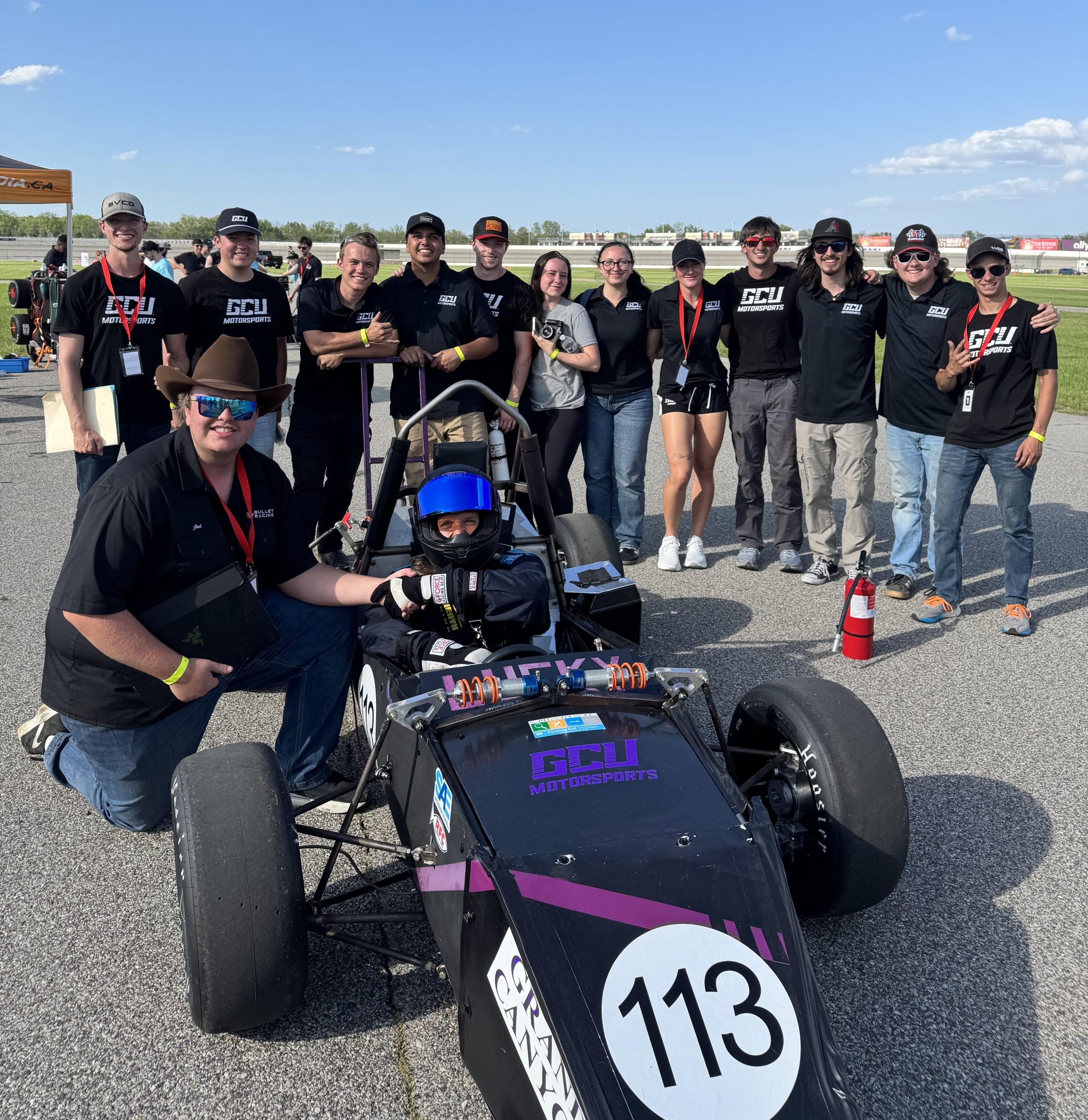
PHOENIX – In the span of one year, the Grand Canyon University Motorsports club doubled in size from 30 members to 60. That presented the club, which designs, builds and races formula-style cars to compete against other universities, with a challenge.
During the COVID pandemic the program took a long break, going inactive, so the current members had very little framework to follow when trying to race forward.
“Everything we did this year we had to develop,” current president Grant Garcia said. “There wasn’t a prior structure to go off of.”
That hasn’t stopped the team from dreaming. Through a combination of long hours, teamwork, inclusivity and engineering know-how, GCU’s team hopes to teach its members the fine art of formula-style car building while growing the club and improving its performance in competitions.
“Leave it better than you found it,” vice president Madison Schiffer said. “That’s always the goal.”
The club is a student chapter of the Society of Automotive Engineers that competes in the Collegiate Design Series (Formula SAE Internal Combustion competition). It operates out of the College of Engineering and Technology garage, which comprises three large shipping containers adjacent to Building 1 at GCU.
For members of the GCU Motorsports club, building a race car isn’t just about engineering. It’s about passion, collaboration and building a successful process. That often means working long hours.
“There was me and three people in our garage from sunup to sundown seven days a week,” said Davis Wright, who is currently the team’s powertrain lead and will take over as the president next year. “Even though we don’t have the history of bigger teams, we’re putting in all the effort to get there.”
One year ago, Garcia said the team’s biggest goal was to build a car and be able to compete in a competition. Last year’s club attended Formula SAE in Brooklyn, Michigan, in May 2025, where 107 teams of university undergraduate and graduate students competed for a spot on Michigan International Speedway after spending the academic calendar building smaller, formula-style racecars.
The event was an educational experience.
“We know we can get a running car,” Garcia said. “Now it’s about doing it on time and with proper engineering behind it.”
As the club grows, the academic majors of incoming members extend well beyond engineering. There is also an emphasis on inclusivity.
When Schiffer first joined the club, she was the only woman in the room, but the female representation is growing, especially for the club’s business team, which handles sponsorships, social media pages and outreach.
“There’s definitely space in motorsports for women,” Schiffer said. “We’ve seen so much growth.”
Schiffer’s biggest priority for the team was to make the club feel accessible.
“I was shaking walking into my first meeting, but once you meet the people you’ll realize how much of a family it is,” she said.
As a powertrain lead, Wright oversees everything when it comes to making sure the car is able to move, including engine performance and drivetrain efficiency. There was only one previous car available for the team to analyze, so there was a lot of trial and error.
“There was a lot that didn’t work on our first car,” Wright said. “So it’s about figuring out why and being able to improve it.”
Wright said stronger documentation and understanding past mistakes will be the key to becoming more competitive.
When it comes to the engineers who drive the team, the culture of the team is just as important. Schiffer said environment is what keeps members engaged and coming back.
“Grit, family and creativity,” she said. “That’s how I would describe the club.”
“We’ll teach you anything you need to know,” Garcia added. “We don’t want people to feel limited.”
The club offers a lot of hands-on training and workshop events so new members are able to jump right in, even if it’s their first time working on a car.
Despite the recent growth and all the good vibes, the club is still operating under limited resources compared to other universities. The club raises its money through fundraisers and sponsorships, but many of the components they use cost thousands of dollars.
On some occasions, members might step in and use their own money.
“If we’re short on budget, I’ll buy parts out of my own pocket because I want to see it happen,” Wright said.
With limited spots available in Formula SAE events, most of the entries in the competition aren’t guaranteed due to Formula SAE’s strict registration limits, lottery system and waitlists. GCU Motorsports doesn’t let that stop them.
Behind all the late nights and every challenge there is something more important than competition for them. It’s the belief that they’re building something, piece by piece, that will last.
Related

Source link