2026 World Cup: Rising demand points to uneven growth among host destinations | News

The 2026 FIFA World Cup is already making its mark on global travel, with international interest increasing in the United States, Canada and Mexico – but not at the same pace.
New analysis from Data Appeal and Mabrian (Almawave-Almaviva Group), in collaboration with PredictHQ – the leader in real-world context for AI and forecasting – shows that while demand is clearly increasing, converting that interest into arrivals will depend on air connectivity, domestic travel momentum and how effectively destinations prepare for peak periods.
The analysis is based on the ‘FIFA World Cup 2026: Mapping Demand, Spend and Experience’ report, which combines global flight search behaviour, flight connectivity and capacity, OTA-based hotel prices and forecast event-related spend. The analysis focuses on the three host countries and their 16 official host cities, with specific in-depth analyzes of selected competitions and destinations for price dynamics.
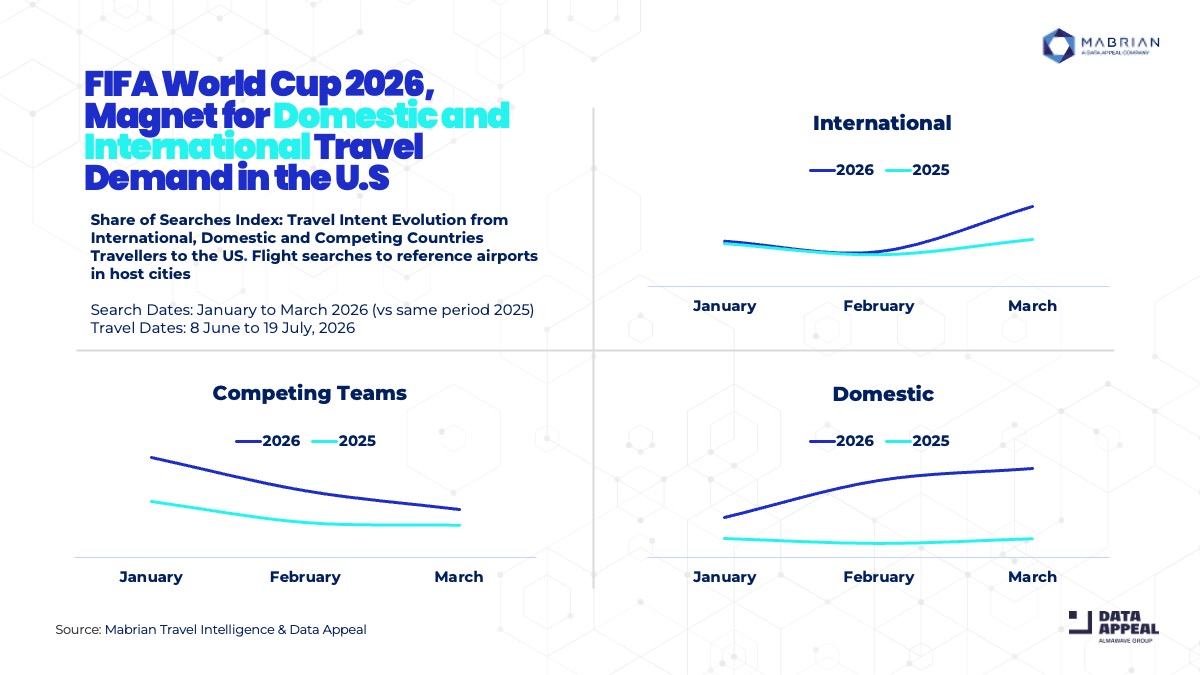
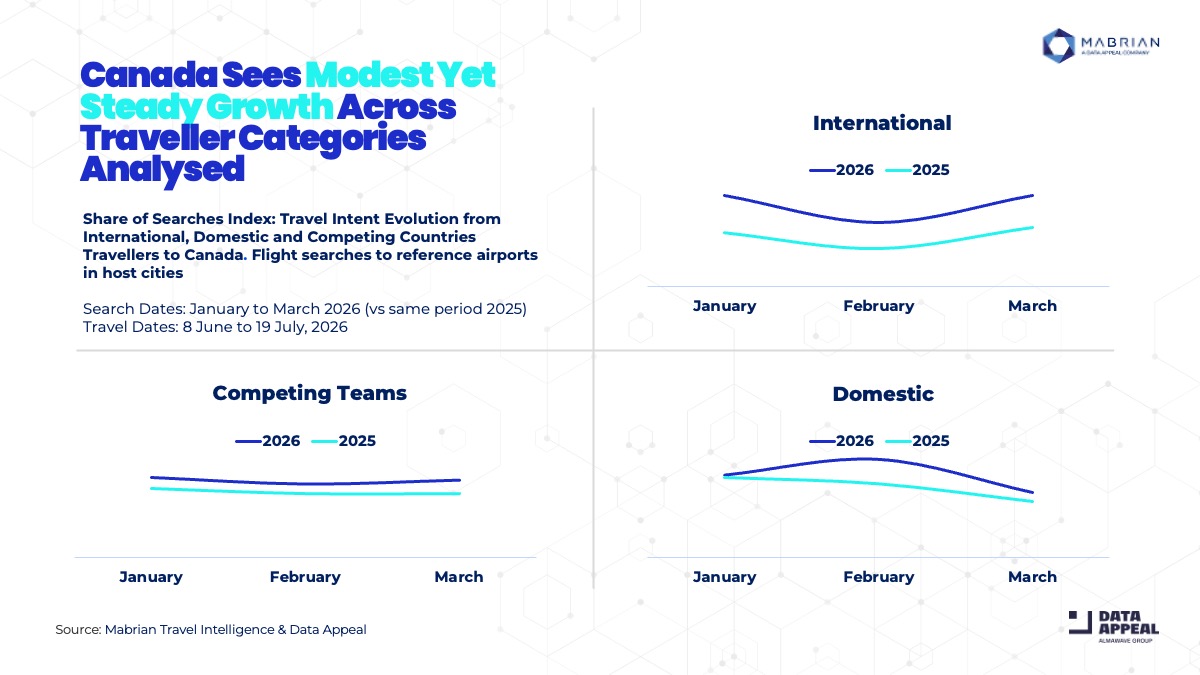
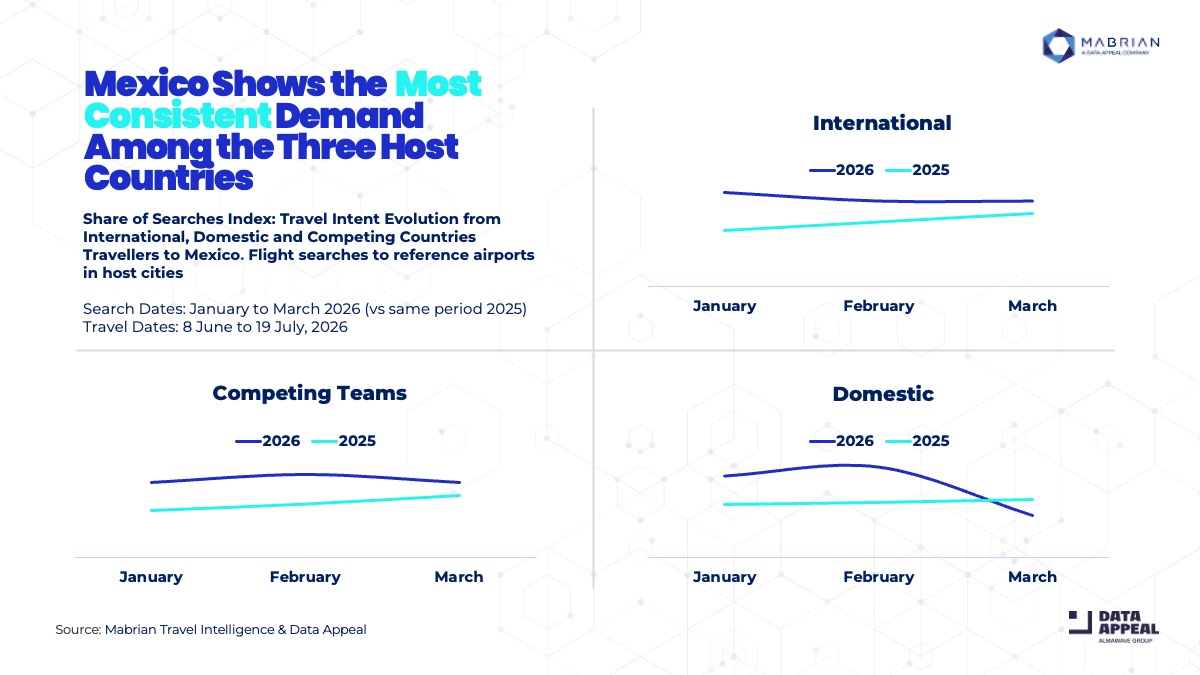
#1 Demand is up, but the picture is mixed. International travel intent – an indicator of future demand – is rising in all three host countries, but the patterns differ. Mexico has shown the most consistent growth, averaging around +0.11 percentage points annually since January 2026, while the United States experiences a sharper late-stage acceleration towards the end of the first quarter of 2026, reaching +0.31 percentage points in March. Canadian growth, meanwhile, has been more stable and gradual. At the urban level, demand is concentrated around important destinations. Boston, Mexico City and Vancouver are seeing some of the strongest gains, while New York continues to build on its role as a global anchor.
#2 Domestic travel and connectivity as key drivers. Domestic travel is emerging as a key driver of overall demand for the FIFA World Cup, especially in the United States, where travel intent to host cities increased by an average of +3.82 percentage points year-over-year during the tournament period. Connectivity will also play a decisive role. The United States maintains direct air connections with 40 of the 48 competing countries, compared to 32 for Canada and 18 for Mexico, making the country the main gateway for international visitors. European markets – particularly the UK, France, Germany, Spain and the Netherlands – are among the main sources of long-term demand, alongside growing interest from emerging markets.
“The 2026 FIFA World Cup format is expected to distribute both demand and impact of the event across multiple locations, cities and countries, creating simultaneous peaks in different locations and generating opportunities for each host country,” said Maria Pradissitto, North America Market Manager at Data Appeal. “Early signals from air capacity, search behavior and booking patterns indicate that demand will be highly fluid. In this context, success will be determined not only by visibility, but by a destination’s ability to interpret and respond to real-time demand signals, optimizing connectivity, pricing strategies and capacity management to capture value as it changes.”
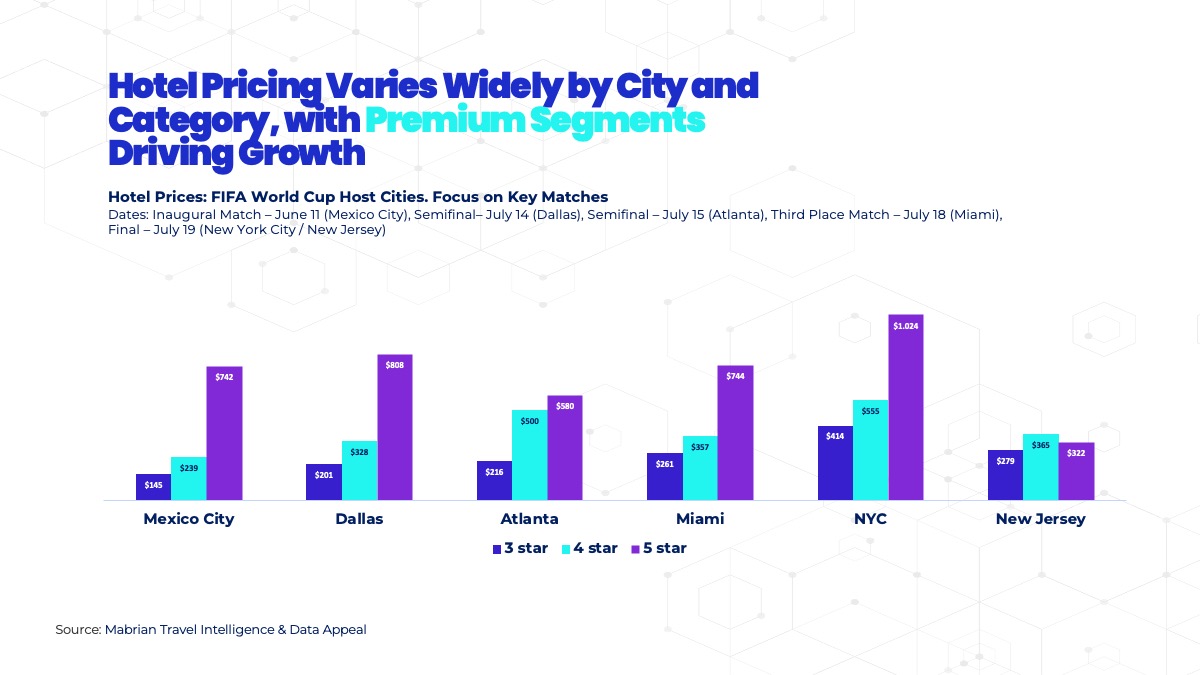
#3 Spending patterns and prices. In total, the tournament is expected to generate around $4.3 billion in tourism event spending, with more than 80% concentrated in the hospitality sector, followed by food and beverage. Hotel prices are already reflecting expected demand, with moderate increases in all host cities, while the sharpest increases are in high-profile matches such as the opener and the final, such as the final in New York/New Jersey: $414–$1,024 (+10.8% y/y), the third-place match in Miami: $261–$744 (+25.5% y/y), and the opener in Mexico City: $145–$742 (+48.9%). JoJ)
“Demand alone will not determine outcomes. What will ultimately differentiate destinations at the 2026 FIFA World Cup is their ability to deliver consistent, high-quality experiences under pressure,” the Data Appeal spokesperson explained. “What we see from the data is that travelers already have very high expectations, especially around attractions and food, but operational aspects such as transport and service consistency will come under real pressure at peak times. This is where reputation will be won or lost in real time. Destinations that succeed will be those that can maintain service quality at scale, using real-time feedback and sentiment signals to quickly identify and adapt to bottlenecks, keeping the visitor journey seamless and driving demand in the short term. translates into longer-term perception and repeat visits.”
Download the full report: https://datappeal.io/full-report-fifa-world-cup-2026/