‘Star City’ Creators Talk Artemis II, Space Exploration
Ben Nedivi and Matt Wolpert, who co-created “For All Mankind” and now its spinoff “Star City” with Ronald D. Moore, are convinced that people are dreaming of space exploration again.
“When the Artemis II launch first happened, I felt that excitement again. It wasn’t about space tourism; it wasn’t about the rich. It was about inspiration,” Wolpert says. Variety at Canneseries where the world premiere of “Star City” premiered on April 26.
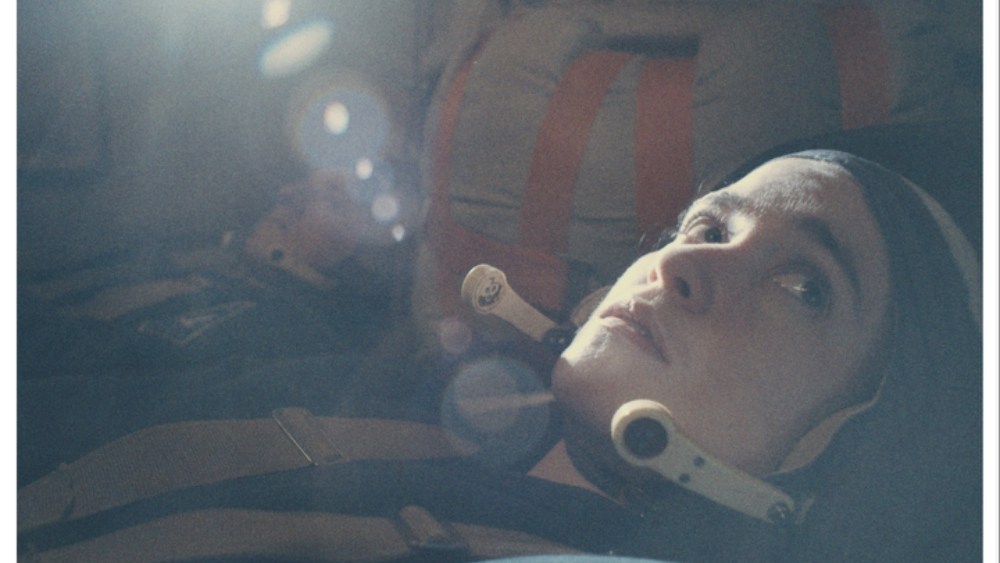
Apple TV’s “Star City” – a Sony Pictures Television production – follows the space race between the US and the Soviet Union. Rhys Ifans, Anna Maxwell Martin, Agnes O’Casey, Alice Englert and Solly McLeod star.
“There was a moment in the late 1960s and early 1970s when we pushed each other forward. It was a competition, but it led to amazing things. There is an exploration gene in our DNA and space is the last frontier.”
As the Russian invasion of Ukraine continues, they acknowledge that it is a “complicated time” to tell a story set in the Soviet Union.
“Our position is that people are human beings. Their system and their government are clearly negative, but there are many people living under that government who disagree with it or are just trying to live normal lives,” Wolpert notes.
Nedivi added: “We are students of history, and unfortunately history repeats itself. This period says a lot about what is happening now. It is a reminder and a warning of what can happen if we are not careful. We could easily return to those horrors.”
As he notes, the characters soon discover “it’s more dangerous on the ground than in space.” While they reference real space pioneers such as Yuri Gagarin and Valentina Tereshkova, the first woman in space, others are fictionalized.
“Everyone knows everything about the American program. There were films, TV shows, books, magazines. However, the Soviets wanted to keep theirs secret. The stories we heard were unbelievable and crazy. We couldn’t believe they were true.”
Take the landing of Soviet cosmonaut Alexei Leonov, says Wolpert.
“They went off course and landed in the middle of a snowy forest in Siberia, surrounded by wild animals. There they had to survive! These cosmonauts and engineers became superstars and were therefore closely watched. The idea of being so afraid of something you are also so proud of is fascinating.”
In the series, cosmonauts are controlled by the system. It follows their every move, writes their speeches and decides who they will marry.
“Again, this was based on something that actually happened: Tereshkova had an arranged marriage with another cosmonaut. They couldn’t feel safe,” Wolpert says.
Despite all this struggle, they wanted to show that the human spirit can overcome almost anything.
“That’s the story we wanted to tell. We live in very dark times. Every time I read the newspaper I want to cry. These characters really spoke to us,” Nedivi notes.
“To be honest, we were surprised that Apple would make it at all. To their credit, they never looked at it through the lens of politics, or what sells and what doesn’t. It’s a testament to Apple’s confidence that we were able to tell a story like this, which is very rare on TV.”
Although “Star City” is in English, they wanted to create an international show.
“‘Chernobyl’ was definitely one of our inspirations. We even filmed in Lithuania, just like them. This show epitomizes an international production. Here we are: two American writers with a British cast and a show shot in Lithuania and premiering in France,” says Nedivi.
“Many people in our Lithuanian crew grew up in the shadow of the Soviet Union. Their parents came to see the costumes and buildings in horror. It is important to explore cultures outside your own. Now more than ever, as our world becomes smaller. What unites us is the wonder of going further into space. This is for all of us. This is for all humanity.”
Wolpert claims that people’s perspectives change when they go there.
“Many of them started speaking out against conflict and working across borders. Science and facts can actually break down barriers between different societies.”
His co-creator adds, “They say, ‘Write what you know,’ which is the biggest lie of all. But you can’t help but write from what you feel. Seeing how our society has evolved and changed over the past five years has certainly informed my psyche, but our hope is that this show is a lesson in re-embracing research. The world can be a better place. I believe that.”