Connecticut homeowner wants to build three apartments in her backyard shed
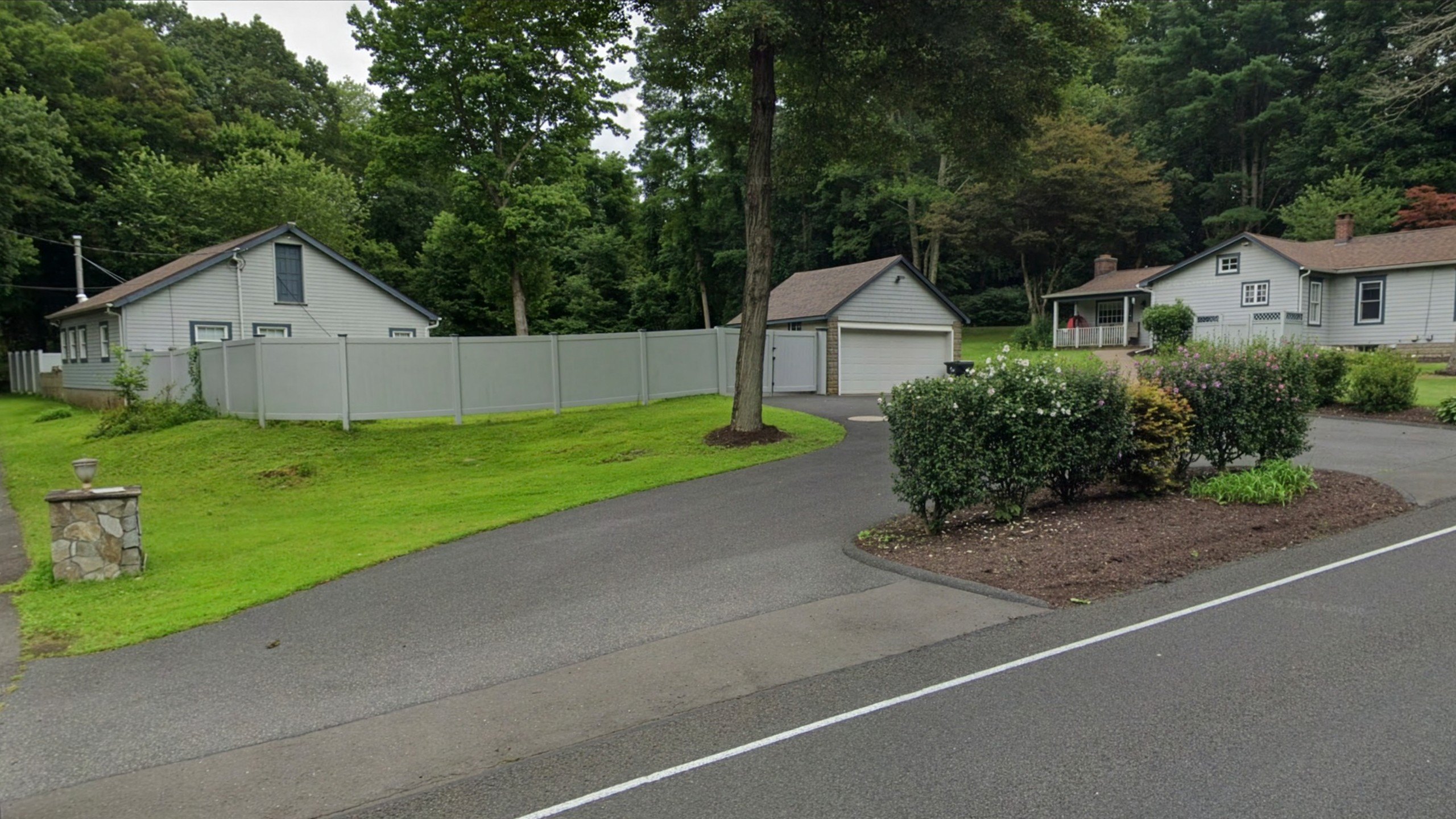
In Connecticut, a homeowner hopes to use a density bonus rule in the state’s affordable housing law to turn a backyard shed into three separate apartments, despite prickly opposition from neighbors.
Rose Marinowho owns a single-family home on Putnam Park Road in the quiet town of Bethel, CT, has submitted a plan to build three one-bedroom units in a two-story barn on her 3.5-acre property.
“I’m not a big developer, not even in that area,” Marino says Realtor.com®. “I’m just a nanny working in New Canaan trying to find a way to pay for Connecticut because it’s becoming impossible. So I thought, if you can’t beat them, join them.’
The plan is based on special rules that allow the construction of new multi-family housing in some areas otherwise zoned for single-family housing, if the projects include a certain share of qualified affordable housing.
In her applicationthat city officials shared with Realtor.com, Marino says at least 30% of new residential rental units — in other words, a single apartment — will be classified as “affordable housing” under Connecticut law, with a maximum rent of $1,287 per month.
Marino’s application is scheduled for a public hearing on April 28, where it will face opposition from neighbors who fear the rental properties will harm the character of the neighborhood.
Change of plans
According to public recordsMarino purchased her property in December 2024 for $425,000.
But she tells Realtor.com that a three-unit development was not part of her original plans.
“The main reason I am doing this project on my property is because my husband, Anthonyand I bought this property a little over a year ago, we thought it would be perfect to turn the large garage – it’s actually an old barn – into a one-bedroom ADU,” she says.
After doing some research, Marino says she discovered this wasn’t allowed at Bethel under current zoning ordinances.
“So I was trying to figure out what we could do,” she says, “and a developer was already building a development of six units on my street at the time, so that’s when I started researching 8-30g.”
Connecticut’s Affordable Housing Law Explained
Connecticut’s affordable housing statute — commonly called 8-30g after the section in state law — requires municipalities to ensure that at least 10% of their housing stock qualifies as affordable.
In cities like Bethel, which don’t meet this threshold, developers have more opportunities to bypass local zoning rules to build new housing.
The law, passed in 1989, aims to increase the availability of affordable housing throughout the state by requiring the construction of housing reserved for households earning 80% or less of the area median income.
Approval was granted for one last year Apartment complex of 11 units featuring affordable housing components on a single-family lot in Bethel.
The additional homes are desperately needed in the small town on the edge of Danbury, where median home prices rose 12% year over year to $547,725 in March 2026.
Neighbors express their concerns
The floor plans submitted by Marino show a ground floor apartment in the barn with a spacious kitchen, dining room, living room and bedroom and two smaller upstairs apartments with compact kitchens, living areas and bedrooms.
But not everyone is in favor of these plans being approved.
Marino’s neighbors James and Charlene Welsh wrote an email to city officials saying in part, “The concerns we have are the number of vehicles, added traffic visuals, how would this impact our resale of property values and the safety of everyone involved.”
The neighbors objected that parking availability was not specified on the site plan and that no stormwater drainage plan was available for public review.
“As mentioned, we are not trying to be negative, but wanted to express our concerns to the board,” the email said.
Connecticut’s serious housing affordability problems
Connecticut’s housing market is currently facing significant affordability challenges.
Connecticut earned an F on the Realtor.com State-by-State Housing Report Card, which tracks how effectively each state balances affordability and new construction to meet housing demand.
Connecticut earned an overall score of 28.3 in the report, placing it among the lowest-ranked states in the country.
The state’s median price of $507,500, combined with a median household income of $95,781, illustrates the deep discrepancy between wages and housing costs. Connecticut’s affordability score shows that even higher-income households may struggle to find homes within reach in this area.
In construction, Connecticut accounted for just 0.4% of all new construction permits in 2024, while representing about 1.1% of the U.S. population. That produces a weak permit-to-population ratio of 0.36, indicating that the state is building far less than necessary.
The new build premium – the difference between the price of new and existing homes – was 68.2% and among the highest in the country, indicating that most new build projects are targeting the luxury market and not middle-income buyers.
Taken together, the data paints a picture of a state in dire need of additional housing, even if it is the small-scale Marino’s backyard project.
“While three rental units in a backyard shed are probably not what the designers of Connecticut’s law had in mind, it’s encouraging to see the provision being used to increase housing density in a place that desperately needs it,” said Realtor.com’s senior economist. Joel Berner.
“This creative use of the statute, combined with neighbors’ opposition over parking and aesthetics, makes this situation a perfect microcosm of the struggle to add housing in underserved parts of the country.”