Arizona State Card Show at Chase Field grows into one of the Southwest’s largest card events
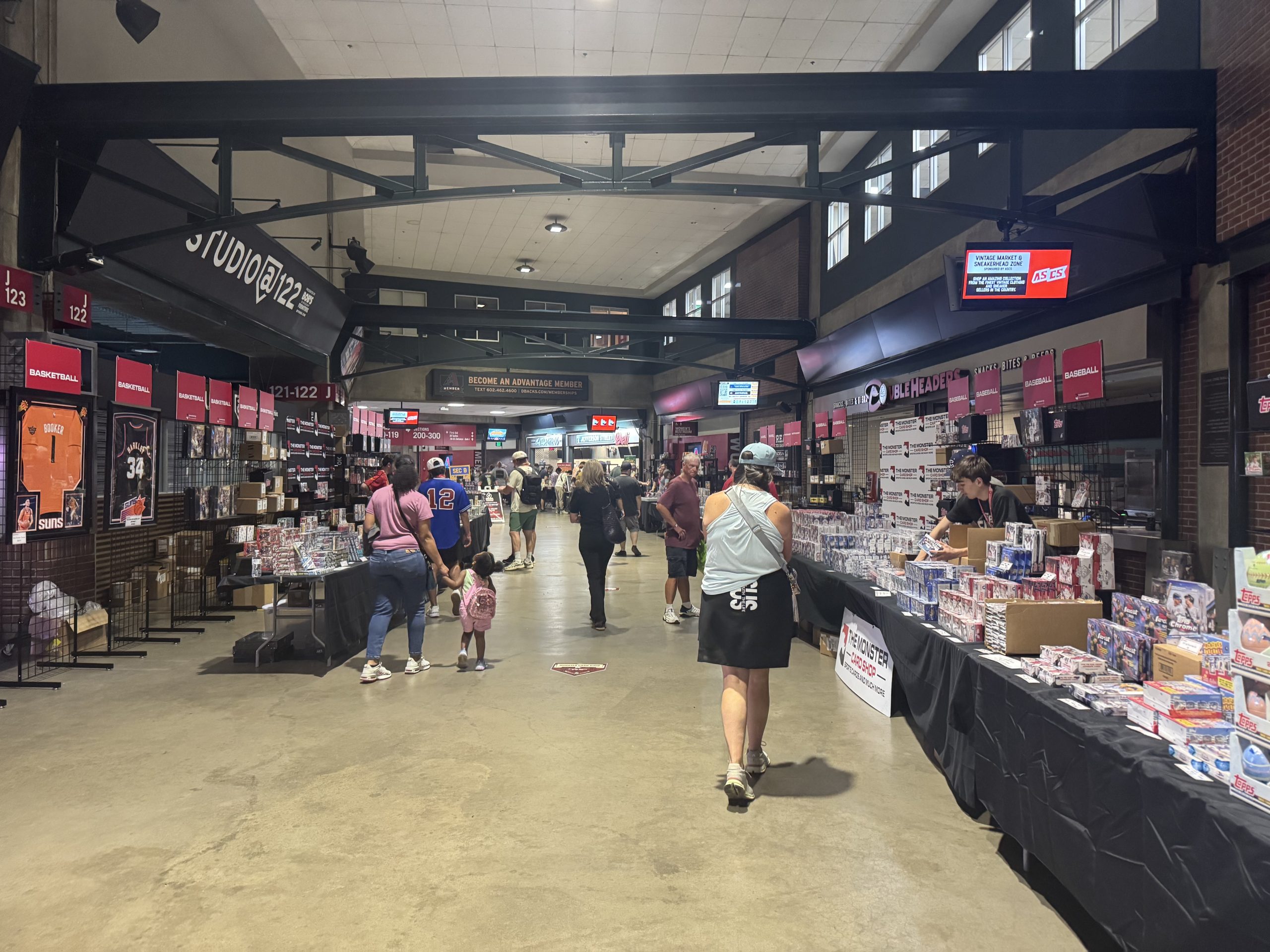
PHOENIX – The hum of conversation echoes through the lower concourse at Chase Field. Rows of display cases stretch along the hallways where fans normally line up for hot dogs and souvenirs.
But instead of baseball jerseys and foam fingers, collectors lean over glass cases studying vintage Mickey Mantle cards, modern rookie autographs and sealed packs of Pokémon.
For one weekend, the home of the Arizona Diamondbacks became something entirely different.
It became the Arizona State Card Show.
“It was honestly kind of crazy,” attendee Johnny Darell said. “You walk into Chase Field expecting a baseball game, but instead, every hallway is lined with card tables and collectors. It really feels like the whole stadium turned into a giant card shop.”
What began as a modest gathering for hobbyists has evolved into a stadium-size marketplace that draws vendors and collectors from across the country.
And for the show’s founder, the journey started with just a handful of tables.
From college hobby to statewide event
The Arizona State Card Show traces its roots back to 2018, when Cole McAuliff – an Arizona State University alumnus and lifelong collector – organized a small monthly show while still in college.
At the time, the event was modest.
“This started as a monthly show,” McAuliff said. “It was about 15 to 20 tables.”
Only one other card show could be found in the Phoenix area at the time, he said, and it catered largely to older collectors focused on vintage cards.
McAuliff saw an opportunity to create something different. The early shows were held in small venues around Tempe, including a church that hosted the monthly event before eventually closing. Even then, attendance was unpredictable.
“Balancing how many attendees would show up to that first show was kind of nerve-wracking,” McAuliff said.
But the concept worked.
By 2019, the show was running consistently on the first Saturday of every month, and the hobby itself was beginning to surge in popularity.
Riding the sports card boom
The sports card industry exploded during the pandemic, fueled by online marketplaces, social media and a new wave of collectors.
As interest grew nationwide, the Arizona show expanded as well.
“All across the nation, card shows were popping up,” McAuliff said.
The event’s first major expansion came in April of 2021 with the Arizona State Card Show at the Marriott Phoenix Resort Tempe at the Buttes, which featured about 100 vendor tables and drew hundreds of attendees.
At the time, it felt like a big step forward.
Today, the numbers are dramatically different.
McAuliff said he was anticipating around 15,000 people at the Chase Field show. While no official attendance figure was available, the event drew a large crowd.
“The show started at 100 tables, and now we’re up to about 700 tables,” McAuliff said.
Those tables now stretch across multiple concourses at Chase Field, with vendors selling everything from vintage baseball cards to modern rookie autographs, Pokémon cards and other collectibles.
The growth reflects a broader trend across the hobby. According to industry reports, the global sports memorabilia market has grown rapidly in recent years as collectors search for rare cards, autographs and game-used items.
For McAuliff, expanding the show meant balancing demand with sustainability.
“As a show promoter, you don’t want to oversaturate the market,” he said. “You want to make sure the vendors make enough money and the customers have enough tables to go to.”
That balance, he said, ensures the event remains profitable for dealers while still giving collectors enough variety to make attending worthwhile.
Why Chase Field?
The idea of hosting the first show inside a major league ballpark in Arizona has been developing for years.
McAuliff said organizers had been communicating with Chase Field and Arizona Diamondbacks event staff for several seasons before the stadium event became a reality.

“It’s been kind of a goal and a dream of mine to have it there,” he said.
The timing aligned with another major Arizona sports tradition: spring training.
Every March, thousands of baseball fans travel to Arizona to watch Cactus League games.
McAuliff believed the card show could become part of that seasonal sports culture.
“We thought it’d be a great time with spring training,” he said. “We want to make this event a staple of springtime.”
He refers to the event as the “spring training spectacular,” a weekend when collectors can enjoy baseball in Arizona while buying, trading and experiencing the hobby in the same stadium where major league games are played.
The venue also offered something few card shows can provide – a baseball atmosphere.
Collectors could browse cards along the concourse, then walk down toward the field or relax in the stands.
“The experience is being in the stadium,” McAuliff said. “It’s almost like an all-access pass.”
What goes into a stadium-size card show
Running an event at that scale requires far more than simply renting tables.
McAuliff said the show generates revenue from several streams.
“We’ll have table revenue, customer revenue, sponsor revenue and autograph revenue,” he said.
But the expenses are just as significant.
Venue costs, promotional efforts, athlete appearances and prize giveaways all factor into the final budget.
“We’re giving back $10,000 to $20,000 worth of prizes all weekend,” McAuliff said.
Beyond the card tables, the stadium show also features autograph signings, live auctions, collectible displays and other attractions designed to draw new fans into the hobby.
“We’re trying to make it more than just a two-dimensional card show,” McAuliff said.
Trade nights, autograph signings, live auctions and fan activations throughout the stadium turn the event into more than just a place to buy and sell cards.
Vendors see opportunity
For vendors, the scale of the show can open new doors.
Aaron Sakaye, a vendor who runs Az Footie Cards on eBay and specializes in international soccer cards, said strong promotion is one of the biggest factors behind a successful show.
“I think advertisement goes a long way,” Sakaye said.
He has attended card shows across the country and said the difference between events often comes down to how well organizers promote them.
“The more money they put into advertising and promoting the show, the more foot traffic there is,” he said.
Even niche markets can find success in the right environment.
Sakaye focuses on a smaller segment of the hobby compared with baseball or basketball.
“It is a very niche market,” he said. “The soccer community is very small; we all know one another.”
But events like the Arizona State Card Show continue to expand the audience.
“With the World Cup coming up, I’ve seen more and more people come up to my table,” he said.
A community built around cards
For other dealers, the appeal of the show goes beyond sales.
William Patterson Jr., owner of Jersey Phoenix Cards & Collectibles eBay store, said the growth of the Arizona show has been dramatic.
“The growth has been exponential,” Patterson said. “To transform a stadium into a card show is unbelievable.”
Patterson has been involved with the event since its early days, when the show rotated through hotels and smaller venues.
Now, he said, the environment feels entirely different.
“Walking through the front door is the biggest difference,” Patterson said. “You look around and think, ‘Wow, this isn’t Chase Field as we know it anymore.’”
For vendors, the show also offers opportunities to connect with other collectors and dealers.
“For me, it’s the networking,” Patterson said. “It’s meeting new collectors.”
Those interactions, he said, often lead to future deals, long-term customers and connections with other dealers who travel from across the country for events like the Arizona State Card Show.
The hobby experience
For fans attending the event, the atmosphere itself can be the biggest draw.
Collectors wander the concourses comparing prices, trading cards and sharing stories about rare finds.
“It’s really the community,” attendee Johnny Darell said. “Everyone’s talking about cards, trading, showing stuff they pulled.”
Even without making a major purchase, Darell said the experience itself keeps people coming back to events like these.
“You can still walk around for hours and meet people who collect the same stuff you do,” he said.
That sense of connection is exactly what McAuliff hopes the event continues to foster.
“There aren’t many card shows that bring in new people,” he said.
The goal, he added, is simple.
“We want people to walk away with a cool experience and cards in their hands.”
By hosting the event inside Chase Field with giveaways, autograph signings and interactive activities, McAuliff hopes the show introduces first-time collectors to the hobby while giving longtime fans a reason to keep coming back.
Looking ahead
Despite the event’s rapid growth, McAuliff believes the Arizona card scene still has room to expand.
The Chase Field show represents the latest step in a process that began with a college hobby project.
“Even doing Chase Field was a little bit of a leap of faith,” he said.
Organizing a stadium-size show required months of planning, coordination with vendors and sponsors, and a willingness to take a risk on a much larger stage than the event had ever seen before.
If the show continues to succeed, organizers hope to bring it back to the ballpark on a regular schedule during spring training.
For collectors wandering the stadium concourse, the transformation is already clear.
Rows of glass display cases reflect the bright stadium lights while collectors lean in to examine cards worth anywhere from a few dollars to thousands.
For one weekend, Phoenix’s baseball home becomes a marketplace for the hobby that inspired it.
And if McAuliff’s vision holds, it may soon become a new spring training tradition.
“We want people to remember the experience for a lifetime,” he said.
Related

Source link