AI has pushed us into a ‘relationship economy’, warns Arte Exec
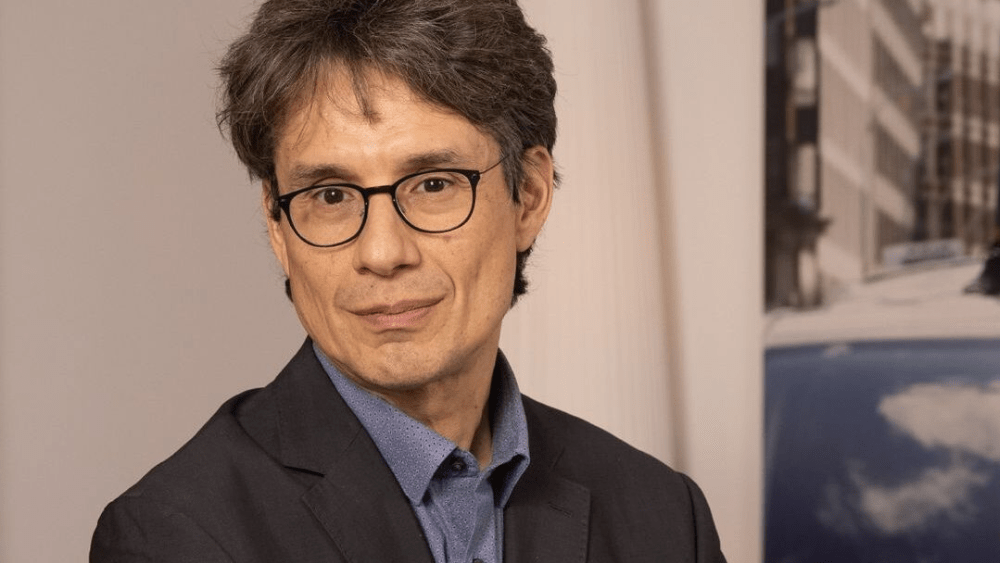
Amid the growing discussion about conglomeration, the changing landscape of global media and limited freedom of expression, leading documentary festival CPH:DOX chose “Media Sovereignty: Rethink, Envision, Redefine” as the theme for its second ever CPH:SUMMIT. This year’s event brings together politicians, innovators, researchers and documentary professionals to discuss the future of the audiovisual industry, with a specific focus on the state of information, technology and changing views of truth. In the opening speech, president of public broadcaster Arte France Bruno Patino provided a somber but piercingly accurate assessment of today’s sector.
During the Summit’s welcome speeches, Doc Society’s Beadie Finzi presented the audience with a report generated by AI bot Claude, predicting what the industry would look like in 2030. The result was horrible: public broadcasters would become “a shadow” of what they once were and develop into “mere clients”; documentary would be split between costly prestige and cheap directed by the creator, with no in between; and the information environment would become overrun, with a “small audience that cares” that is “closely concentrated around a small number of highly trusted brands.”
Most worryingly, the “real loss by 2030” would be that of the “shared commons.” Finzi’s AI-generated report warned that the idea that a society could have a common information experience would be “largely gone” in just four years and that rebuilding it “will take longer than losing it.”
Patino was then invited on stage to respond directly to Claude’s predictions. A seasoned journalist, writer, media analyst and close observer of recent developments in AI, the director offered keen insight into how rapidly developing technology is contributing to the erosion of our understanding of media. Below you will find the main points of the keynote speech:
Replace pull behavior with push era
Patino says that for a long time, citizens went “directly to the media,” which he called a “pulling behavior.” People online would actively seek out information and access online newspapers and trusted sources, looking for what was going on in the world. With the rise of social media and algorithm-based platforms, we have now entered a ‘push era’, according to the director. “People wait for the content to reach them, not the other way around. This is a big change.”
Strength and satiety
In that push landscape, a scenario has emerged where there are two major industry dynamics: saturation and power. “The idea of scale is changing,” says Patino. “Global players are becoming increasingly important [becoming] more powerful than ever. Just look at the recent takeover of Warner Brothers by Paramount in the United States. Everyone is competing to become the global interface and control the relationship with saturation.” Thanks to AI, the expert said our content production is now “almost limitless.” “Content can be produced faster, cheaper and in greater quantities than ever before.”
“These two dynamics could have similar consequences,” he continued. “First, the industrial standardization of content due to the increase in power. Second, the technological standardization of content due to less diversity. And that leads us to the paradox of our industry: we produce more content than ever before, but diversity ultimately decreases.”
Getty Images
Fragmentation as our primary relationship to reality
Patino alerted the audience to how three crucial ideas in our understanding of modern culture are now under threat: “First, the idea that culture is the source of both individual and collective emancipation. Second, the idea that fact-based information shared with the broadest audience contributes to democratic society.” [process]. And thirdly, the idea that public broadcasting is a form of collective solidarity.”
He said the third transformation “is not just about our industry,” but about the “world we live in, where the legitimacy of the European social and cultural model we fought for after World War II is being questioned.” For Patino, the worst-case scenario is “a world in which AI determines the citizen’s place in society and determines the information, culture and entertainment [they] have access. In such a world, fragmentation becomes our primary relationship with reality.”
The relationship economy
That risk of fragmentation did not come out of nowhere, the director added. It is the direct result of the ‘broader history of the digital revolution’. Patino outlined three eras since the Revolution, with the Age of Access coming first with the advent of the Internet, and then the Age of Propagation, which began in 2007 and introduced concepts such as “algorithm, viral, visibility, social media” and “the rise of the attention economy.”
With the introduction of AI, we have now entered the age of implication. “An era in which everything blurs between man and machine, authentic and synthetic, reality and fiction.” “The age of social media has changed the place of truth,” the expert continued. “Media no longer speak directly to citizens; they speak to an agent who then speaks to citizens. The risk is that these agents become the main mediator of our relationship to society, to information, to culture, to entertainment.”
This, Patino said, is what he calls the relationship economy. “There is a growing risk of invisibility for diverse voices or stories about the real world, either because those stories will never be introduced to the public or because they will drown in the age of content.”

David Borenstein accepts the Documentary Feature Award for “Mr. Nobody Against Putin” onstage during the 98th Oscars at the Dolby Theater on March 15. (Photo by Kevin Winter/Getty Images)
Getty Images
Coalition: the future of Europe
The relationship economy has “a major impact on our professions,” Patino said. “There is a growing risk of invisibility for diverse voices and for stories about the real world, either because those stories will never be introduced to the public or because they will be drowned in the flood of content. For us in Europe, this created quite a challenge.”
“The first challenge is discoverability: how can our content be found in the age of AI, when AI is controlled by US-based giants? The second challenge is production itself. Our production logic is increasingly tied to US-based platforms. Europe cannot produce acts of comparable strength in these areas.”
The question, Patino said, is simple: Is there any other logic besides sheer power? “Faced with the power of these platforms, Europe must rely on the strengths of coalitions.” “This is, on the whole, a political choice. Europe remains the most effective geopolitical, social and cultural framework for rethinking identities, narratives and spaces.”
Patino said he believes Arte can become “the missing name in the European broadcasting system.” The director discussed how Arte bundles a network of fourteen public broadcasters, has programs available in seven languages and maintains strong ties with the creative ecosystem across Europe. Speaking the day after the Oscars, Patino lifted Arte’s hand to two big winners: ‘Mr Nobody Against Putin’ and ‘Sentimental Value’.
“Our ambition is not to build a mega structure, not even to create a European Netflix,” he added. “Our goal is much simpler: to give real content to the European network. An alternative built on curiosity, discovery and openness.”