Medical spas want to become more visible – ITB Berlin | News
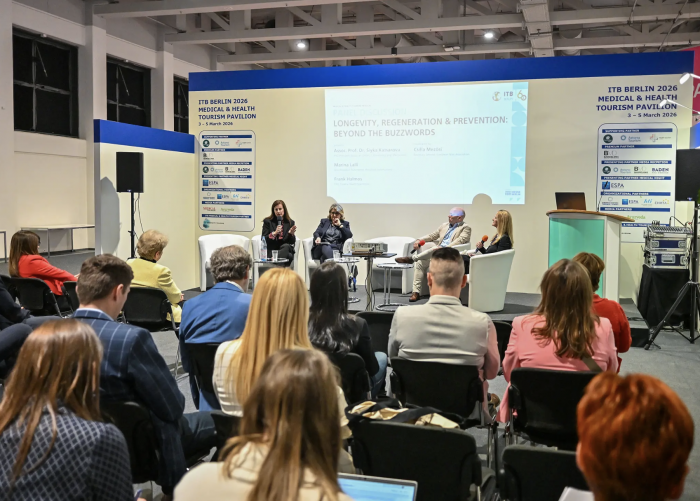
Siyka Katsarova, Marina Lalli, Frank Halmos and Csilla Mezosi discuss longevity and prevention at the Medical & Health Tourism Pavilion of ITB Berlin 2026.
One year of prevention saves the costs of seven years of medical therapy. This was the conclusion reached by Siyka Katsarova, President of the Bulgarian Association of Spa Resorts and Spa Tourism Providers, in her statement on the current trend of longevity. She called for greater promotion of medically indicated wellness. Experts backed her position on Tuesday at ITB Berlin 2026, calling for greater emphasis on the value of such therapies in national and European health strategies.
After the pandemic, spas were in particularly high demand, Katsarova said, as people finally wanted to get back out into the fresh air. And in spas the air is particularly fresh. But there needs to be greater awareness that natural healing methods offer numerous advantages over pharmaceutical therapies, especially because they represent a holistic approach.
Prevention is a hard sell
In addition to genetic predispositions, fitness, mental health programs, natural therapies and preventive structures are a prerequisite for a long and healthy life, says Martina Lalli, vice-president of the Italian thermal springs association Federterme. The economic problem for spa providers, whether entire cities, hotels or sanatoriums, is that prevention is harder to sell because its success is harder to measure.
Frank Halmos, CEO of hotel group Ensana, mainly focused on young customers. “When a 70-year-old comes to us who wants to prolong his life, I have mixed feelings,” he said. For effective therapies, it is important to interest young people so that they live healthier from the start. However, Halmos himself said that the elderly can also be effectively helped with holistic therapy. “It really happens that they throw away their crutches afterwards.”
Forest experience with bears
Lalli said this approach should also be communicated to the European Commission in such a compelling way that it is included in its next health strategy. Mental health in particular can rarely be improved with medications. Halmos gave the example of a hotel in Transylvania “where bears roam”, but where burnout can still be cured by the calming and balancing effect of the forest experience. He was against the introduction of robots in the service sector because human interaction is not only desired by customers, but has also been proven to be an integral part of healing mental health problems. Ultimately, all participants in the panel discussion agreed that medical wellness is a fundamental remedy.