Percy Jackson EP, Courtney B. Vance in Season 2 Finale Twist From Book
SPOILER ALERT: This story contains spoilers for the Season 2 finale of “Percy Jackson and the Olympians.”
The Disney+ adaptation of “Percy Jackson and the Olympians” just took a big step away from the books.
Or at least, that’s how it seems at first. But if you ask executive producer Craig Silverstein, that big twist in the Season 2 finale was just a way to truthfully show what “Percy Jackson” — both on page and on screen — has always been about: children (or in this case, demigods) standing up for themselves when neglected by their parents (all-powerful Olympians).
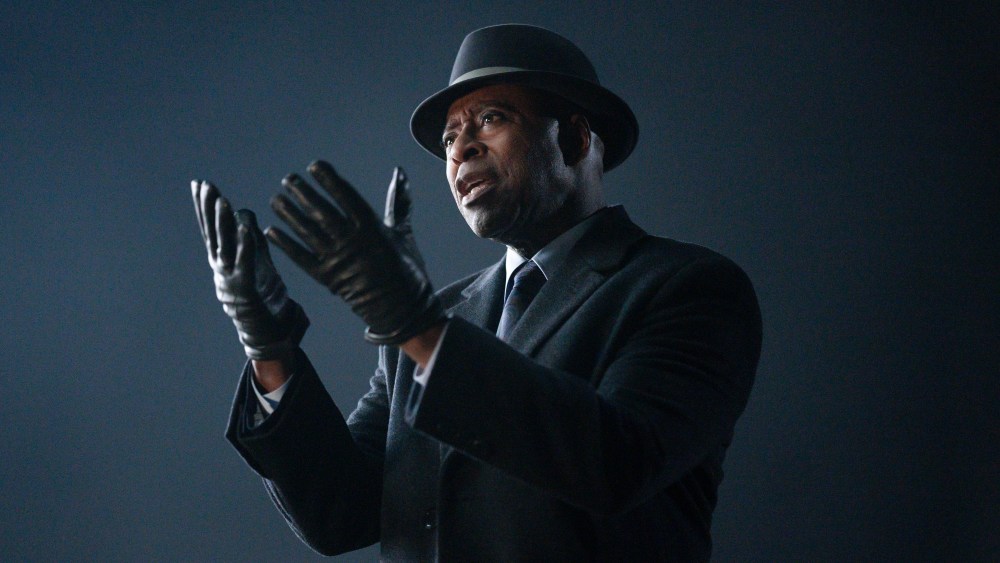
Throughout Season 2, based on the book “The Sea of Monsters” by Rick Riordan, Thalia Grace (Tamara Smart) is introduced in a series of flashbacks. Thalia, a daughter of Zeus (Courtney B. Vance), was the one who first brought Annabeth (Leah Sava Jeffries) and Luke (Charlie Bushnell) to safety at Camp Half-Blood after a difficult journey plagued by constant monster battles. In the books, it is revealed that Thalia herself never became a camper because the Furies attacked before she could get inside. She saved her companions, but almost lost her life in the process – until Zeus intervened and transformed her dying body into a magical pine tree with the power to protect the camp from monsters. In the TV series, however, that story turns out to be a lie: The Furies never touched Thalia. Sent by Hades (Jay Duplass) to turn her against her father, they told her about the Great Prophecy, which states that a child of the “big three” (Zeus, Hades and Poseidon) will make a decision that will save or destroy the gods, and explain that Zeus plans to use her as a weapon. Thalia is furious, as Zeus has never been a present parent, and she tells him as much when he spontaneously shows up to convince her. So he turns her into the tree as punishment, and to prevent her from ruining the government of Olympus. It’s not exactly an act of fatherly love.
‘Zeus says: ‘There is something that I was to go to tell you about. Now I have to,” says Silverstein. “You’re about to become super relevant to it. You’re turning 16 very, very soon. But good news: you’re going to be the princess of Olympus! I am going to raise you above all others.” He just hasn’t been paying attention to her, and doesn’t know that he is not how to sell Thalia.”
Tamara Smart as Thalia
Silverstein says the writers of “Percy Jackson” had the idea for that twist about halfway through writing Season 2, but initially “kept it at bay.” However, by the time they were writing the finale, they realized that those earlier flashbacks of Thalia lent themselves to a darker version of her final conversation with Zeus. “You see her and how she was the leader of this group who wanted nothing to do with her father’s world,” Silverstein says. “Even before she turned into a tree, she had a grudge against Zeus, the flames of which are fanned by Luke, who has problems with his father, Hermes.”
Silverstein adds, “At the same time, these characters are heroes who care about each other. ‘We take care of our own’ is that trio’s motto.” In other words, Thalia’s feud with Zeus doesn’t mean she’s on the same path as Luke, who betrayed Annabeth and other campers by joining Kronos’ fight to overthrow the gods. “All of this is in service of triggering the last line of Rick’s book, where Percy looks at Thalia Grace and says, ‘I had a feeling this person could be my best friend or my worst enemy.'”
Vance was cast as Zeus following the death of Lance Reddick, who played the sky god in season 1. Like the writers, he approaches “Percy Jackson” primarily as a family story. Calling Reddick a “dear friend,” Vance began his time on the show by addressing the sore elephant in the room. “People didn’t want to affect my experience by talking about Lance, so they didn’t quite know what to do or say,” he says. “So I asked for a moment of silence for the people to honor him. I can’t get Bogart in – transitions take time. I said I’m grateful to be here, and acknowledged that Lance was the man. The people appreciated the time to breathe.”
From there, Vance focused on the interpersonal dynamics between Zeus and Thalia. He says he “wasn’t thinking about Greek mythology at all. The focus was on an argument between father and daughter.” So he drew from his own experience; with his wife, Angela Bassett, he has 19-year-old twins. When he and his children disagree, he says, “sometimes you say, ‘Okay, let me see if I can change some things.’ But every now and then it doesn’t happen. “But I don’t understand why!” ‘You don’t have to understand why. It’s not happening.”
That’s the kind of persistent, unresolvable conflict Thalia and Zeus had, and it allows “Percy Jackson” to portray Zeus’ bad parenting in a way never seen before. “She called him in and he decided to let Zeus have her instead of fathering her,” Vance says. Yes, in this show that means weaponizing his godly powers to essentially paralyze her for years — but Vance focused on Zeus’ actions as an expression of an adult’s unfair anger toward a child who was simply expressing his feelings. “And what does that mean if you are Zeus your daughter? What does that mean for your relationship and her life?”
It means there are “existential stakes” at stake, says Silverstein, explaining that the shift in Thalia’s backstory is meant to “bring the Great Prophecy to the forefront of the show. The gods are bastards – who are immortal, so they don’t care. But the Prophecy means the Olympians can fall as the Titans did before them. They can no longer rely on just being immortal.”

Toby Stephens as Poseidon, left, Walker Scobell as Percy Jackson
It all goes back to the show’s goal of bringing Mount Olympus to a more grounded place, allowing for the exploration of fraught, messy family relationships. “Poseidon [Toby Stephens] says that the greatest fear the gods ever had was that their fate would be in the hands of their children. That means the Olympians feel a little more human,” says Silverstein. “Because at some point we get old. Unlike the gods, we depend on our family and children to provide for us. That’s scary for immortals.”
In season 3, which Disney+ announced Wednesday will premiere later this year, Percy will have to work with Thalia as she worries that she could be the subject of the Great Prophecy — and that she will make the wrong decision. That tension already existed in Riordan’s third “Percy Jackson” book, “The Titan’s Curse,” so adding the twist to the Season 2 finale helps set the stage for what’s to come. “Rick understood how it made the stakes for the next season real. Thalia is really feuding with Zeus. It’s not theoretical, like, ‘Oh, maybe something will happen that will make them [turn against the gods].’ Because otherwise her father saved her, right? Then she would be a bit of a brat for being angry.”
The twist also sets new stakes for camp director Chiron (Glynn Turman) heading into Season 3. He originally lied to the campers to protect Zeus’ image, but he’s the one who reveals the truth in the Season 2 finale. “If you look closely at the books, Chiron is a little bit dark. He does a lot of things where he’s like, ‘Oh, I would go myself, but that puts me in danger.’ There are some questionable things,” Silverstein says. “Our Chiron is a rule follower and the rules he has to follow are very strict. He has a bond with these children, but he is preparing them to die fighting monsters for the glory of the gods. There is a bit of a conflict there.”
In the finale, Chiron tells Percy, Annabeth, and Grover (Aryan Simhadri), “I have always tried to obey the will of the gods and be an example to the demigods I train and care for. I can no longer do both.” With that sentence, Silverstein says, Chiron realizes that he can no longer focus on the consequences he will face if he defies the gods: “Because he has already dealt with the consequences. In Zeus’ paranoia, he was fired [from camp earlier in the season]. You can follow all the rules and still get fired. Everything changes. The primacy of Olympus is in question. Anyone who is unchangeable because he is immortal is now going through all kinds of changes at the time of the Great Prophecy. That opens up some good things for Chiron.”

Glynn Turman as Chiron
Disney/David Bukach
‘Percy Jackson’ fans are known for being protective of Riordan’s original lyrics. But with the new ending for “The Sea of Monsters,” Silverstein says, “they’re hoping that what seems like a huge departure isn’t actually that big of a departure. I’ve always said that this change isn’t as big as the change in episode 3, where Percy learns about the Great Prophecy, the stakes of the Great Prophecy are now being balanced against – and perhaps in conflict with – whatever the seasonal prophecy is. That thing that’s just in the background as we wait for the fifth book is now very active.”
Vance, who is not only part of the twist but also working to fill the Olympic shoes left by Reddick, laughs as he wonders how the finale will be received. “I’m just trying to be careful and gentle with the fandom, because they’re not playing. I hear they’re the Real Deal Holyfield. So I’m just saying, ‘Let me in, y’all. Give me a little time.'”